
 EN
How to Troubleshoot Common Lawn Mower Starting Problems?
A lawn mower that will not start is frustrating, especially when grass is growing faster than expected. The good news is that many lawn mower starting problems come down to a short list of checks: operator controls, fuel, spark, air, and routine maintenance. As someone who has sold and serviced garden machinery for years, I would start with the simple checks before removing covers or buying parts. That approach saves time and avoids turning a small issue into a bigger repair.
Before beginning any mower troubleshooting, move the lawn mower to a level, well-ventilated outdoor area. Keep sparks, cigarettes, and flames away from fuel. On a petrol lawn mower, remove the spark-plug wire before inspecting the blade area or working near moving parts. For a cordless lawn mower, remove the battery first. Follow the instructions and safety warnings for your exact model; control layouts and service procedures vary.
Start With the Symptoms, Not the Most Complicated Repair
Listen to what the lawn mower does when you try to start it. Does the starter cord feel normal but the engine does not fire? Does an electric-start model click once? Does it run for a few seconds and stop? Those details help narrow the repair guide. Most engine problems fall into one of four paths: the lawn mower is not allowed to start because a safety control is not engaged, it is not receiving usable fuel, it has no reliable spark, or air and fuel cannot move through the engine correctly.
Do not keep pulling the starter rope repeatedly without checking anything. A flooded lawn mower can become harder to start after many unsuccessful attempts. Instead, work through the following steps in order and note what changes after each check.
1. Check the Safety Controls and the Starting Procedure
Many lawn mower starting problems are operator-control problems rather than failed parts. On a walk-behind petrol lawn mower, hold the engine-brake or operator-presence bar firmly against the handle before pulling the cord. On a self-propelled lawn mower, make sure you are using the control specified for starting, not only the drive lever. Riding models may require the parking brake, neutral position, blade switch position, and seat switch to be set correctly.
Next, check the manual for whether your lawn mower has a primer bulb, manual choke, automatic choke, fuel valve, key, or electric-start sequence. Pressing a primer too many times, for example, may flood some engines. Many petrol mowers handle average lawn conditions comfortably, but starting behavior still depends heavily on the engine system and its maintenance history.
2. Inspect the Fuel Before Chasing Other Engine Problems
Old or contaminated petrol is one of the most common causes of a lawn mower that cranks but will not start. Check that there is enough fuel in the tank, that a fuel valve is open if your model has one, and that the fuel does not smell stale or look contaminated. Fuel left through a long storage period can leave deposits in the carburetor and restrict fuel flow.
If fuel is old, do not simply top it up and expect that to resolve the problem. Follow local disposal rules, refill with fresh fuel approved for your lawn mower, and then retry the standard starting procedure. If you see leakage, smell strong fuel vapour, or find a damaged fuel line, stop the repair guide there and arrange service. Fuel-system work has fire and spill risks that are not worth guessing at.
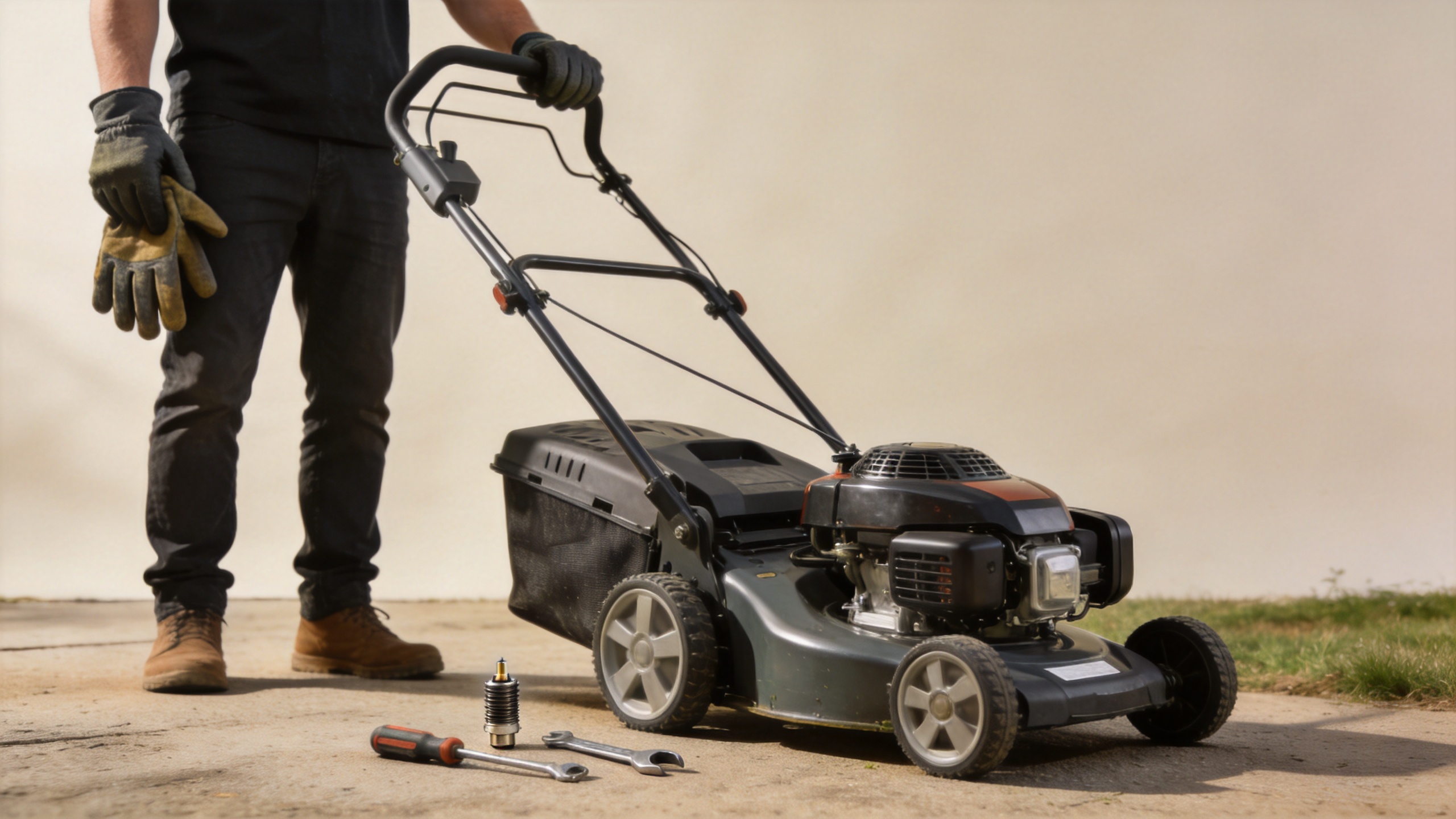
3. Check the Spark Plug and Ignition Connection
A loose plug cap, worn spark plug, or fouled electrode can keep a lawn mower from firing. With the engine cool and the spark-plug wire disconnected, inspect the plug according to the owner’s manual. Look for a loose wire, cracked ceramic, heavy deposits, or a plug that is unusually wet with fuel. A wet plug can be a clue that fuel is reaching the cylinder, while a dry plug can suggest a fuel-delivery issue; neither observation proves the fault on its own.
Use the exact plug type and gap specified by the manufacturer if replacement is needed. Do not test for spark near spilled fuel or improvise a live ignition test if you are not trained to do it safely. If the lawn mower still has no start after a confirmed plug and connection check, an ignition fault may need a technician’s diagnosis.
4. Give the Lawn Mower the Airflow It Needs
Every petrol lawn mower needs a clean air path. Remove and inspect the air filter only as your manual directs. A heavily clogged, oily, or damaged filter can upset the fuel-and-air mixture and contribute to starting problems. Foam and paper filters have different cleaning and replacement rules, so do not wash or oil a filter unless the manufacturer calls for it.
Also look for packed grass, leaves, or debris around cooling and intake areas. This is basic maintenance, but it is easy to miss after a dusty mowing session. If the lawn mower starts after the filter is serviced, run it only long enough to confirm normal operation and then recheck that the cover and fasteners are fitted correctly.
5. Recognize When Carburetor or Compression Work Is Needed
If the lawn mower has fresh fuel, correct controls, a sound plug connection, and a clean air filter but still will not start, the issue may be inside the fuel system or engine. A carburetor can become restricted after storage, and an engine can also have compression, valve, flywheel-key, or safety-switch problems. These engine problems are not all visible from the outside.
At this point, professional service is the sensible choice when a lawn mower has fuel leaks, repeated backfires, damaged wiring, a seized starter, a broken recoil cord, or persistent no-start symptoms after the basic checks. A technician can test the fuel system and compression without bypassing safety devices or causing further damage.
Prevent the Next No-Start: A Short Maintenance Routine
- After each use: Brush grass and debris from the lawn mower after it cools, and inspect for loose hardware or leaks.
- During the season: Check engine oil, air-filter condition, blade condition, and spark-plug condition at the intervals in the manual.
- Before storage: Use the manufacturer-approved fuel-storage procedure. Stale fuel is a major source of future mower troubleshooting.
- Before the first cut: Test-start the lawn mower on a safe surface rather than waiting until the lawn is overdue.
Good maintenance is less dramatic than a repair, but it prevents many starting calls. Keep a simple note of the last oil service, filter check, and spark-plug inspection. That record makes recurring engine problems easier to explain to a service professional.
Frequently Asked Questions
Why does my lawn mower start and then stop?
A lawn mower that starts briefly and then stops may have stale fuel, restricted fuel flow, a clogged air filter, a carburetor issue, or a safety-control problem. Begin with the easy external checks and consult the model manual before disassembly.
Can I use starting fluid on a lawn mower?
Use only products and procedures explicitly approved in the lawn mower manual. Starting fluid can create safety and engine-damage risks when used incorrectly, so it is not a substitute for finding the underlying cause.
When should I stop troubleshooting and call for repair?
Stop when you find fuel leakage, damaged electrical parts, a seized engine, persistent backfiring, or a problem that requires bypassing a safety system. A qualified repair provider can handle those engine problems safely.
The Practical Takeaway
For most lawn mower starting problems, begin with the controls, fresh fuel, spark plug, and air filter, then move toward professional repair only if those checks do not change the result. This sequence keeps mower troubleshooting orderly, protects you from avoidable hazards, and supports better long-term maintenance. A lawn mower that receives regular attention before storage is far more likely to be ready when the next mowing day arrives.
 Hot News