
 EN
How to Prepare Gasoline Lawn Mowers for Seasonal Storage?
Putting a gasoline lawn mower after the final cut is more than a garage-cleaning task. A careful end-of-season routine protects the fuel system, engine, cutting deck, and controls during winter storage, then makes the first spring start less uncertain. The exact service steps and fluids for any gasoline lawn mower should come from its owner’s manual, but the sequence below gives homeowners, dealers, and garden-equipment teams a sensible way to plan the work.
Start with a safe, dry work area
Choose a level, ventilated location clear of ignition sources. Allow the engine and muffler to cool before working near fuel or vegetation debris. Switch the engine off, remove the ignition key if your machine has one, and disconnect the spark-plug lead before cleaning under the deck or inspecting the blade. Wear gloves around cutting edges and follow the manual’s instructions before tilting a gasoline lawn mower; the wrong tilt direction can allow oil or fuel to reach parts where it does not belong.
It is useful to gather the manual, a brush or scraper, a drain pan if an oil service is due, approved engine oil, a clean rag, and any fuel-treatment product specified for the machine. This small setup reduces the temptation to skip fuel maintenance once the mower is already stored.
1. Clean clippings, soil, and moisture from the machine
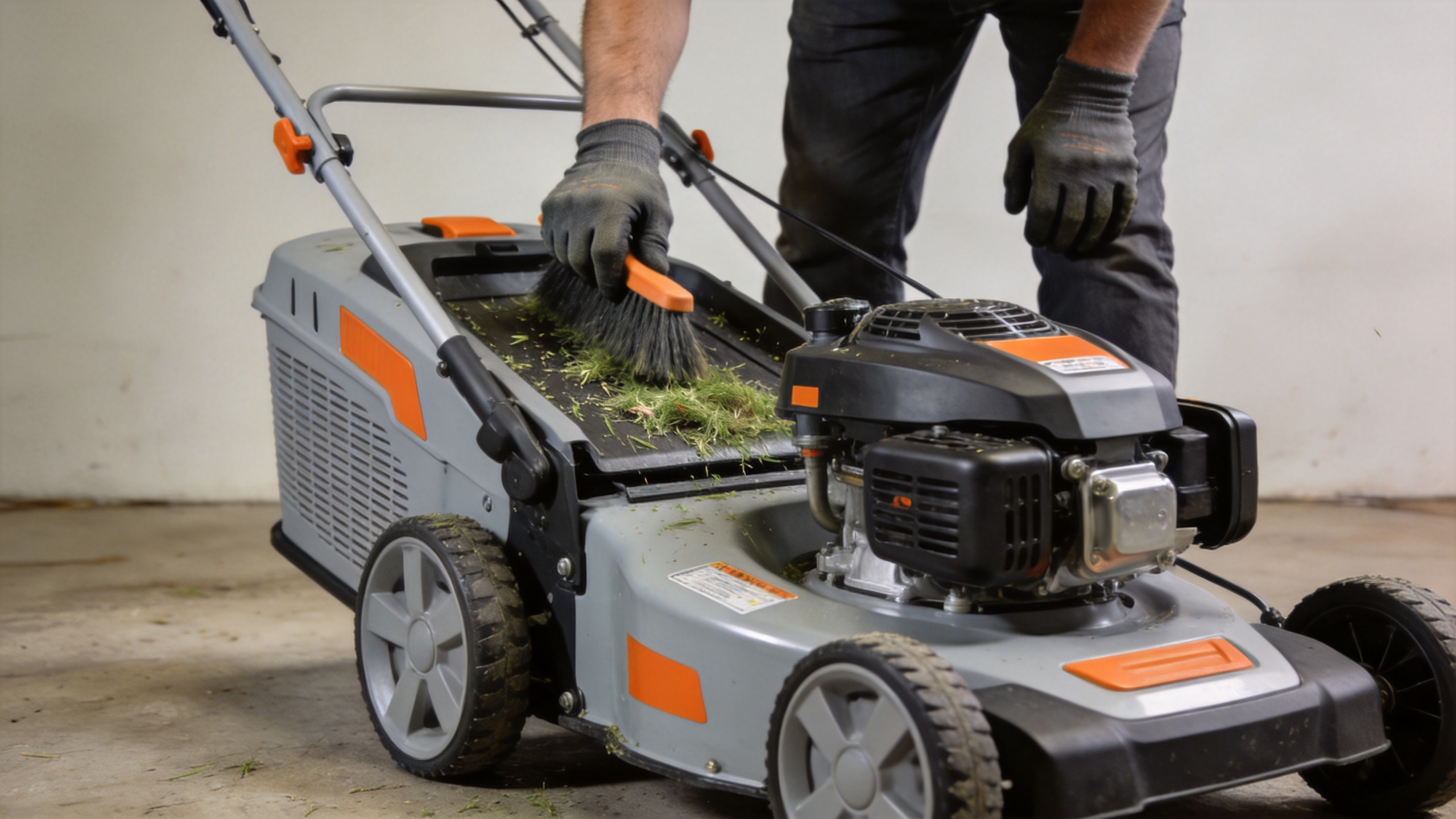
Let the mower dry after its last use if conditions allow. Brush clippings from the deck, discharge area, wheels, collection bag, and cooling-air openings. Accumulated clippings retain moisture and can make a garden tool unpleasant to inspect next season. Avoid directing high-pressure water at bearings, electrical connections, or the engine. A damp cloth and a soft brush are usually enough for the exterior.
While cleaning, look for loose fasteners, damaged cables, worn wheels, and collection-bag tears. Note repairs now rather than relying on memory after winter storage. Inspect the blade only with the spark-plug lead disconnected. If it is dull, bent, cracked, or heavily nicked, arrange sharpening, balancing, or replacement according to the mower manual rather than forcing another season from it.
2. Make a deliberate fuel-maintenance choice
Fuel is often the storage step that deserves the most attention. Old gasoline can change during long storage and may leave deposits in small engine fuel passages. Do not guess whether to store the tank full, nearly empty, or drained: follow the fuel-system procedure in the owner’s manual for your specific gasoline lawn mower.
One established approach is to use fresh fuel with a compatible stabilizer. Manufacturer guidance for small engines commonly directs users to add the treatment according to its label before storage, then run the engine long enough for treated fuel to reach the carburetion or injection system. That approach may be appropriate where the manual permits it and where the correct treatment is available. Another mower may specify a different draining procedure. What matters is completing one documented method instead of leaving untreated, aging fuel in the system.
- Use only the fuel type and ethanol limit stated in the manual.
- Measure any stabilizer according to its product directions; adding extra does not improve the result.
- Do not drain or handle gasoline indoors, near flames, or while the engine is hot.
- Label any approved fuel container with its contents and storage date.
For fleet managers and dealers, add the chosen method to a service record. Consistent fuel maintenance is easier to verify when the storage date, fuel action, and technician are recorded together.
3. Service the oil while the engine is warm
Oil service is easier after the engine has run briefly and has warmed, while remaining safe to handle. Check the mower manual for the required oil grade, fill quantity, drain method, and service interval. If the annual interval or the stated operating-hours interval has been reached, change the oil and filter where equipped. Use a suitable drain pan and dispose of used oil through an approved collection point.
Why do this before winter storage? Used oil can carry combustion by-products and contaminants from the mowing season. Beginning the next season with fresh, manual-specified oil helps make the spring inspection more straightforward. Do not overfill; confirm the level using the method described for that engine.
4. Inspect the air filter, spark plug, and controls
Remove the air-filter cover and inspect the element. A foam filter, paper element, or pre-filter may each have different service instructions, so clean or replace only as the manual directs. A restricted filter can affect starting and running quality, yet aggressive cleaning can also damage some filter media.
Check the spark plug for a worn electrode, cracked insulator, or heavy deposits. Replace it only with the specified plug type and gap. Inspect the pull cord, recoil housing, throttle and drive cables, blade-control cable, and safety bar for obvious damage or sticking. If a control does not return freely, have it assessed before the next mowing season.
5. Protect exposed metal and store the mower correctly
After the gasoline lawn mower is clean and dry, follow the manual’s guidance for any light protective lubricant on approved metal points. Do not coat belts, brake surfaces, or areas where lubricant could reach the cutting system. Fold the handle only if the design allows it, and route cables so they are not sharply bent or trapped.
Store the mower on a level surface in a dry, well-ventilated space. Keep it clear of furnaces, water heaters, space heaters, and other ignition sources. A breathable cover can limit dust without trapping moisture. If storage is humid, inspect the garage or shed periodically for condensation, fuel odor, pests, or evidence of leakage.
A simple end-of-season checklist
- Read the model-specific storage and safety instructions.
- Let the engine cool and disconnect the spark-plug lead.
- Remove clippings, soil, and moisture from the deck and exterior.
- Inspect the blade, wheels, cables, bag, and fasteners.
- Complete the manual-approved fuel maintenance procedure.
- Change oil if the service schedule calls for it.
- Inspect or service the air filter and spark plug as specified.
- Record any repair needed before spring.
- Store the gasoline lawn mower dry, level, and clear of ignition sources.
What to do when spring arrives
Before the first cut, move the mower outdoors and inspect it again. Reconnect the spark-plug lead, check the oil level, look for fuel leaks, confirm that safety controls operate correctly, and use fresh fuel when the manual calls for it. Test the machine on a clear area before tackling tall lawn growth. If starting is difficult, fuel leaks appear, or controls behave abnormally, stop and consult a qualified service technician.
Good equipment protection is not about performing every possible task. It is about doing the specified tasks carefully, recording what was done, and leaving enough time to address a concern before spring demand arrives. With a repeatable winter storage routine, a gasoline lawn mower can enter the next mowing season with a cleaner, clearly documented starting point.
Frequently asked questions
Should I drain the fuel from a gasoline lawn mower for winter storage?
The correct method depends on the engine and mower manufacturer. Some manuals permit stabilized fuel, while others specify a draining procedure. Use the manual for your model and handle fuel only in a safe, ventilated area.
Can I store my mower outside under a tarp?
A dry, well-ventilated indoor location is generally a more suitable choice. A tarp outdoors can trap moisture and does not address security, temperature swings, or fuel-storage safety.
Do garden tools need a service record?
For a single mower, a dated note can be enough. For multiple garden tools or a dealer fleet, a simple record of fuel maintenance, oil service, inspections, and outstanding repairs helps keep seasonal work consistent.





 Hot News