
 EN
How Does Engine Displacement Affect Gasoline Lawn Mower Performance?
When you compare a gasoline lawn mower, engine displacement is often one of the first figures you see. It is useful, but it does not tell the whole story. A larger cc number describes the total cylinder volume; it does not, by itself, tell you how well a mower will cut tall turf, hold blade speed, start after storage, or suit your lawn.
As a garden-machinery technical consultant, I start with the job rather than the badge on the engine. Is the turf dense? Is the mower pushing a wide deck? Are there slopes, wet spring growth, or infrequent mowing? Those conditions determine whether a particular gasoline lawn mower has enough usable reserve for the work.
What engine displacement actually means
Engine displacement is the volume swept by the piston or pistons during one complete cycle, normally expressed in cubic centimeters (cc). In a single-cylinder gasoline lawn mower, a higher displacement usually means the engine has a larger cylinder in which to draw in an air-and-fuel charge. That can create more potential for torque, especially at the engine speeds used for mowing.
The important word is “potential.” Compression ratio, valve timing, combustion design, governor calibration, air intake, exhaust layout, and the fuel system all influence the finished engine. Two gasoline lawn mower engines with a similar cc rating can therefore feel different under load. Treat displacement as a starting comparison, not a standalone performance score.
Why torque matters more than cc alone
For a gasoline lawn mower, torque is the twisting force available to keep the crankshaft and blade turning when the workload rises. Thick turf, damp clippings, a dull blade, and a fuller collection bag all increase that workload. If the engine cannot sustain useful torque, blade speed drops and the cut can look uneven.
A larger-displacement engine often has an advantage when the same basic engine family is compared, because it can move more air and fuel per cycle. But compare rated output carefully. Gross-torque figures may be measured at a specified engine speed and standard, such as SAE J1940 at 2,600 rpm. A number without its test condition is less informative than it first appears.
That is why engine power should be read alongside the mower’s deck width, drive system, blade design, and stated operating conditions. A modest engine on a narrow deck can work sensibly on a regularly cut lawn. A wider deck or heavier turf load may call for more torque reserve even if the two machines have similar-looking features.
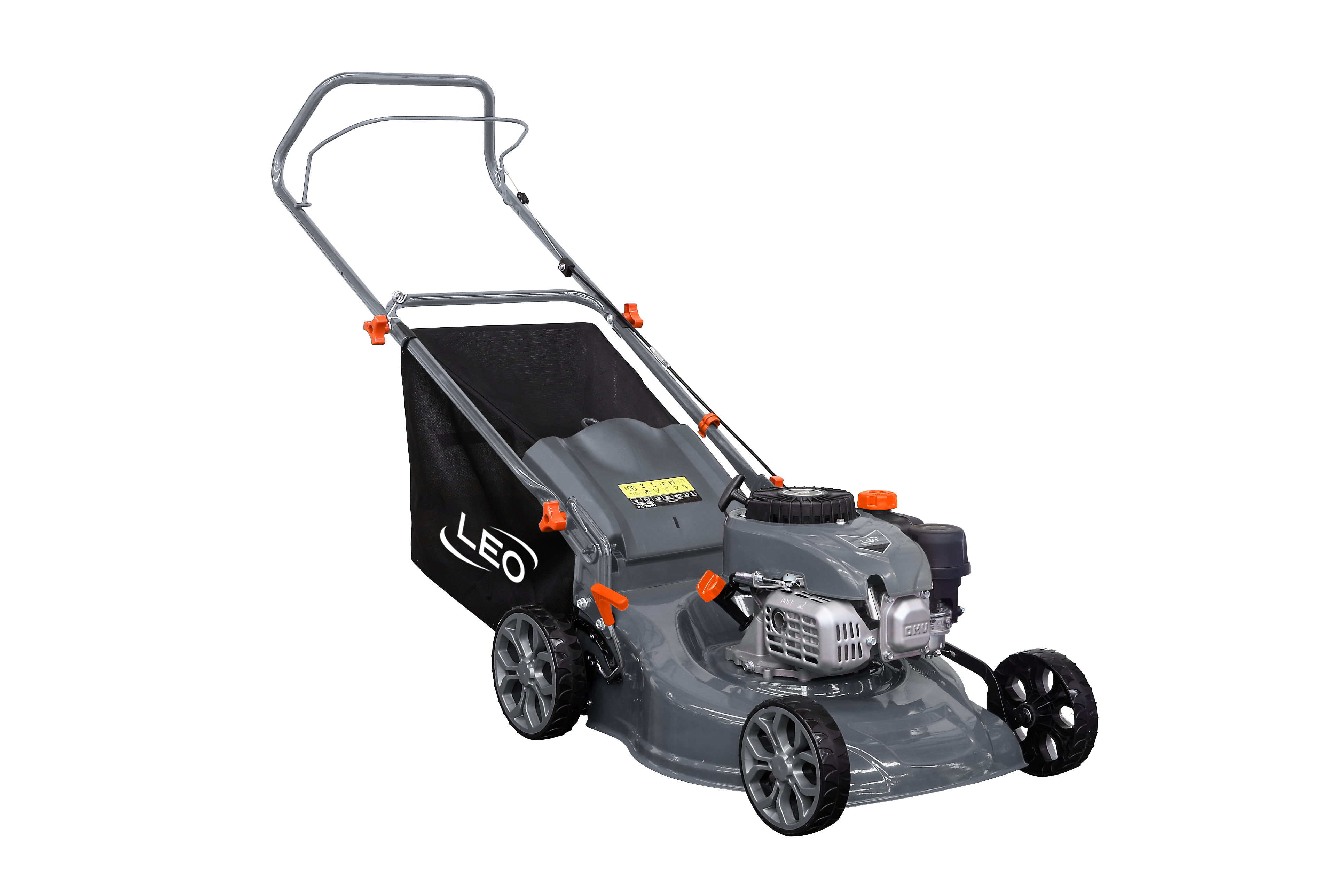 Engine capacity, blade load, and maintenance condition work together during mowing.
How displacement changes cutting ability
Cutting ability is not simply about how fast a gasoline lawn mower travels. It is about whether the blade remains close to its intended speed while it is cutting, lifting, and discharging turf. More displacement can help a mower recover when it meets a dense patch. It may also make it less necessary to slow the walking pace or take a narrower pass.
Still, conditions matter. On short, dry turf cut regularly, a high-displacement gasoline lawn mower may offer capacity you rarely use. On a larger lawn with coarse turf, longer intervals between cuts, or a collection-heavy routine, extra engine reserve can be valuable. It is a practical margin, not a reason to ignore setup and maintenance.
- Small, frequently cut lawns: prioritize maneuverability, deck width, and ease of starting; extreme displacement is rarely the deciding factor.
- Dense or fast-growing turf: look for usable torque and a deck designed to clear clippings, then match the engine to the cutting width.
- Uneven or sloped ground: consider self-propelled drive, traction, safe operating limits, and operator control in addition to engine size.
- Large properties: assess fuel capacity, service intervals, deck coverage, and whether the gasoline lawn mower can maintain blade speed over longer sessions.
The fuel system can make a strong engine feel weak
Before attributing poor mower performance to low displacement, inspect the basics. A restricted air filter, aged fuel, contaminated carburetor passages, incorrect oil level, or a worn blade can make a capable gasoline lawn mower bog down. The fuel system deserves particular attention after seasonal storage because stale fuel and deposits can affect starting, throttle response, and steady operation.
Use the fuel and service procedure specified for the engine, keep the air intake clear, and follow the manual’s storage routine. If a mower slows unusually in turf it handled before, maintenance may be the more relevant question than cc. Also check that the deck is clean and the blade is properly maintained; improving cutting ability sometimes begins below the engine.
How to compare gasoline lawn mower engines fairly
A useful comparison places displacement in context. First, compare only engines intended for a similar class of gasoline lawn mower. Next, look for a published torque or output rating with its measurement condition. Then consider the deck width and the work you expect the mower to do. Finally, review the fuel system, maintenance access, and parts support available for the intended market.
| What to check | Why it matters |
|---|---|
| Displacement (cc) | Indicates engine size and possible torque reserve, but is not a direct power rating. |
| Rated torque or output | Shows a more useful comparison when the test standard and engine speed are disclosed. |
| Deck width and turf conditions | Define the blade load that the engine must carry in real mowing. |
| Fuel system and air filter access | Influence starting consistency and sustained mower performance over time. |
| Blade and deck condition | Directly affect cutting ability and the load placed on the engine. |
Choose capacity for the job, not the number alone
Engine displacement matters because it often supports torque under load, and torque helps a gasoline lawn mower maintain blade speed in demanding turf. But the right choice is a balanced one. A well-matched deck, clean fuel system, well-maintained blade, suitable drive system, and realistic mowing routine are just as important to mower performance.
When evaluating a gasoline lawn mower, ask whether its engine, deck, and maintenance requirements fit your lawn’s size, growth rate, terrain, and cutting schedule. That approach produces a more useful decision than choosing solely by the largest displacement figure.
Frequently asked questions
Does more displacement necessarily mean more engine power?
No. More displacement can provide greater torque potential, but the actual engine power of a gasoline lawn mower also depends on engine design and the conditions used to rate it. Compare published specifications as a complete set.
Can a fuel-system issue reduce mower performance?
Yes. Old fuel, restricted fuel flow, or carburetor deposits can affect starting and response under load. Follow the engine manual’s service and seasonal-storage guidance.
What improves cutting ability besides a larger engine?
A well-maintained blade, clean deck, correct cutting height, appropriate walking pace, and regular mowing all reduce load and help a gasoline lawn mower leave a cleaner finish.
 Hot News