
 EN
How Does Feeding System Design Affect Garden Shredder Efficiency?
A garden shredder is often judged by motor rating or a stated branch diameter, but the feeding system has just as much influence on the work rate a user actually experiences. As a garden-machinery technical consultant, I start with a practical question: can the operator present real garden waste to the cutting mechanism steadily, safely, and without repeated stops? The answer depends on the feed hopper, the way a machine supports self feeding, and how well those components suit the cutter.
For homeowners, grounds teams, and dealers, that distinction matters. A garden shredder may accept a branch at its headline limit once, yet feel slow when processing a pile of mixed pruning. Efficient work comes from a consistent flow of suitable material, not from forcing every piece through at the maximum stated size.
Efficiency begins before material reaches the cutter
In this equipment category, the feeder is not merely a safety funnel. It guides branches, stems, and garden waste toward the cutting zone at an angle the mechanism can grip. A well-designed feed hopper gives the operator room to place irregular material while limiting access to moving parts. Its opening, depth, wall shape, and transition into the cutter all affect whether a branch engages cleanly or needs repositioning.
A narrow, steep entry may keep a branch aligned with the cutter, which can help with straighter woody material. A wider feed hopper may make it easier to introduce forked pruning or a small bundle of twigs. Neither format is automatically right. The useful question is whether the feed hopper matches the waste stream: straight seasonal pruning, dense hedge cuttings, dry twig bundles, or mixed material from a full garden clear-out.
When the entry geometry presents material consistently, cutting efficiency usually improves because the cutter spends less time striking an unstable piece. If the operator must lift, twist, or repeatedly withdraw material, the stated capacity is not translating into productive throughput.
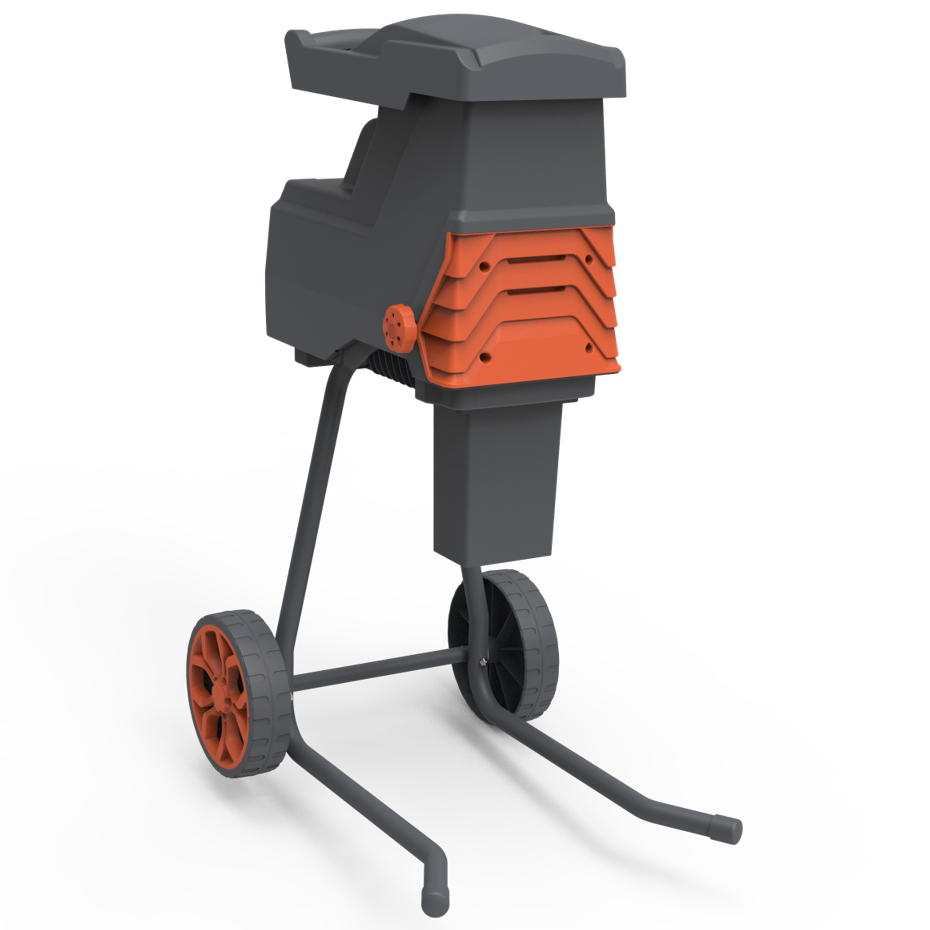
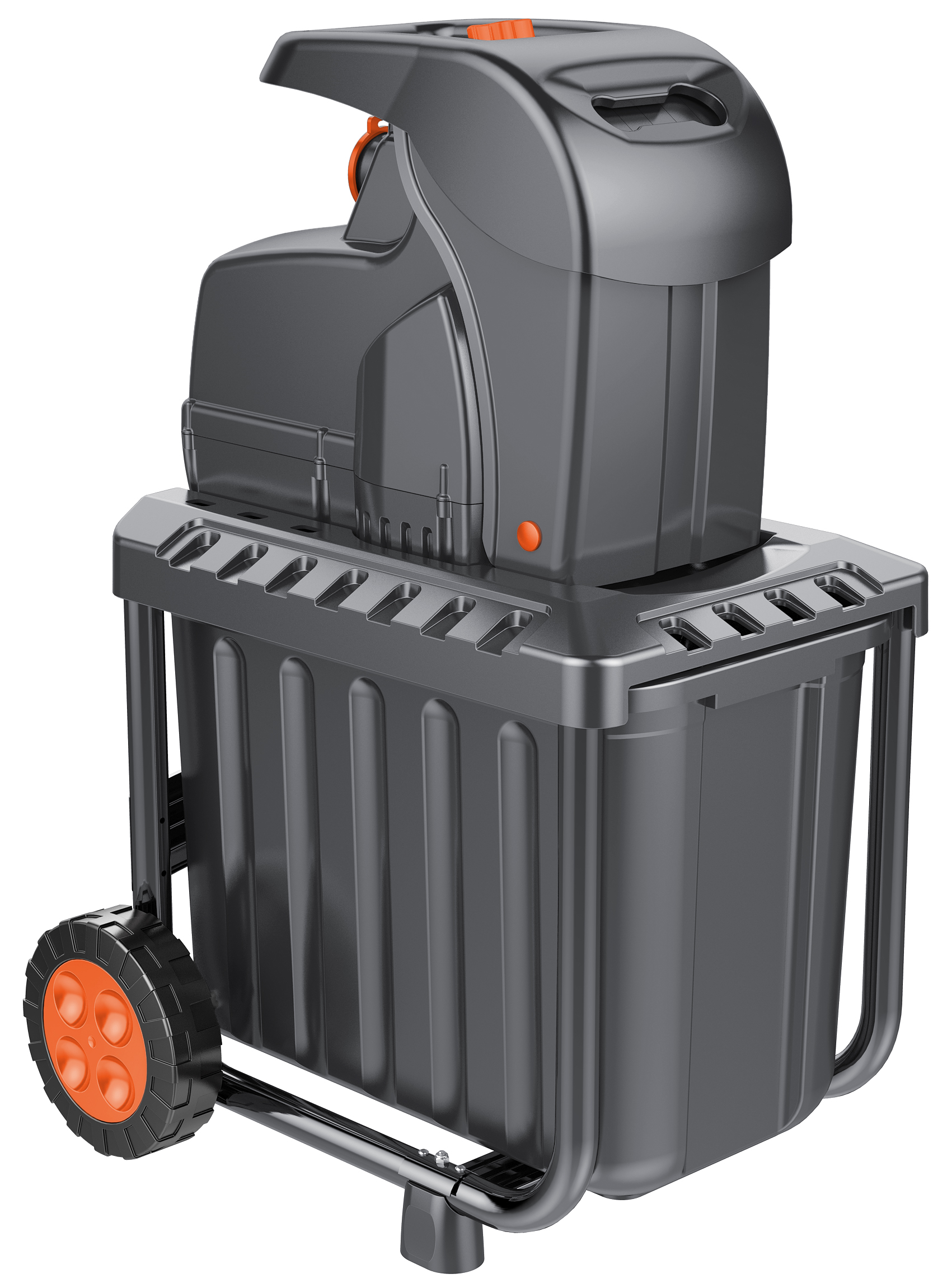 A wide, guided feed hopper helps present suitable branches consistently to the cutting system.
What self feeding changes in day-to-day use
Self feeding describes a design in which the cutting or pulling action draws compatible material inward after the operator has started it into the feed hopper. In ordinary use, self feeding can reduce the effort of holding a straight branch at the entrance and make the job feel less interrupted. It does not mean every item should be released immediately. Operators should follow the machine instructions, use the intended feed method, and keep hands clear of the opening.
Self feeding works most predictably when the branch profile, moisture level, and presentation suit the cutter. Fresh, flexible, leafy stems may bend instead of transferring force into the mechanism. Wet clumps can bridge at the hopper or wrap around internal parts. Very short offcuts can be difficult to control at the point where a garden shredder needs material to engage. That is why a useful feeding system combines hopper guidance, cutter grip, and a sensible operating sequence.
For a mixed pruning pile, it can help to sort material into small batches: woody branches first, then lighter dry stems, with softer material introduced in moderation. That routine gives the garden shredder time to clear each material type rather than creating a compacted mass at the feed hopper.
Branch capacity is a limit, not a throughput promise
Branch capacity normally identifies the largest diameter the machine is intended to process under suitable conditions. It is an important safety and selection figure, but it is not a forecast of how quickly a whole pile will disappear. A branch near the capacity limit can require careful alignment, slower engagement, and more cutting energy than several smaller branches. Repeatedly feeding oversize or heavily forked material can reduce cutting efficiency and increase the likelihood of a pause for clearing.
Compare branch capacity with the typical, not exceptional, material in the garden. If most pruning is modest and straight, a feeder that grips those pieces consistently may deliver a better working experience than a larger-rated model whose hopper is awkward for everyday bundles. For a garden shredder used after hedge trimming, hopper access for tangled, thinner stems may matter more than the maximum branch diameter.
How the feed hopper and cutter must work together
The feed hopper can only guide material; the cutting mechanism determines how that material is reduced. Impact-style systems, roller systems, and other cutter arrangements respond differently to woody branches, leafy waste, and fibrous stems. The machine performs more smoothly when its feed path keeps the material in the zone where its specific cutter can bite or compress effectively.
It is more useful to assess the whole feed path than to rely on one headline figure. The feed hopper should let the user approach the machine with stable posture. The transition should not create an obvious shelf where damp material collects. The cutting path should suit the intended material range, and any reverse or clearing function should be used as directed when a blockage develops. Together, these details shape cutting efficiency in ways a specification sheet may not show.
Practical ways to protect cutting efficiency
- Prepare branches before feeding. Remove soil, stones, wire, and other contaminants. Trim awkward side branches when the equipment instructions allow it.
- Feed at a measured pace. Let the garden shredder take one suitable piece before adding another rather than packing the feed hopper.
- Separate difficult material. Wet leaves, long fibrous stems, and very soft green waste may need a different feed rhythm or a machine designed for that material.
- Respect branch capacity. Treat it as an upper operating boundary, not the preferred size for every pass.
- Maintain the cutting components. A dull or worn cutting surface can make a garden shredder pull less consistently and leave coarser output.
Questions buyers should ask about a garden shredder
Before selecting a garden shredder, ask what material will enter the machine most often and how the operator will feed it. Is the feed hopper broad enough for typical pruning? Does the design support controlled self feeding for compatible branches? What branch capacity is stated, and is it relevant to the usual garden workload? Is the cutter intended for woody material, mixed waste, or a narrower use case? These questions connect the specification to real work.
For distributors and private-label buyers, the same reasoning leads to clearer product communication. Explain the intended material types, the rated branch capacity, and the feeding procedure instead of implying that one garden shredder handles every type of waste equally. That creates more realistic expectations around cutting efficiency and reduces the chance that customers force unsuitable material through the feed hopper.
Conclusion
Feeding-system design directly affects how efficiently a garden shredder turns garden waste into manageable output. A useful feed hopper guides material safely, self feeding reduces effort only when material and cutter are compatible, and branch capacity should be interpreted as a boundary rather than a throughput claim. Match the feed path, cutter type, and everyday waste stream, and the garden shredder is more likely to work with a steady, controlled rhythm.
 Hot News