
 EN
What Safety Features Should Garden Shredders Include?
A garden shredder is built to reduce pruning waste, leaves, and small garden debris, but the cutting system and feed area demand more thought than a power rating alone. From a garden-machinery technical perspective, the useful question is not simply whether a garden shredder turns on and chips material. It is whether the machine gives the user practical ways to stop, isolate, and manage it when material behaves unpredictably.
That distinction matters during autumn clearing. A wet clump, a forked branch, or a rushed attempt to push material through can change a routine job into a jam or a kickback moment. Good shredder safety starts with machine design, then depends on correct setup and use. The checklist below helps buyers compare a garden shredder without assuming that every model carries the same controls.
1. A clearly marked safety switch for deliberate start and stop
Every garden shredder should have an easy-to-reach safety switch or main on/off control that is visible from the normal operating position. A recessed or protected control can reduce accidental activation during handling, while a clear off position makes it easier to confirm that the machine is not ready to run.
Look for a garden shredder whose controls can be operated without reaching across the hopper. If the machine is electric, a switch that remains off after a power interruption is valuable because the operator should make a conscious decision before restarting. The exact arrangement varies by model, so inspect the manual and control layout rather than relying on a product photo.
2. An emergency stop that is easy to find
An emergency stop is a rapid way to halt operation when something unexpected occurs. On a household garden shredder, it may be a prominent stop button, an integrated stop position on the main switch, or another clearly labelled control. Larger or professional equipment may use a dedicated mushroom-style button; that does not mean every compact garden shredder will have the same hardware.
What matters is accessibility. Can a user reach the stopping control while standing safely beside the feed chute? Can another person identify it quickly? A garden shredder with an obvious emergency stop arrangement gives the operator a more direct response path if clothing, a tool, or unsuitable material approaches the feed area.
3. Hopper guarding and a feed design that keeps hands clear
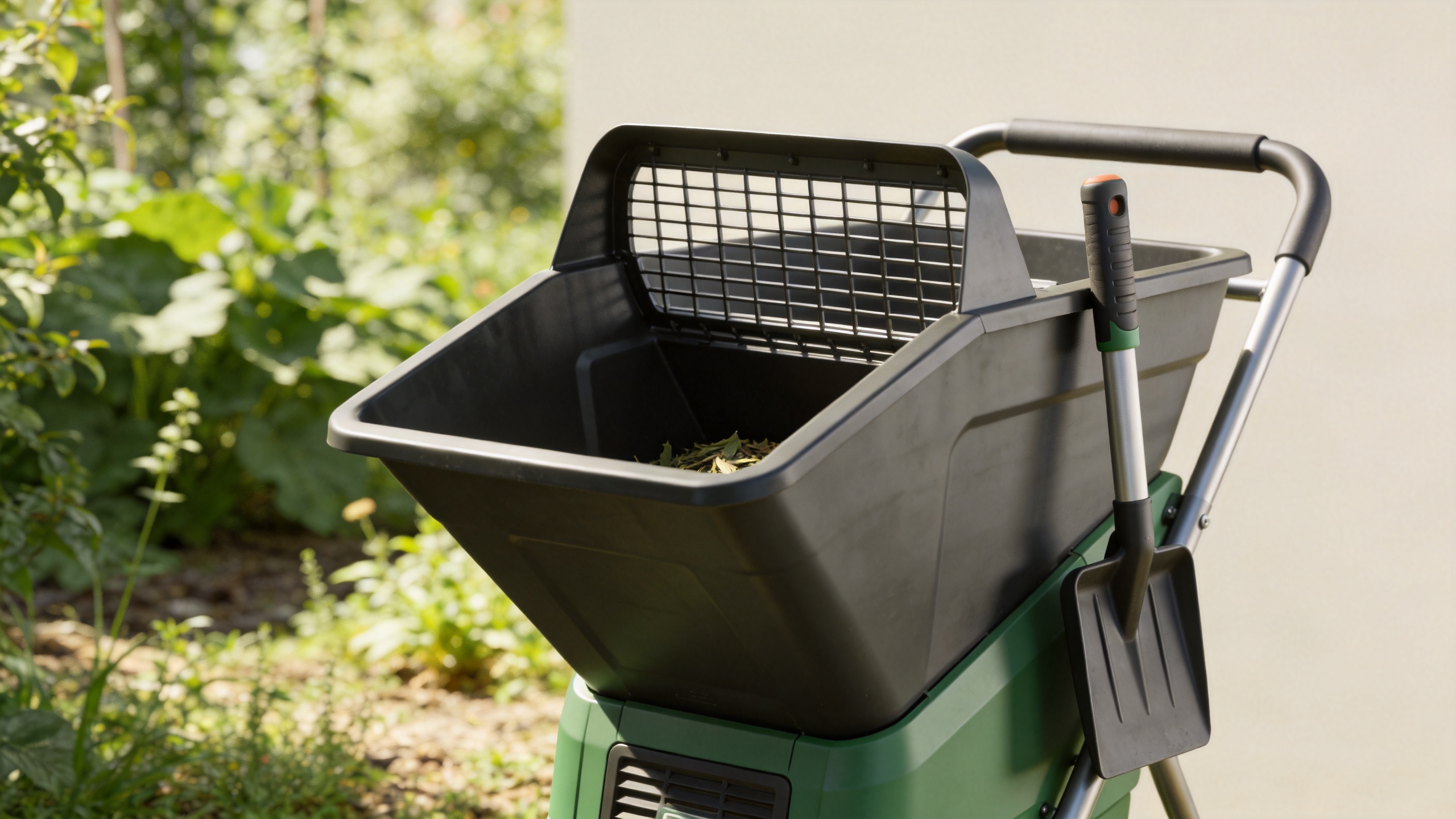
The hopper is a primary safety feature, not just a funnel. A well-designed garden shredder uses a deep feed chute, internal baffles, or shaped openings to keep hands and arms clear of the cutting mechanism. It should guide material toward the cutting area without inviting the user to reach inside.
Compare the opening with the type of waste you actually produce. A garden shredder intended for leafy material may behave differently from one designed around woody branches. Use a supplied pusher, where applicable, rather than hands to move material through a hopper. A supplied pusher, where applicable, is the safer tool for the job. This is also where clear warning labels and visible operating instructions help reinforce shredder safety at the moment it matters.
4. A lid, hopper, or collection-box interlock
An interlock is a control that stops a garden shredder from operating, or interrupts operation, when a guard, hopper, or collection box is not correctly fitted. It is one of the most useful features to ask about because it connects protection to the machine’s operating state.
For example, if a collection container must be in place before the garden shredder can run, the user has an added reminder not to expose the discharge area. Do not bypass interlocks; they are part of the intended protective system. During a product check, confirm how the safety switch and interlock behave after the hopper is opened, the box is removed, or the unit is assembled again.
5. Overload protection for difficult material
Overload protection helps a garden shredder respond when the motor is working beyond its intended load. It can reduce the chance of continued operation during a severe jam or excessive demand, although it is not a substitute for selecting material within the manufacturer’s stated capacity.
Ask how overload protection responds: does the machine stop, trip a reset, or signal the user to clear material after isolation? The answer should be in the manual. Do not treat overload protection as permission to feed oversized, wet, fibrous, or bundled waste. A garden shredder works more predictably when branches are within the declared diameter and material is fed steadily rather than packed into the hopper.
6. A reverse function that supports jam clearing
Some electric garden shredder designs include a reverse function. When available, it can help release material caught in the mechanism without asking the user to reach toward the cutting zone. That is a practical feature for shredder safety, especially where mixed garden waste can bridge or bind.
Still, reverse does not make every blockage safe to clear immediately. Switch the garden shredder off, isolate it from power, and follow the manufacturer’s instructions before inspecting a jam. If the machine has a reset function after overload protection activates, use that sequence only after the cause has been addressed. Gloves may protect against rough branches, but they do not justify putting hands into a feed opening.
7. Stable support, controlled discharge, and cable management
A stable base reduces movement while a garden shredder is processing uneven loads. Check that the frame sits firmly on level ground, wheels lock or remain controlled during operation, and the collection area is not likely to shift. A unit that rocks is harder to manage and can make the safety switch less accessible.
For corded equipment, consider where the cable will run before you start. Keep it behind the operator and clear of the feed and discharge zones. For all types of garden shredder, allow space around the machine so the operator can move back rather than being crowded by bins, branches, or a wall.
A buyer checklist for garden shredder safety
- Can you identify the main safety switch and stop function without leaning over the hopper?
- Does the garden shredder have guarding that keeps hands clear from the cutting system?
- Is there an interlock for the hopper, lid, or collection box?
- How does overload protection respond, and how is the unit reset?
- Is a reverse function available for jams, and does the manual explain its safe use?
- Are the stated material type and branch-diameter limits realistic for your garden waste?
- Can the garden shredder stand securely where you plan to operate it?
Safety features work with safe habits
A thoughtfully designed garden shredder can support safer work, but no feature removes the need for attention. Wear eye protection, keep bystanders outside the operating area, and stop the garden shredder before adjustments or cleaning. Check guards, the safety switch, and the power lead before each session. If a control, interlock, or emergency stop does not operate as described, do not use the machine until it has been checked by a qualified service professional.
For buyers, the practical takeaway is simple: prioritize controls that make a garden shredder easier to stop, isolate, and clear according to its instructions. A visible emergency stop, functional interlocks, effective hopper guarding, overload protection, and a considered reverse function create a stronger foundation for shredder safety than motor power alone.

 Hot News