
 EN
How Does a Garden Mulcher Improve Soil Quality Naturally?
A garden mulcher does more than make pruning debris easier to handle. When it reduces dry leaves, small twigs, and plant trimmings into smaller pieces, it creates a useful feedstock for a soil-covering mulch layer or a garden compost pile. The soil benefit is gradual: the processed plant material helps return organic matter to the garden instead of treating it as waste.
One practical distinction matters. A mulching machine produces feedstock; it does not turn every branch into finished compost on the spot. How that material is placed, how coarse it is, and whether it is balanced with other inputs determine the result. Used thoughtfully, a garden mulcher can support healthier soil structure, steadier moisture, and an active soil-food web.
Why smaller plant material changes the soil process
Whole branches and thick stems take up space, trap air awkwardly, and break down slowly. A garden mulcher cuts or crushes them into smaller particles with more exposed surface area. That gives fungi, bacteria, insects, and other decomposers more places to work. Over time, the material softens and becomes part of the organic matter cycle in the bed or compost system.
Organic matter is central to soil health because it helps mineral particles form stable aggregates. Those aggregates create pores for air and water, which matters for root growth. As organic mulch decomposes, it can also support soil microbes and improve the soil’s ability to hold moisture and nutrients. This is not a quick substitute for a soil test or a fertilizer plan, but it is a useful long-term habit for many gardens.
Three natural ways mulched material can help
1. It protects the soil surface
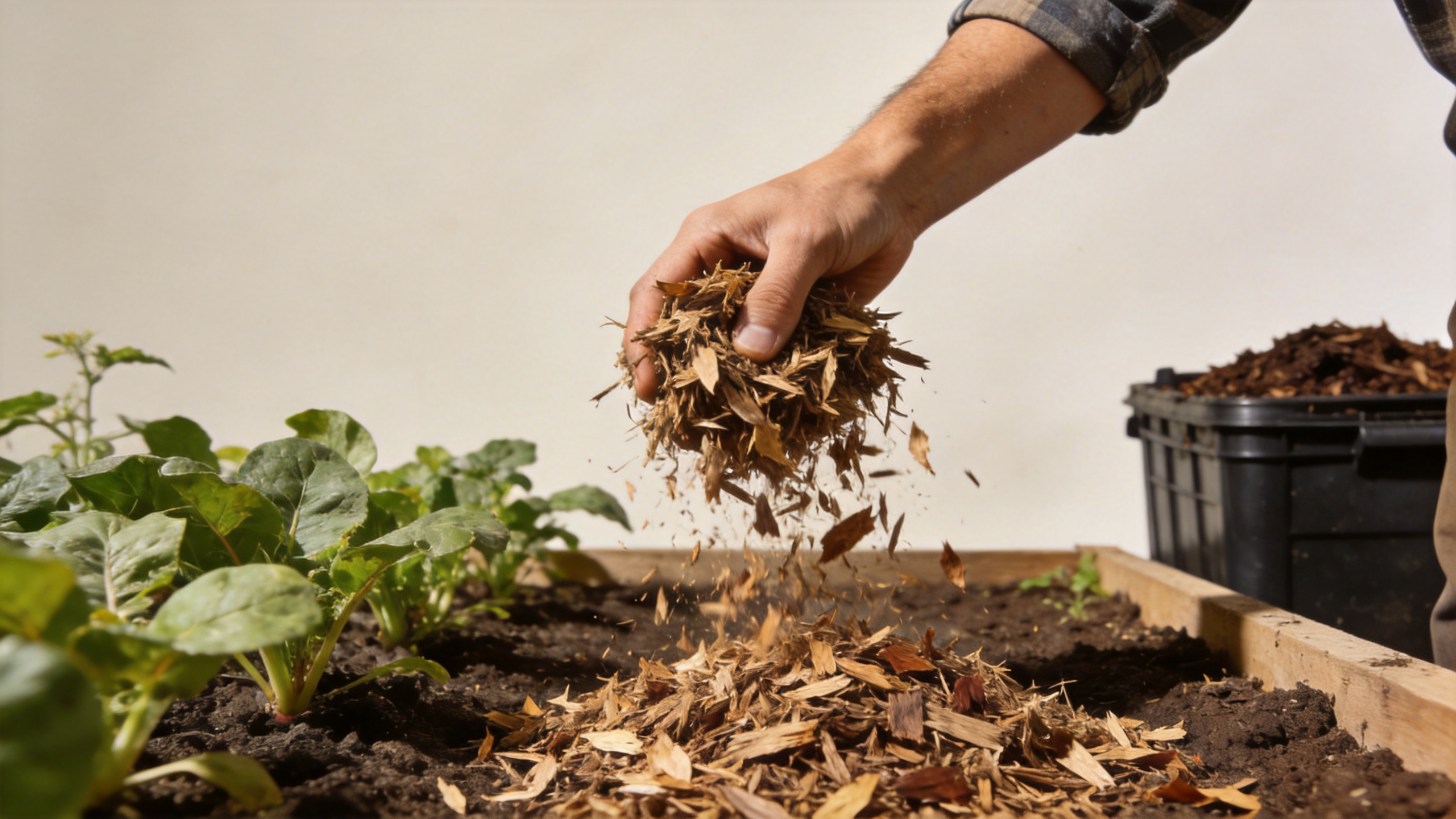
A loose layer of chipped leaves and small woody material shades bare soil. That can reduce rapid drying after watering, soften temperature swings near the surface, and lessen the force of rain on exposed beds. Less bare ground also means fewer opportunities for wind and runoff to carry fine soil off the bed. Keep the layer light enough for water to enter rather than packing it into a dense mat.
2. It feeds the organic-matter cycle
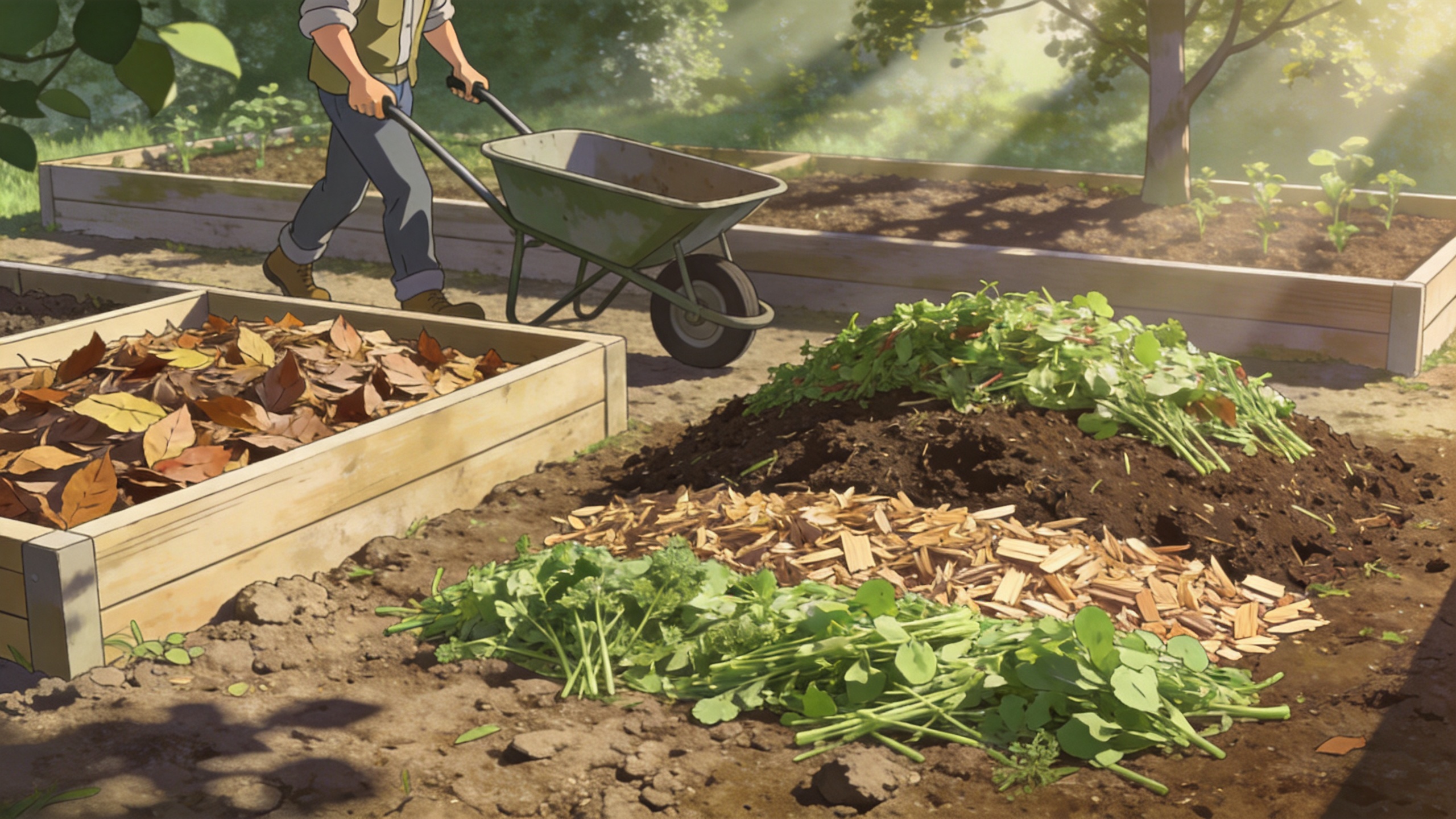
When mulch breaks down, it contributes carbon-rich material to the soil. The process is slowest with coarse wood chips and faster with shredded leaves or softer green trimmings. That difference is useful in practice. Coarse pieces can remain as a protective surface cover, while finer material can be mixed into a garden compost pile with nitrogen-rich green inputs such as fresh fresh green clippings or vegetable scraps. A mix of browns and green inputs is generally easier to manage than wood chips alone.
3. It creates a better home for soil life
Earthworms, fungi, and many beneficial organisms work most consistently where the surface is buffered from heat and moisture extremes. Mulch cannot solve compacted or poorly drained soil on its own, yet it can make the upper soil zone more hospitable while roots and organisms gradually improve structure. For that reason, modest seasonal applications can be more useful than a single heavy layer.
Using a garden mulcher for mulch versus compost
The same garden mulcher output can serve two different jobs. For pathways, shrub borders, and around established trees, coarser chips can function as a surface mulch. For a compost pile, a finer mix of leaves and thin prunings provides a brown, carbon-rich ingredient. Choose between them based on the next task in the garden.
| Use | Suitable material | Practical approach |
|---|---|---|
| Surface mulch | Dry leaves, fine twigs, and well-chipped woody trimmings | Spread an even layer on soil, leaving a clear gap around stems and trunks. |
| Garden compost | Shredded leaves and small chips mixed with green material | Layer browns with moist green inputs; turn or aerate when the pile becomes dense. |
| Soil protection between crops | Leaf-rich material without weed seeds or diseased plants | Cover bare beds, then move or incorporate only well-decomposed material when planting. |
For vegetable beds, it is often wiser to leave fresh woody chips on the surface rather than digging a large amount into the root zone. As high-carbon material decomposes below ground, microbes may temporarily use available nitrogen. Surface placement keeps the moisture and weed-control benefits while allowing decomposition to proceed more gradually.
Choose material your mulching machine can handle
A mulching machine should be matched to the material stream, not chosen only for motor power. Soft leaves and small green trimmings need different handling from dry, woody branches. Check the manufacturer’s stated feed capacity and follow the safety instructions for your specific equipment. Do not force oversized, wet, fibrous, or contaminated material through the machine; jams can reduce output quality and create unnecessary wear.
Good feedstock is clean garden material: leaves, thin prunings, and untreated plant debris. Avoid invasive weeds carrying seed, diseased plant material, pet waste, and painted or treated wood. If you are unsure whether a plant problem can survive in a home compost system, dispose of it according to local guidance rather than spreading it back into the bed.
A simple routine for better soil health
- Sort first. Separate leafy material from thick branches, diseased plants, and non-organic debris.
- Process in dry, manageable batches. Smaller, drier loads are generally easier to handle and produce a more even mulch texture.
- Assign the output. Put coarser pieces on the soil surface and reserve finer leaf-rich material for garden compost.
- Apply with space around plants. Keep mulch clear of crowns, trunks, and woody stems so the covered area does not stay excessively damp.
- Observe before adding more. Check moisture, earthworm activity, and whether the layer is matting or shifting in wind; adjust thickness and particle size next time.
What a garden mulcher cannot fix alone
A garden mulcher supports a sound soil-care routine, but it cannot correct severe compaction, drainage problems, nutrient deficiencies, or unsuitable soil pH by itself. Those issues may call for a soil test, better irrigation practice, drainage work, or crop-specific amendments. Treat processed garden debris as one part of a wider routine that also includes plant diversity, careful watering, and minimal disturbance.
For homeowners and garden-maintenance teams, the cycle is practical: trimmings become a resource, the soil stays covered longer, and the garden gradually gains more organic matter. When the material is clean, appropriately sized, and used in the right place, a garden mulcher becomes a simple tool for turning routine cleanup into ongoing soil care.
Frequently asked questions
Can I put fresh mulch directly on soil?
Yes, clean shredded leaves and chipped plant material can be used as a surface layer. Keep it clear of plant crowns and trunks, and avoid mixing a large amount of fresh woody material deeply into planting soil.
Is mulch the same as garden compost?
No. Mulch mainly covers the soil surface, while garden compost is decomposed organic material used to improve soil. Mulched material can become part of a compost process, but it needs time and usually benefits from a mix of carbon-rich and nitrogen-rich ingredients.
How often should I add mulched material?
Check the bed seasonally. Add more when the existing layer has thinned substantially, but base the amount on drainage, plant type, and how quickly the material is decomposing in your garden.

 Hot News