
 EN
EN
How Does a Gasoline Lawn Mower Engine Work During Grass Cutting?
A gasoline lawn mower turns stored fuel into the rotation that cuts grass, but the engine does more than simply spin a blade. It has to keep running as the blade meets thin turf, damp clippings, and occasional thicker patches. Understanding that process makes routine operating choices—fuel, throttle setting, blade care, and cleaning—much easier to judge.
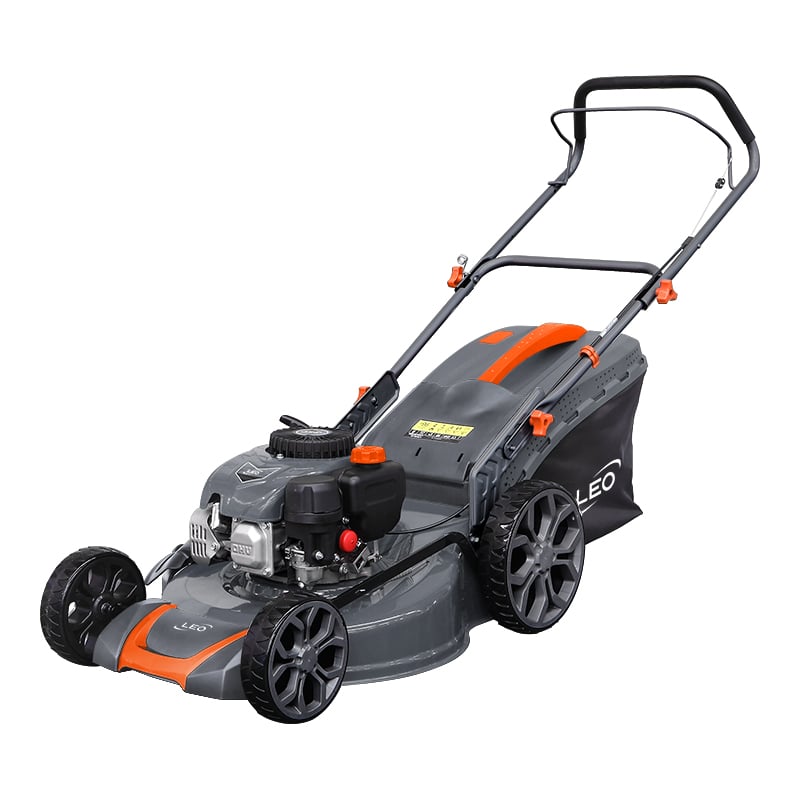
From a garden-machinery technical perspective, the useful question is not only how a gasoline lawn mower starts. It is how the engine system responds when the work changes. On most walk-behind models, a compact single-cylinder four-stroke engine supplies the torque that keeps the crankshaft and blade moving.
Start with fuel, air, and a spark
Before a gasoline lawn mower can cut, its fuel system delivers gasoline from the tank to the carburetor or another metering arrangement. There, fuel combines with incoming air in a proportion the engine can burn. The piston moving downward on the intake stroke creates the pressure difference that draws that mixture into the cylinder through an intake valve.
On the next upward movement, the piston compresses the mixture. Near the top of that stroke, the ignition system sends a high-voltage spark to the spark plug. Combustion pushes the piston down on the power stroke. This is the stroke that adds useful energy to the crankshaft. The piston then comes back up to push exhaust gases out, and the cycle repeats. A gasoline lawn mower typically repeats these four strokes very quickly while you walk behind it.
The flywheel is important here. It stores rotational energy from the power stroke and helps carry the engine through intake, compression, and exhaust. It also helps the ignition system do its job. If you are trying to picture the engine system during mowing, think of combustion events feeding a rotating reserve of energy rather than one isolated push per blade revolution.
How the engine reaches the cutting blade
The crankshaft is the link between the piston and the mowing hardware. On many gasoline lawn mower designs, the blade mounts directly beneath the vertical crankshaft; on others, belts or a deck drive transfer power. As the crankshaft turns, the blade creates the cutting action and moves air through the deck. That airflow can lift grass toward the blade, discharge clippings, or carry them toward a collection bag, depending on the deck arrangement.
Cut quality is not determined by engine size alone. A sharp, balanced blade and an unclogged deck let a gasoline lawn mower use its available power effectively. A dull blade tears grass instead of slicing it cleanly, while a packed deck restricts airflow and adds drag. That is why mower performance can fall even when the engine still sounds normal.
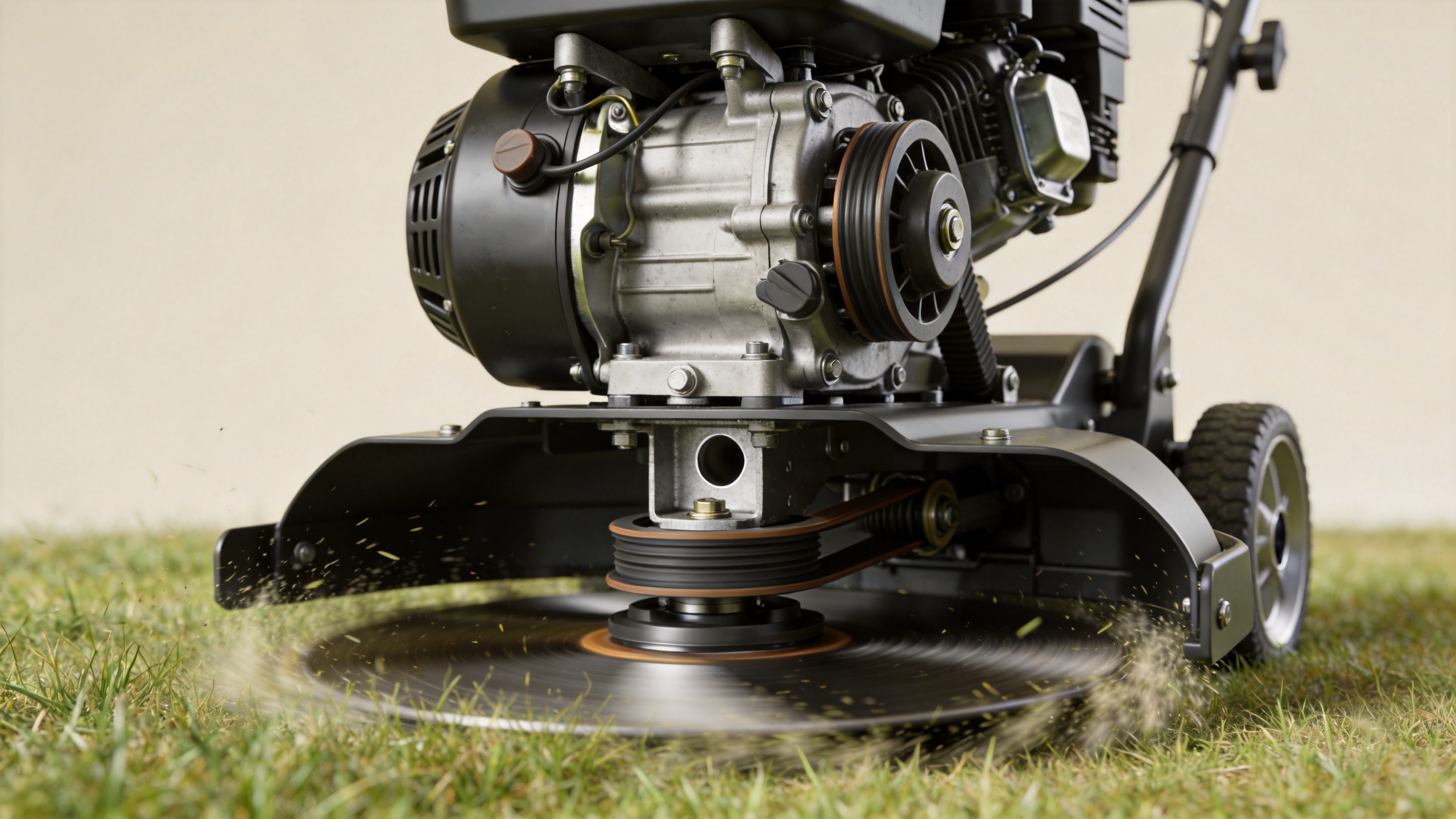
What changes when the mower enters thicker grass?
Light, dry grass presents a modest load. Taller, wetter, or denser grass makes the blade work harder and slows the crankshaft if the engine system does not respond. Most small engines use a governor: a mechanical or air-vane control that senses a change in engine speed and adjusts the throttle. When load increases, the governor opens the throttle so the engine can admit more air-fuel mixture and make more power. When the load eases, it reduces that opening again.
This does not mean a gasoline lawn mower has unlimited capacity. If the grass is far too tall, wet, or matted, the blade can lose speed faster than the governor can recover it. The practical response is to slow your walking pace, raise the cutting height for a first pass, or mow in smaller sections. Those steps reduce the immediate blade load and support steadier mower performance without pretending that more throttle alone solves every condition.
Fuel efficiency is really a system question
Fuel efficiency during cutting depends on several connected parts. A clean air filter allows enough air into the mixture. Fresh fuel supports predictable combustion. The correct oil level reduces internal friction and protects moving parts. A clean deck and sharp blade reduce the power needed at the blade. In other words, fuel efficiency is not just about what is in the tank; it reflects the condition of the complete gasoline lawn mower.
There is a useful boundary condition here: a gasoline lawn mower working on a flat, regularly maintained lawn generally faces a steadier load than one clearing long, damp growth. The second job naturally consumes more fuel per pass because the engine must produce more work. Comparing fuel use without comparing grass conditions can lead to a misleading conclusion.
Why operating habits affect mower performance
- Use fresh, appropriate fuel: stale fuel can make starting and running less consistent.
- Check the air filter: restricted airflow can upset the air-fuel mixture and limit response under load.
- Keep the blade sharp and balanced: clean cutting usually requires less wasted energy than tearing grass.
- Clear accumulated clippings: switch the engine off and follow the manual before cleaning the underside of the deck.
- Adjust to conditions: reduce travel speed or use a higher first cut when growth is heavy.
For any gasoline lawn mower, these basics work together. The number I kept checking was engine displacement. In real use, though, blade condition, airflow, grass moisture, and the governor’s ability to maintain speed often tell you more about the result than one engine number does.
Where the broader power equipment setup matters
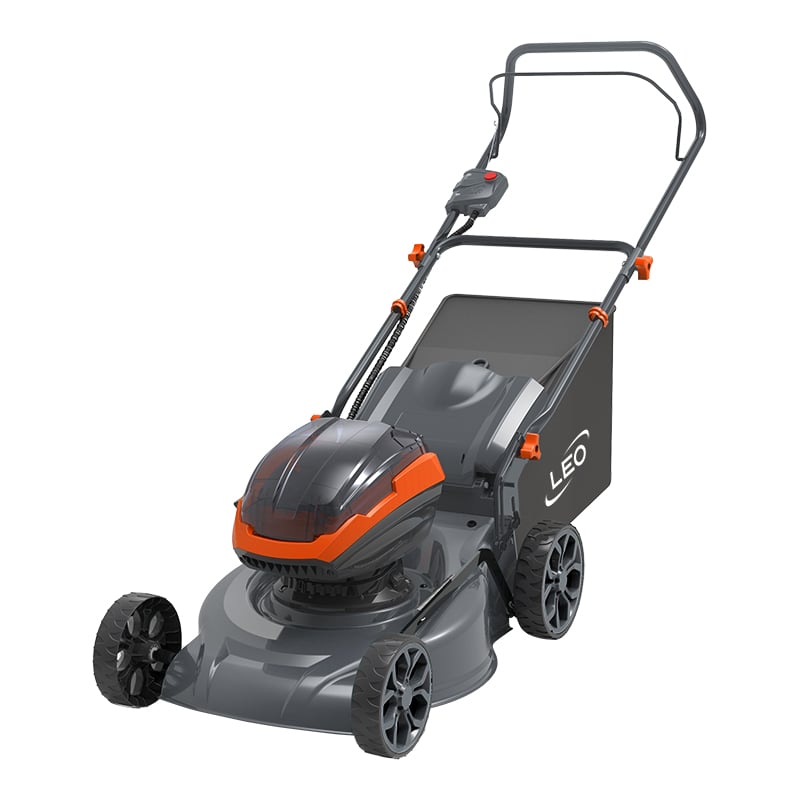
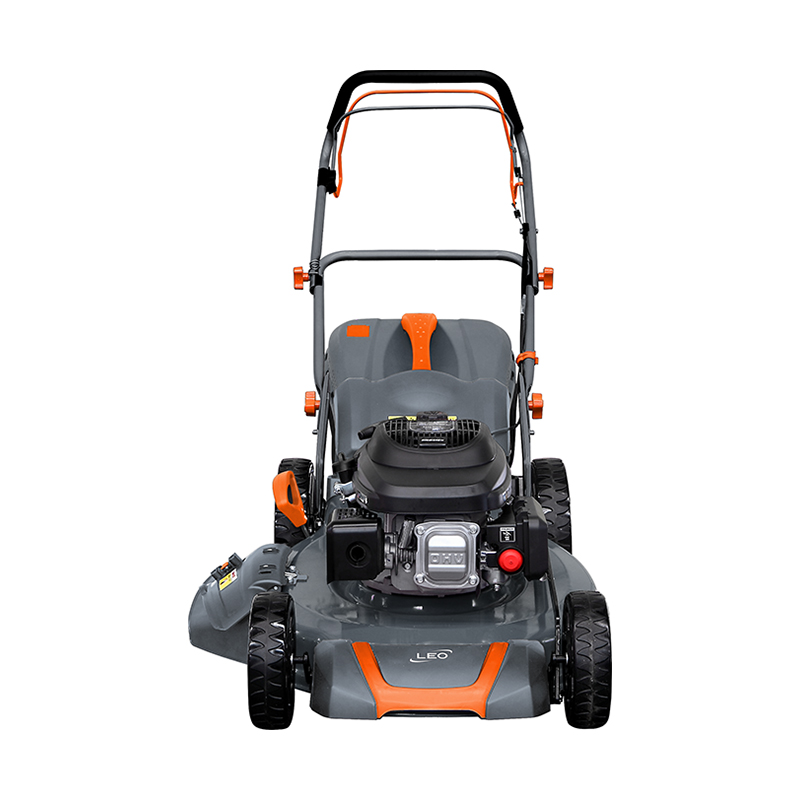
A lawn mower is part of a wider group of power equipment used around gardens, properties, and public green spaces. The right operating routine should match the workload. A small home lawn with frequent cuts may only need sensible maintenance. Larger or rougher areas may require a machine with a suitable deck, drive arrangement, and service plan. Zhejiang Leo Garden Machinery Co., Ltd. develops garden machinery including lawn mowers and ride-on mowers, so its product range reflects the practical difference between light garden work and more demanding mowing tasks.
Before every session, inspect the gasoline lawn mower for loose hardware, damaged guards, leaks, and a blade in need of service. Follow the specific product manual for fuel, oil, starting, and safety instructions. Do not reach beneath the deck while the engine can start, and allow hot components to cool before maintenance.
Bottom line
During grass cutting, a gasoline lawn mower draws in air and fuel, compresses the mixture, ignites it, and sends combustion force through the crankshaft to the blade. The flywheel smooths the cycle, while the governor helps the engine meet changing grass load. Keeping fuel, airflow, oil, blade condition, and deck cleanliness in order helps the engine system deliver consistent mower performance and sensible fuel efficiency.


 Hot News