
 EN
Cordless Lawn Mower vs Gasoline Lawn Mower: Which One Is Better for Modern Gardens?
Choosing between a cordless lawn mower and a gasoline mower is less about picking a universal winner than matching a machine to the work. A compact, regularly cut lawn with a nearby charging point places very different demands on equipment than a large, fast-growing garden with tall turf and a distant shed. As a garden-machinery technical consultant would put it: start with the job, then compare the power system.
A battery mower can make routine lawn care feel simpler, while a gasoline mower still suits certain heavy or uninterrupted workloads. The useful question is not “which technology is stronger?” but “what must this mower accomplish in one session?”
The short answer: match the mower to the garden
For many small-to-medium modern gardens, a cordless lawn mower is a practical choice because it starts simply, produces no exhaust at the point of use, and usually avoids fuel handling. It is particularly appealing where neighbours are close, storage is limited, and mowing happens often enough to keep lawn growth from becoming dense.
A gasoline mower can still be the more workable option for larger areas, rougher turf, infrequent cuts, or jobs where stopping to recharge would disrupt the day. That does not mean every petrol model is right for every large lawn; deck width, drive system, terrain, and service access matter too. In other words, the power source is only one part of a mower comparison.
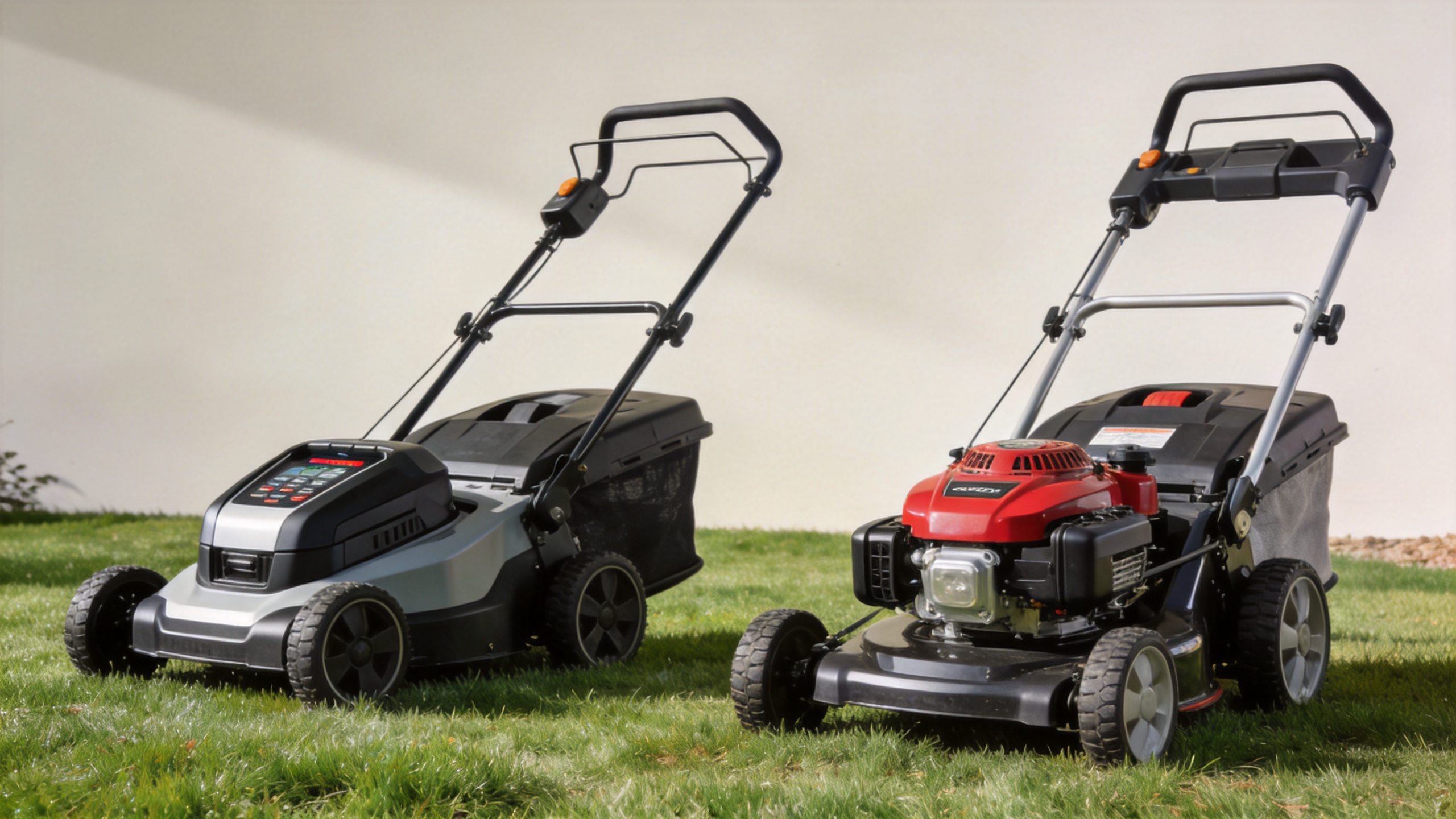
Runtime versus uninterrupted working time
The defining planning issue for a cordless lawn mower is usable runtime. Battery capacity, turf height, moisture, cutting width, terrain, blade condition, and whether the mower is self-propelled can all affect how much ground one charge covers. A battery mower that is comfortable on a tidy lawn may need a second pack or a recharge break when turf is longer or the garden has slopes.
Before buying, estimate the area you normally mow and consider your least convenient mowing day, not just an easy summer trim. Ask whether the stated battery setup is supplied with the machine, how long charging takes, and whether a spare battery is available in the same platform. For a cordless lawn mower, a second compatible battery can be more useful than an impressive-looking voltage number.
Gasoline mowers trade that charging pause for a fuel refill, so they can suit long sessions where access to electricity is inconvenient. They also add tasks: checking fuel, oil, filters, and seasonal condition. The right comparison is therefore planned runtime against planned upkeep, not runtime against zero effort.
Power, turf conditions, and cut quality
An electric mower can give a clean result when its deck, blade, battery condition, and cutting height suit the lawn. Still, it is wise not to assume that an electric mower automatically handles every neglected patch in the same way. Tall, wet, or dense turf raises the load on any walk-behind mower. In those conditions, reducing the cutting width per pass, raising the deck for an initial cut, and emptying the collection bag before it becomes heavy may help the operator work more steadily.
A cordless lawn mower is often most convincing when mowing is a regular habit. If turf is left until it is long and damp, the question changes from convenience to workload tolerance. A gasoline mower may be appropriate for that pattern, but model-specific engine output and deck design still need checking against the owner’s manual and intended use.
Do not overlook the blade. A dull blade can tear rather than cut turf cleanly regardless of whether the mower is battery powered or gasoline powered. Routine blade inspection and correct servicing are part of good lawn care for both systems.
Noise, starting, and day-to-day handling
Many buyers consider a cordless lawn mower because it can reduce the engine sound associated with gasoline equipment. Actual perceived noise still depends on the model, blade, deck, ground surface, and cutting conditions, so local rules and the product’s published sound information remain important. For early-evening use near homes, quieter operation can be a meaningful benefit, but it should not replace hearing protection where the manual calls for it.
Starting procedure is another practical difference. A battery mower typically uses a safety key or battery connection and a start control, whereas gasoline equipment may require fuel management, a pull start or other engine-start routine, and periodic checks. For users who want to mow in short windows of time, the simpler start sequence of a cordless lawn mower can remove friction from the routine.
Weight and drive assistance deserve equal attention. A light push electric mower can be easy to turn around flower beds, yet self-propelled designs can be more comfortable on larger or uneven gardens. The same principle applies to gasoline models: a wider deck may reduce passes in an open space but can be awkward around trees, borders, and narrow access points.
Ownership tasks across a season
A cordless lawn mower shifts maintenance toward cleaning the deck, inspecting the blade, caring for batteries, and storing packs as their manufacturer specifies. Keep battery packs dry and in a temperature-stable location during the off-season; the mower manual should guide the exact storage procedure and charge level. Avoid treating battery care as an afterthought, because the battery is central to the system’s usable working time.
Gasoline mower ownership commonly includes fuel management, oil checks or changes where applicable, air-filter care, spark-plug servicing, and winter preparation. That maintenance is manageable for users who are comfortable with it or have local service support, but it should be part of the purchase decision rather than a surprise after the first season.
Cost: compare the system, not only the mower
When comparing prices, list the whole system. For a cordless lawn mower, that means the mower, batteries, charger, possible spare pack, and future replacement-battery availability. For gasoline equipment, include fuel, oil, routine service parts, and the time or cost of maintenance. Neither route is automatically lower-cost in every garden.
It also helps to ask a dealer or supplier about parts availability, battery-platform continuity, warranty terms, and service routes before choosing. Those answers can matter more over several seasons than a small difference in the initial ticket price.
A practical decision checklist
- Choose a cordless lawn mower if you mow a small or medium garden regularly, can charge and store batteries correctly, value simpler starts, and want to limit fuel handling.
- Consider a gasoline mower if the area is large, turf is often tall or rough, sessions must run without charging pauses, or charging access is limited.
- Check terrain, passage width, storage space, collection or mulching needs, drive assistance, and local servicing before deciding.
- For either type, clear debris first, wear suitable footwear and eye protection, mow only in conditions appropriate for the manual and site, and disconnect the power source before servicing as the manual directs.
Which choice makes sense for your lawn?
A cordless lawn mower is not simply a smaller substitute for gasoline equipment, and gasoline is not automatically the answer to every demanding lawn. Modern gardens benefit from a fit-for-purpose decision: choose battery power when its runtime and charging plan match your normal routine; choose gasoline power when uninterrupted capacity and heavier conditions are the priority. Review the manufacturer’s specifications for the exact model, then make the choice around your garden rather than the headline technology.
 Hot News