
 EN
How to Improve Fuel Efficiency of Gasoline Lawn Mowers?
A gasoline lawn mower earns its keep when it starts cleanly, holds a steady cut, and does not waste fuel while doing ordinary work. Fuel use changes with turf height, blade condition, deck cleanliness, terrain, and the way the operator moves across the lawn. Fuel saving usually comes from clearing several small sources of drag and inefficient running, not from one dramatic adjustment.
This guide focuses on sensible operation and mower maintenance for walk-behind and ride-on equipment. It is not a substitute for the engine manual: oil grade, fuel specification, filter type, and service intervals must match the specific gasoline lawn mower and engine installed on it.
Start with the conditions that make a mower work harder
Engine efficiency falls when a mower is asked to take on more turf than the deck and blade can clear smoothly. Very tall, wet, or dense turf increases resistance at the blade and can make an otherwise healthy gasoline lawn mower sound laboured. If the lawn has grown beyond its normal cutting height, raise the deck for the first pass, then lower it for a later pass if the turf needs further trimming. That gives the machine a more manageable load and can leave a tidier finish.
Choose a dry mowing window where practical. Damp clippings can cling under the deck, block discharge paths, and force the engine to work against accumulated material. Do not rush through a heavy patch simply to maintain a fast route. A moderate, even travel speed lets the blade process clippings rather than repeatedly striking a packed mass. On self-propelled equipment, use only as much ground speed as the turf condition allows.
For slopes, rough ground, or long turf, the right operation is usually slower and more deliberate. Safety takes priority over fuel saving. Follow the machine manual for slope limits, direction of travel, footwear, debris checks, and shut-down procedures.
Keep the cutting system ready and clear
A dull blade tears turf instead of cutting it cleanly. It can also increase the load carried by a gasoline lawn mower, especially when the lawn is thick. Inspect the blade only after the engine is off, the spark-plug lead is disconnected where the manual directs, and all moving parts have stopped. Look for damage, imbalance, or a rounded cutting edge. Blade servicing and balancing should follow the manufacturer’s instructions, or be handled by a qualified service technician when there is any doubt.
Clean the underside of the deck after use when clipping buildup is visible. A blocked deck changes airflow and can leave uneven clippings, leading an operator to make extra passes. It is a small mower maintenance habit, yet it helps the deck discharge or mulch as intended. Do not reach under a mower that could start, and do not use a running engine to clear clippings.
Protect engine efficiency with routine checks
Air, fuel, and lubrication all affect how a gasoline lawn mower runs. A dirty air filter may restrict the intake path; old oil or an incorrect oil level can add unnecessary friction; and a worn spark plug can contribute to rough running. These are not universal diagnosis rules, but they are useful prompts when the mower is harder to start, loses smoothness, or seems to use more fuel than its usual pattern.
Use the owner’s manual to identify the correct maintenance schedule and replacement parts. Manufacturer maintenance guidance commonly addresses the air filter, oil, fuel filter where fitted, and fuel stabilization as seasonal service items, but the exact work differs by engine. For a fleet or a contractor, log the date, hours if available, and action taken. That record makes mower maintenance easier to schedule before the busy season rather than after performance has already declined.
Check the oil level on level ground and use the specified oil only. Inspect the air-filter housing for loose fasteners or debris, and service the filter using the stated procedure. If a gasoline lawn mower surges, smokes, leaks fuel, or makes an unfamiliar mechanical sound, stop using it and investigate before continuing. Pushing through a fault can turn a simple service item into a larger repair.
 Routine air-filter checks support consistent engine operation.
Handle fuel carefully from storage to tank
Fuel quality matters because a gasoline lawn mower often sits between mowing sessions. Buy an amount of fuel that suits the expected work period, use the fuel type and any approved stabilizer specified by the manual, and keep fuel in an approved container. Avoid spills when filling. Refuel outdoors with the engine off and cool, clear of ignition sources, then secure the cap before starting.
At the end of the season, follow the manual’s storage procedure rather than assuming every engine should be handled the same way. Some manufacturers describe stabilizer as part of seasonal care, while the correct storage approach still depends on the engine and local fuel. Good storage supports reliable starting and helps keep operation predictable next season.
Plan the mowing route instead of idling through it
Before starting a gasoline lawn mower, walk the area and remove branches, stones, toys, and other debris. Plan turns around trees and beds so the mower is not repeatedly stopped, reversed, and restarted. A consistent overlap avoids narrow missed strips that require another pass. Where a collection bag fills quickly, choose a route that brings the mower naturally back toward the emptying point instead of making several separate trips across the lawn.
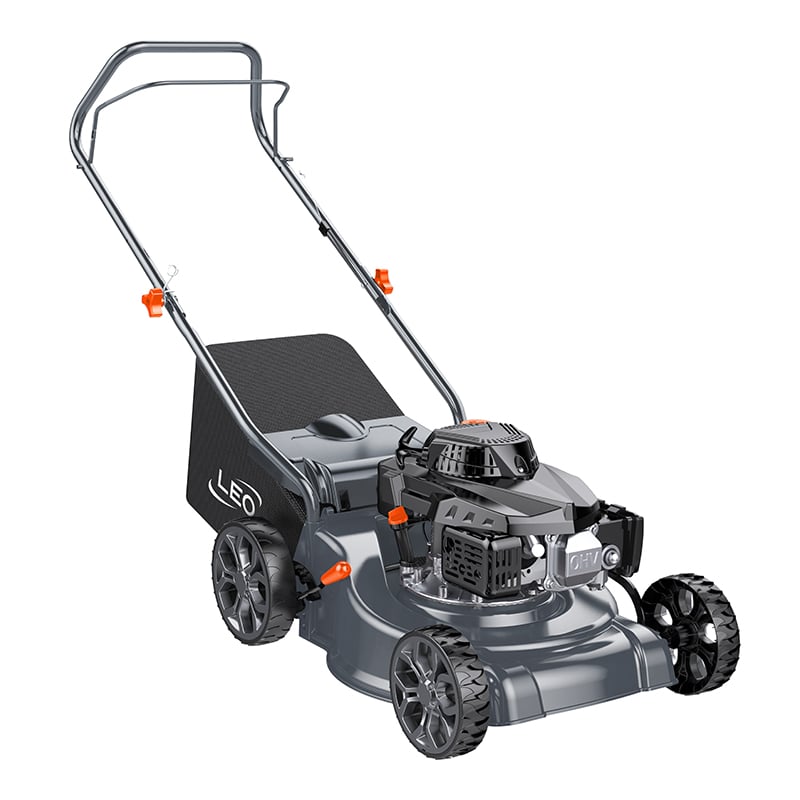
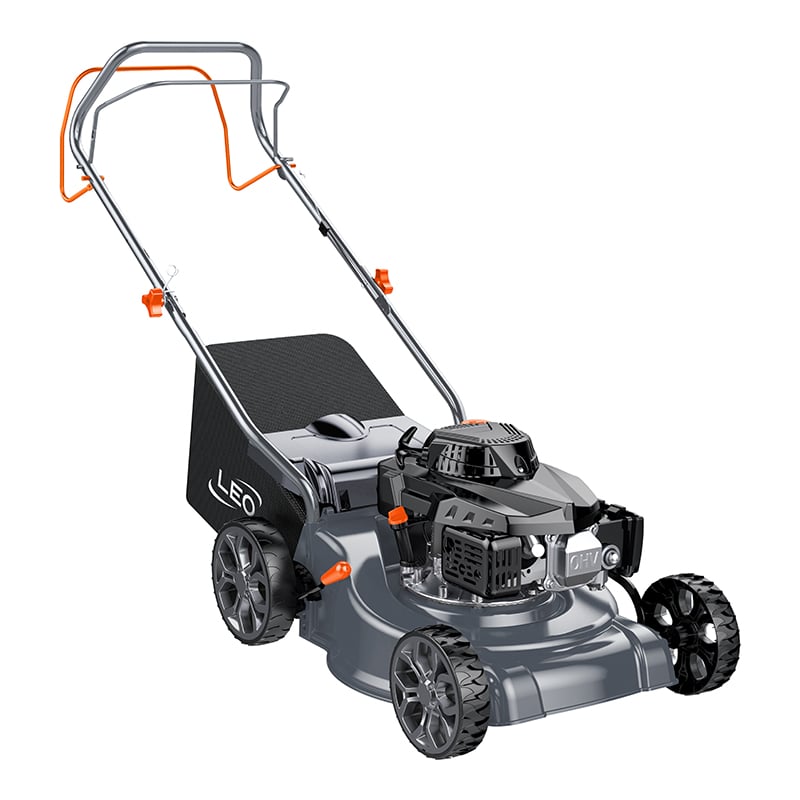
A practical fuel saving rule is to match the job to the machine’s capability. A compact walk-behind gasoline lawn mower may suit a regular medium lawn, while a larger or self-propelled configuration may be more appropriate for frequent work, uneven ground, or larger areas. More equipment is not automatically more economical; correct capacity, a clear route, and careful operation often matter more than price alone.
A simple pre-mow checklist
- Check oil, fuel level, and visible leaks before using the gasoline lawn mower.
- Confirm that the air intake, deck, discharge path, and collection system are clear.
- Set a cutting height that matches turf condition rather than forcing one low pass.
- Inspect the lawn for obstacles and select a route with fewer unnecessary turns.
- Stop and consult the manual or a service professional if operation changes unexpectedly.
Turn efficient habits into lower operating waste
Improving a gasoline lawn mower does not require a complicated routine. Use fresh, correctly specified fuel; keep the blade and deck ready for the turf conditions; follow the documented service schedule; and operate at a pace the mower can sustain. Together, those habits support fuel saving, protect engine efficiency, and keep mower maintenance manageable through the season. When a machine is maintained for its actual workload, each mowing session is more predictable and less likely to involve unnecessary repeat passes.


 Hot News