
 EN
How to Maintain Battery Systems in Electric Ride On Mowers?
A battery operated ride on mower makes routine mowing quieter and eliminates engine-oil changes, but its battery system deserves a routine of its own. The pack, charger, cables, connectors, and battery-management electronics work as one system. Look after that system and your mower is more likely to be ready when grass growth picks up; ignore heat, moisture, or storage charge and even a capable electric mower can lose useful runtime.
As garden-machinery technicians know, the important question is not simply whether a battery operated ride on mower will start today. It is whether the machine is being charged, used, cleaned, and stored in conditions that support the battery chemistry specified by its manufacturer. Your operator’s manual is the controlling guidance because battery design and permitted temperature ranges vary by model.
Start With the Battery System, Not Just the Battery Pack
Before building a maintenance routine, identify what your mower actually uses. Some machines have removable packs, while others use an integrated battery. Some charge through an onboard port; others use a dedicated external charger. The safe charging method, indicator lights, storage procedure, and service access can differ substantially.
Keep these items together in your maintenance record:
- the mower model and serial number;
- the approved charger model and its cable condition;
- the battery type or system voltage listed in the manual;
- the recommended charging and storage temperatures; and
- any warning indicators or diagnostic messages explained by the manufacturer.
This small record prevents a common mistake: treating all lithium-ion battery care as interchangeable. General safety advice is useful, but the supplied charger and the mower manual set the rules for your particular electric mower.
Use a Consistent Charging Routine
Good charging tips are mostly about conditions, not tricks. Park the mower on a level, dry surface, switch it off, remove the key if applicable, and let a warm machine cool before charging. Inspect the charging port and cable first. Dirt, wet grass, bent pins, cracked insulation, or a loose plug are reasons to stop and correct the problem rather than force a charge cycle.
Charge a battery operated ride on mower only with the charger specified for that model. A look-alike connector or an unapproved adapter can defeat the charging controls built into the system. Keep the charging area ventilated and clear of fuel, dry leaves, cardboard, and other combustible material. Do not route the lead where it can be pinched by a tire, door, or storage equipment.
Temperature matters. General lithium-ion fire-safety guidance warns against charging below 32°F (0°C) or above 105°F (40°C), but your manual may set a narrower range. If the pack or mower has been sitting in direct sun, a hot shed, or freezing weather, bring it to the manufacturer-approved condition before charging. If an over-temperature light appears, do not try to “push through” the warning.
For everyday use, plug in after mowing according to the manual’s instructions and allow the charger to finish its normal cycle. Avoid repeatedly unplugging and reconnecting just to chase the last bar on the display. The battery-management system is designed to control charging; your job is to provide the correct charger, a suitable location, and a chance for the system to complete its process.
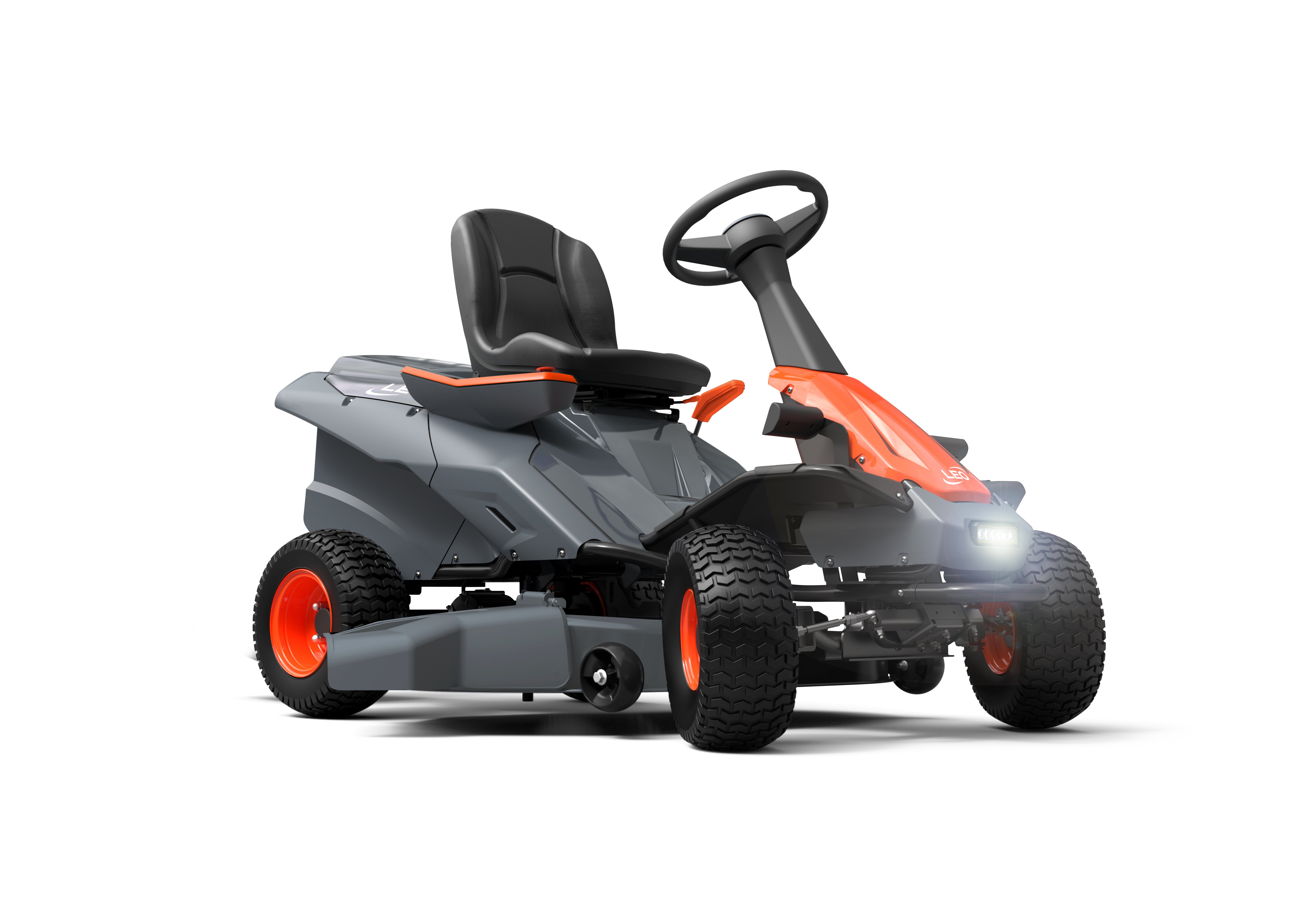
Protect Runtime While You Mow
Battery lifespan is affected by how hard the mower works. A battery operated ride on mower draws more energy in tall, wet, or overgrown grass, on slopes, and when the deck or blades need attention. That is not necessarily a battery fault. It is the load the system is being asked to carry.
- Mow dry grass when practical, rather than asking the mower to repeatedly cut heavy wet clippings.
- Keep blades sharp and the deck underside clean so cutting resistance does not rise unnecessarily.
- Use a sensible travel speed and overlap pattern instead of rushing through dense sections.
- Plan steep or demanding areas with the manufacturer’s slope guidance in mind.
- Watch the charge and temperature indicators; stop if the manual tells you to stop.
When runtime falls, do not assume the battery is finished. First check the grass conditions, blade condition, tire pressure, deck cleanliness, and temperature. A clean cutting deck and a realistic mowing pace can reduce avoidable load on an electric mower.
Make Inspection Part of Battery Care
Set aside a few minutes after every few mowing sessions for a visual inspection. With the mower powered down and disconnected from charging, look for corrosion, debris, moisture, damaged cable jackets, loose fasteners, and unusual smells near the battery compartment or charging connection. Wipe accessible exterior surfaces with a dry or barely damp cloth only if the manual permits it; do not spray water into battery, controller, or connector areas.
Also compare what you see with the manual’s normal indicators. A charging light that will not change state, a connector that becomes unusually hot, swelling, leakage, repeated shutdowns, or a sudden, unexplained loss of runtime are service signals. Do not open a sealed battery enclosure or bypass an interlock. Qualified service personnel should inspect a system that shows physical damage or persistent fault codes.
Prepare Correctly for Seasonal Storage
Seasonal storage is where many owners can protect—or shorten—the useful lifespan of a battery operated ride on mower. Clean the mower after the last cut, remove grass debris, dry it thoroughly, and store it in a clean, dry location away from direct sun, heaters, and freezing exposure. Do not leave it connected to a charger indefinitely unless the manual specifically says its system is designed for that storage method.
For many lithium-ion systems, general safety guidance recommends storing at roughly 50% charge and checking the state of charge about every three months. Treat that as a starting point, not a replacement for your mower manual. Some integrated mower systems specify a different storage charge or a periodic maintenance-charge sequence. Follow the published instruction for your model.
If your mower is stored where temperature swings are common, choose the most stable indoor space available. A damp shed can bring condensation to contacts; a sun-heated garage can place unnecessary thermal stress on the pack. Before the first spring mow, inspect the system, charge it as directed, and test all safety controls in an open area.
A Simple Maintenance Schedule
| When | What to check | Why it matters |
|---|---|---|
| Before each mow | Charge level, warning lights, charger cable, visible moisture or damage | Helps prevent starting with an unsafe or undercharged system. |
| After mowing | Grass buildup, deck condition, battery-system temperature indicators | Reduces load on the next cut and catches heat-related issues early. |
| Monthly in season | Connectors, cable routing, fasteners, runtime changes, manual updates | Builds a record of gradual changes before they become downtime. |
| Before long storage | Cleaning, dryness, state of charge, storage location, scheduled check date | Supports battery care during months when the mower is not used. |
When to Stop and Ask for Service
Do not troubleshoot inside a high-voltage battery enclosure. Stop using the machine and contact the manufacturer, dealer, or a qualified technician if you notice a damaged pack, smoke, a burning odor, liquid leakage, swelling, a charger that overheats, repeated battery faults, or an impact that may have reached the battery area. If a battery incident creates an immediate fire or safety hazard, move people away and contact local emergency services.
The answer depends on the model, but a decline in runtime alone is not enough to diagnose battery failure. Mowing conditions, ambient temperature, grass height, deck condition, and battery age all matter. Service records that note charge behavior and fault messages give a technician much better information than a guess based on one difficult mowing session.
Keep the System Ready, Not Just Charged
The most reliable battery care for a battery operated ride on mower is a steady routine: use the approved charger, charge in a suitable environment, reduce unnecessary cutting load, inspect connectors, and follow the exact storage instructions in the manual. Those habits protect more than runtime. They help preserve safe, predictable operation across the mowing season.
For an electric mower, maintenance is not about chasing an ideal charge display. It is about matching the battery system to its real working conditions and responding early when the machine tells you something has changed.
 Hot News