EN
How Does Ride On Mower Transmission System Affect Performance?
The transmission system determines how a ride on mower converts engine output into movement at the wheels. It shapes how smoothly the machine starts, how easily the operator changes speed and how the mower responds to a changing load. The transmission does not work alone: tyres, weight distribution, engine capacity and the condition of the lawn all affect the result.
For a buyer, the useful question is not simply which drive has the most impressive name. It is whether the controls and rated workload suit the property. A large open field, a garden full of trees and a fleet used every day place different demands on a ride on mower.
What the transmission does between engine and wheels
In a conventional powered ride on mower, the engine supplies rotational power. The drive system changes the speed and turning force delivered to the driven wheels. A lower speed ratio can help the machine move under load, while a higher ratio can cover open ground more quickly when conditions permit. The exact arrangement depends on the model.
Mower power and usable traction are different things. A powerful engine cannot turn available power into forward movement if a tyre slips. Equally, a transmission with convenient controls cannot compensate for a machine that is unsuitable for the terrain or the work. Compare the full machine design, not the engine and drive in isolation.
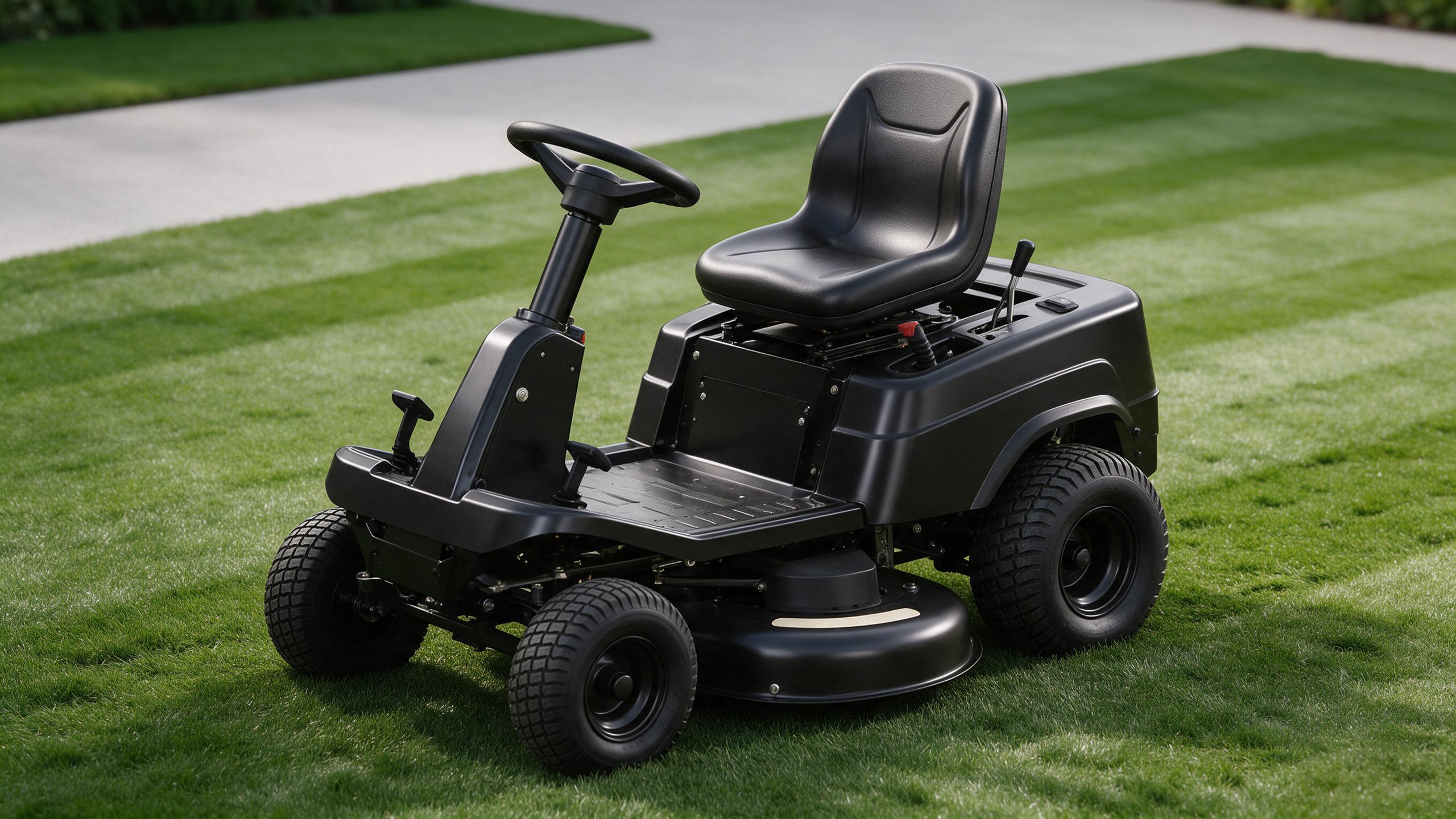
How the main drive types feel in use
Gear drive: distinct speed selections
A gear-driven ride on mower uses selected ratios to set travel speed. On a relatively open, even lawn, a suitable gear can provide a consistent pace. Where the operator must frequently change speed around obstacles, the shift procedure can add work. Some models require the operator to stop or use a clutch before selecting another gear; consult the particular machine's instructions rather than assuming all gearboxes operate alike.
The practical trade-off is straightforward: the operator chooses between discrete ratios, so the available speeds may not align perfectly with every part of the job. Ask how reverse is engaged and whether changing between forward and reverse requires a full stop.
Hydrostatic drive: continuously variable control
A hydrostatic transmission system uses a hydraulic pump and motor in a closed circuit to vary drive speed. On a ride on mower, a pedal or lever may let the operator adjust ground speed without selecting individual gears. That can be useful when approaching a tree, aligning a pass or changing direction on a busy property. Controls and response still differ across models.
The convenience has an ownership side. Ask whether the unit is serviceable, which fluid and service intervals the manufacturer specifies, and what happens if repair is needed. Some units are sealed and should not be opened or filled unless the manufacturer directs it. Purchase price alone does not describe the long-term cost.
Other variable drives
Some machines use belt-based variable-speed arrangements rather than either a conventional gearbox or a hydrostatic unit. Their operation and service requirements vary. For any ride on mower, identify the actual drive type from the model documentation instead of treating a marketing phrase such as “automatic” as a complete specification.
Where transmission choice changes the working day
Open areas and repeated turns
On a clear rectangular lawn, a comfortable operating speed and a suitable cutting width may matter more than frequent speed changes. Around beds, entrances and trees, fine control can make positioning less tiring. Yet turning geometry, visibility and steering layout are also important: a transmission system cannot by itself deliver a tight turning circle.
During a demonstration, approach an obstacle slowly, stop as directed and reposition for the next pass. Note whether the pedals or levers are easy to reach and whether reverse operation is intuitive. This reveals more about driving performance than a transmission label alone.
Changing loads and cut quality
Thicker growth can increase the load on the cutting deck. If the engine begins to struggle, reduce ground speed according to the operating instructions so the blades have time to cut. A smooth speed adjustment may help an operator respond to changing conditions, but the deck, blade condition and engine settings remain central to the finish.
A ride on mower that travels faster is not necessarily completing the job sooner if it leaves an uneven cut or requires a second pass. Compare the quality of the result at a comfortable working pace, not only the maximum transport speed.
Slopes, grip and stopping
Traction and stability are safety limits, not optional performance features. The US Occupational Safety and Health Administration advises operators not to exceed the slope angle specified by the mower manufacturer. Check the manual for the specific model and attachments, and assess surface conditions before work. Wet or loose ground can reduce grip even within a stated limit.
Do not infer that a hydrostatic drive makes a slope safe, and do not rely on the transmission as a substitute for the specified brake. Follow the manufacturer's instructions for stopping, parking and operating on inclines. If the slope or surface falls outside the machine's instructions, use a suitable alternative method.
Maintenance and signs worth checking
Before servicing a ride on mower, switch it off, remove the key and follow the manual's isolation and parking steps. Keep cooling areas clear where the manufacturer permits access, inspect for visible leaks and check drive belts or linkages at the recommended intervals. Keep hands clear of moving components.
Slow response, unusual noise, a belt that slips or a change in the machine's normal behaviour deserves attention. These symptoms do not prove that the transmission has failed: belt condition, linkage adjustment or other causes may be involved. Stop using the machine and have a qualified service provider diagnose the issue. Use only the specified parts and fluids, and do not add fluid to a sealed unit on assumption.
A practical buying checklist
- Map the site: note open stretches, obstacles, access widths and slopes before comparing a ride on mower.
- Compare controls: check how the transmission system changes speed, selects reverse and brings the machine to a stop.
- Check the rating: confirm permitted slope, towing and attachment limits for the exact configuration; a drive type is not a rating.
- Discuss service: ask about maintenance schedules, repair access and replacement component availability in your market.
- Try the route: where a dealer offers a demonstration, assess comfort, visibility and driving performance on representative ground.
A transmission suited to the route makes mower power easier to use, but it is only one part of the decision. Match the complete ride on mower to the lawn, operator and service arrangements, and verify the specifications for the exact model before ordering.
 Hot News