EN
How to Select the Right Ride On Mower for Different Terrain Conditions?
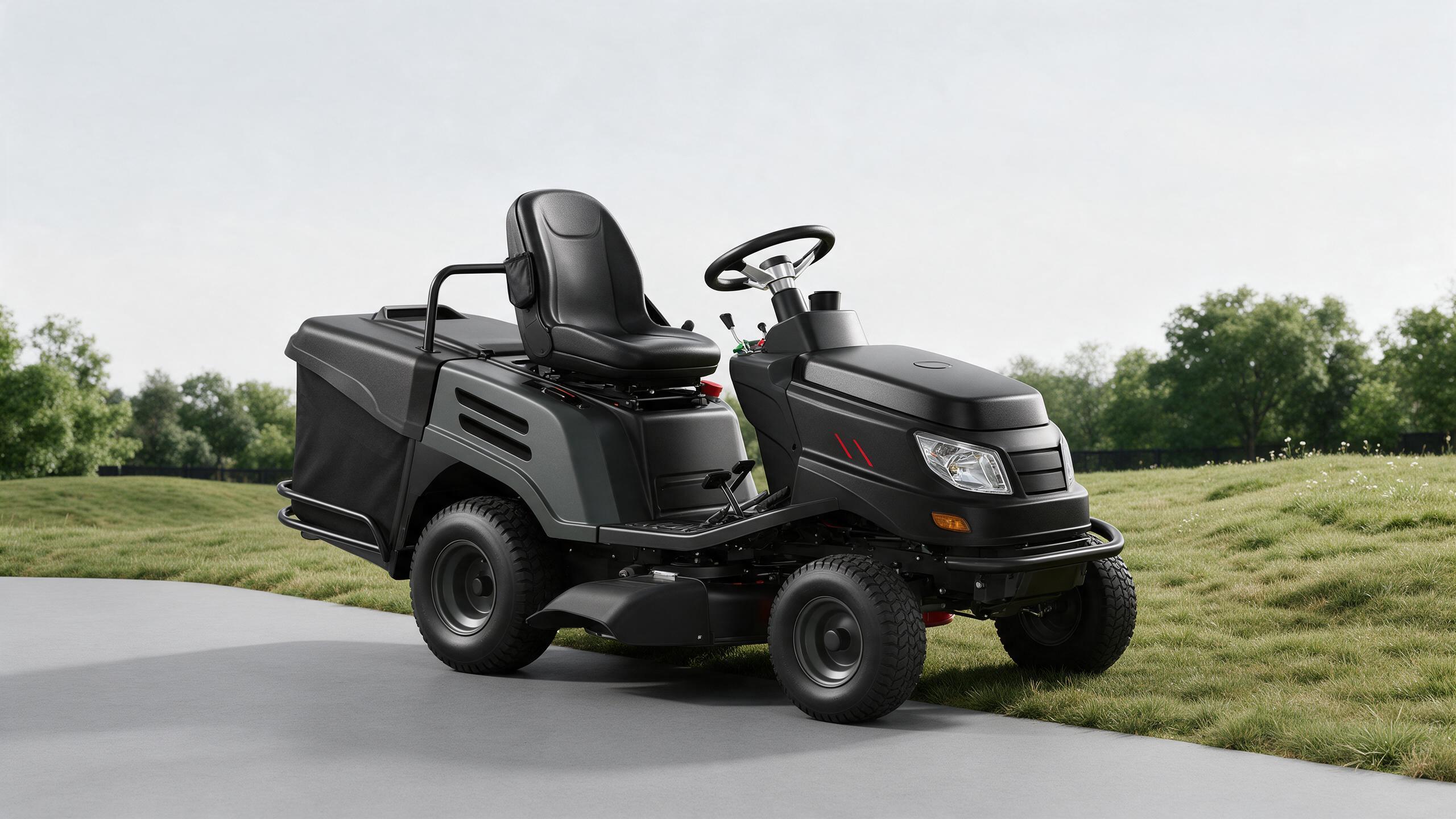
A wide, open lawn, a bumpy orchard and a sloping estate may need very different machines. Choosing a ride on mower starts with the ground beneath the wheels, not just the engine figure in a catalogue. Map the difficult sections first, then compare each machine's stated limits, dimensions and service needs against the job. A model that covers an open field quickly may be awkward around trees or unsuitable for a bank.
Start with a practical site survey
Walk the entire route before comparing machines. Note the steepest sections, changes in slope, drainage ditches, exposed roots and soft areas. Measure entrances and narrow passages, including the clearance needed for the deck and discharge chute. A ride on mower must fit the route between lawn sections as well as the storage space when the work is done.
Consider conditions across the season. A surface that feels firm in dry weather may become slippery or rut easily after rain. Record the longest turf you reasonably expect to encounter, the number of obstacles and where the operator can turn safely. If multiple people will use the equipment, include visibility, controls and access in the assessment.
For terrain mowing, a simple sketch can separate open areas from tight corners and banks. Bring photographs and measurements to a dealer and ask for the operator's manual for each candidate. A practical demonstration on representative, permitted ground can reveal visibility and turning issues that a specification sheet alone may not show.
Match the machine to each kind of ground
Open and relatively level lawns
On a broad, smooth lawn, deck width and working pattern matter. A wider deck can cover more ground in each pass, but it also needs room to turn and pass through entrances. Compare the deck's overall transport width with the narrowest gate, not just the stated cutting width. If the property has planted borders, allow for the time spent trimming edges after mowing.
Choose a ride on mower with controls that the operator can reach comfortably and a transmission suited to the workload. Smooth speed control can help around obstacles, but transmission type alone does not establish slope capability. Ask about maintenance access and the availability of blades and drive components before placing an order.
Uneven ground and shallow hollows
On rolling or rutted ground, a long or wide deck may bridge a hollow and cut unevenly at the next rise. Compare deck articulation, adjustable cutting height and any anti-scalp wheels specified for the model. These features can help manage surface changes, but they cannot make an unsuitable machine safe on a steep slope.
Inspect for stones, holes and debris before mowing. Lift the cutting height where the surface warrants it and follow the manufacturer's instructions for adjustment. A slower working pace may give the operator time to respond to rough patches. Avoid using the deck as a way to level the ground; repair hazards where practical instead.
Slopes and banks
Slope mowing needs a more cautious selection process. Measure the steepest part of the intended route using a suitable slope gauge, and compare it with the exact ride on mower manual, including any limits for attachments and the direction of travel. Slope ratings differ by machine and configuration. As an example of that variation, a workplace safety advisory discusses manufacturer limits of 15 and 22 degrees for different machines; neither number is a universal allowance.
A stated limit is not an instruction to operate at that angle in every condition. Wet turf, loose soil, abrupt changes in slope and nearby drop-offs can reduce the margin of control. Do not mow wet slopes. Follow the model's instructions on travel direction and avoid sudden steering, braking or changes of speed. Keep clear of ditches, retaining walls and other edges where a wheel could drop.
If a bank exceeds the manufacturer's limit, or the operator cannot maintain control, leave that area uncut by the ride on mower and choose a method designed and permitted for that site. A traction feature, extra weight or an experienced operator does not override the published limit. Ask the supplier how a collection system or other attachment affects stability before adding it.
Obstacles and confined areas
Trees, beds and posts change the calculation. A compact ride on mower may reduce uncut patches in a complex garden, while a larger machine may complete the open section with fewer passes. Compare turning space in the actual layout, including room to approach a gate without reversing toward a slope. Some tight areas may still require a separate tool.
Turning capability should not be confused with safe operation on a bank. Different steering systems and machines can have different slope instructions. Read the relevant manual rather than assuming that a tight-turning design is appropriate for every incline.
Compare traction, deck and power together
During mower selection, ask what tyre type and drive configuration are specified for the intended ground. The contact patch, soil condition and tread all influence traction; no tyre removes the risk of sliding on a wet incline. Check the permitted tyre pressures in the manual and keep the machine in its approved configuration. Do not add ballast or modify tyres without the manufacturer's guidance.
Power is another part of the decision, not a substitute for stability. Dense growth, a collection system and prolonged use place different demands on the machine. Compare the manufacturer's intended application and service recommendations, then ask whether the drive and cutting system are specified for the expected workload. For battery-powered equipment, request runtime information for the actual terrain and cutting conditions rather than assuming a flat-lawn estimate will apply.
Collection, side discharge and mulching have different implications for handling clippings. Confirm which options are offered for the individual machine and whether a collector changes the approved slope limit. Whatever the arrangement, stop the engine or power system and follow the manual before clearing a blocked deck or chute.
Use a short buying checklist
- Measure the steepest intended route and check the model-specific slope limit and travel instructions.
- Compare gate clearance, deck dimensions and turning space with the site sketch.
- Check the deck adjustment and ground-following features against uneven sections.
- Confirm how attachments, tyres and wet conditions affect the permitted use.
- Ask about operator fit, routine servicing, replacement parts and local support.
- Plan a separate method for banks, edges or narrow areas outside the machine's limits.
For buyers comparing outdoor equipment across several sites, keep the site measurements with the machine documentation so each operator knows where the equipment may be used. Zhejiang Leo Garden Machinery lists ride-on mowers among its garden machinery range; ask for the current model documentation and confirm the relevant configuration before making a decision. The right ride on mower is the one that matches the actual route and the manufacturer's operating boundaries, not simply the largest machine that fits the budget.
 Hot News