EN
How Does a Garden Branch Chipper Process Large Branches Efficiently?
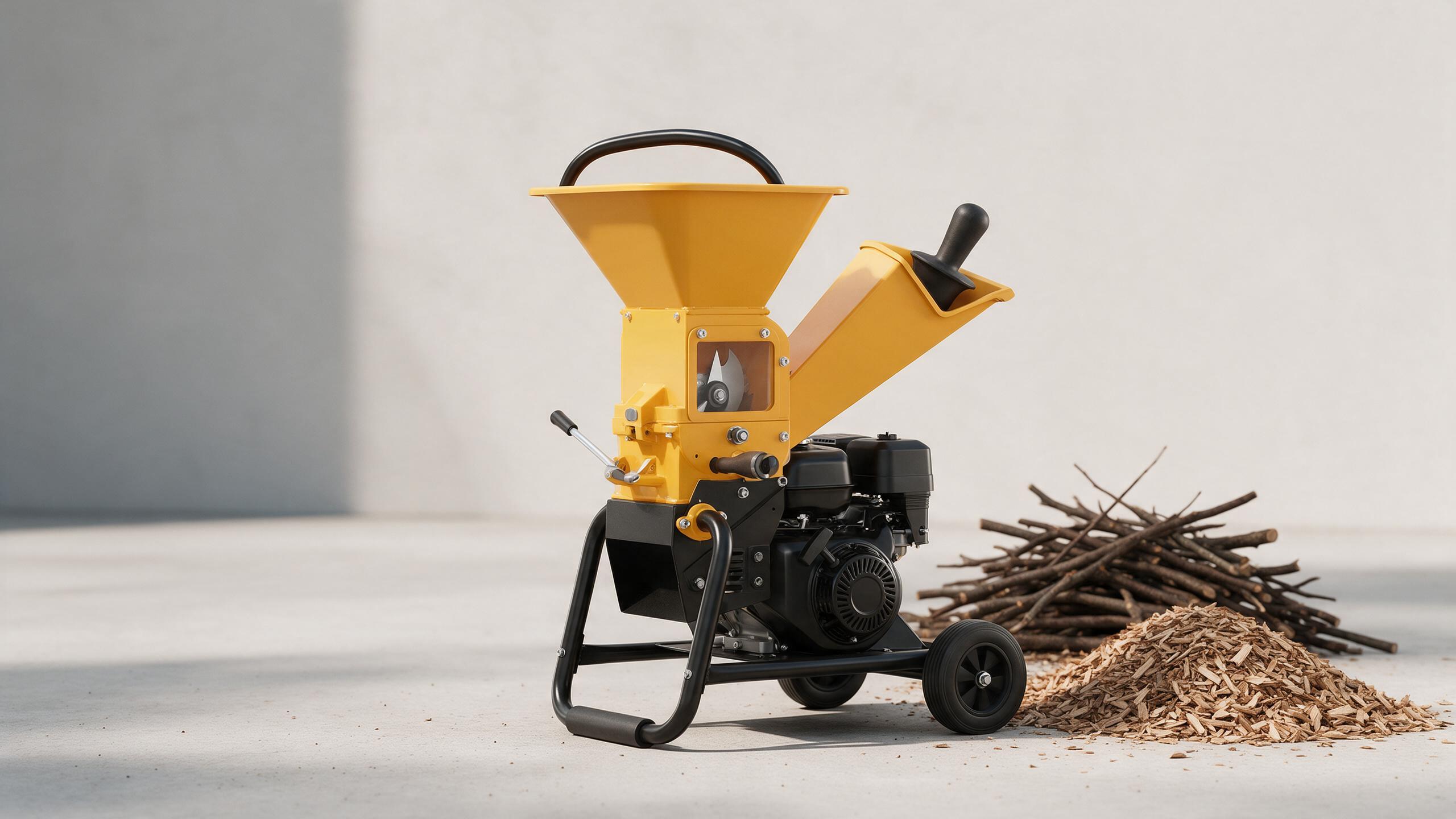
A thick pile of prunings can occupy far more space than the wood it contains. A garden branch chipper reduces suitable branches to smaller pieces by bringing them into contact with a powered cutting mechanism. The pace depends on the size and condition of the material, the machine's rated capacity, the feed arrangement and the condition of its cutting edges. Power matters, but so does the fit between the machine and the work.
From branch to chip: the basic sequence
A garden branch chipper accepts material through an infeed opening that guides it toward the working mechanism. Depending on the design, the operator may present the branch to a gravity-fed inlet, or a powered feed system may help move it toward the cutter. These are different arrangements, not features found on every machine. The manufacturer's instructions determine how material should be presented and which feed method is appropriate.
Inside the machine, a rotating disc or drum may carry knives that slice the wood into smaller pieces. Some garden shredders use other mechanisms, including rollers that crush and cut. A cutting system does not work in isolation: the power source must maintain the mechanism under load, while the discharge path must let the chips leave without backing up. The resulting pieces can be collected or directed to a suitable area according to the equipment's design.
For large branches, each part of that sequence matters. If the infeed geometry does not suit a forked limb, or if the discharge area fills up, the operator has to stop more often. If the material exceeds the stated limit, it is not suitable for that machine even when the inlet looks large enough.
What does cutting capacity really tell you?
A capacity rating is a starting point, not a promise that every branch of that thickness will feed equally well. Read the model's manual or specification for the maximum permitted diameter and the material types it accepts. A dry, hard, knotty limb can place a different load on a garden branch chipper than a straight, freshly cut piece. Branch forks and irregular shapes can also affect whether material enters the hopper as intended.
Measure the thickest section you intend to process, not just the narrow end. Compare that measurement with the model's stated limit and any conditions attached to it. If the wood is above the rating, choose another suitable method or a machine rated for that work. Do not force it through, remove guards, or treat an occasional overload as a normal way to increase throughput.
For a distributor assessing a wood chipper, ask for the rated capacity, permitted material, feeding instructions and replacement blade information for the specific model. A larger headline number alone says little about how a machine will behave on a particular mix of limbs and twigs.
How feeding and cutting work together
Steady branch processing relies on a manageable amount of wood reaching the cutter. When the material is straight and within the machine's rating, the cutter can engage it in a more predictable way. An uneven fork, a tightly packed bundle or a sudden change in diameter can interrupt that flow. Follow the manual for how many pieces to feed, their orientation and whether the machine uses a powered feed.
Some machines use feed rollers; others rely on the way branches are presented to the inlet. Do not assume a garden branch chipper has a reverse function or automatic feed control unless the manufacturer confirms it. Where a model does provide such controls, operators still need to follow its specific procedure rather than reaching into the hopper.
Blade condition affects the workload
Cutting edges wear with use. A dull or damaged edge may produce rougher output and make the machine work harder; dirt, stones and metal mixed with the material can damage the mechanism. Inspect and service knives only as the manufacturer's instructions allow, after shutdown, isolation from power and confirmation that moving parts have stopped. Use a qualified service provider when the task is outside the operator's training.
Discharge is part of the system
Chips need a clear route out of the cutting chamber. Before starting, position the collection arrangement as instructed and keep the discharge area clear of people. If output begins to collect where it should not, stop the machine and follow the prescribed shutdown and clearing procedure. Do not reach into an opening while the machine is running, even if the blockage appears close to the surface.
Preparing a pile for efficient garden cleanup
Sorting the pile before starting helps the operator match the material to the garden branch chipper. Separate unsuitable objects and check for soil, wire, stones or other debris. Identify limbs that exceed the rated diameter and set them aside. Where the manual permits, remove awkward side shoots with an appropriate hand tool before feeding; do not cut or trim a branch while it is moving into the machine.
Keep the working area stable and clear, and arrange material so it can be handled without crossing the discharge zone. A pile of fresh woody prunings may behave differently from a mixture containing wet, fibrous stems or leaves. Consult the manual rather than assuming the same inlet accepts every type of waste. If material begins to accumulate, stop and investigate according to the instructions instead of adding more.
For example, consider a mixed pile after a hedge and tree pruning job. Sort the straight limbs from tangled soft cuttings, check the thick ends against the rating, and plan a separate route for any oversized wood. This is an illustrative workflow, not a claim about a specific job or a measured processing rate.
Safety checks that support a steady workflow
Chippers can draw in material quickly and throw debris. Follow the equipment manual, receive suitable training, and keep bystanders clear of both feed and discharge areas. OSHA advises operators not to reach into a running chipper, to avoid loose clothing and to use appropriate protective equipment. Select eye and hearing protection and other equipment as required by the task and local rules; secure loose hair and remove items that could catch.
Stand in the position specified by the manufacturer and remain attentive to branch movement. Know how to stop the machine before work starts. If a jam occurs, shut down, isolate the power source, wait for all motion to stop and follow the manufacturer's clearing procedure. A garden branch chipper should be inspected before restarting; an unexplained repeated jam calls for service rather than repeated forcing.
Choosing for the actual branch workload
When comparing equipment, consider the usual branch diameter, the hardest material expected, site access, feed layout, discharge arrangements and access to replacement parts. Ask for the model-specific manual and verify which materials its cutting system accepts. For infrequent small piles, handling and storage may matter as much as capacity; frequent larger workloads may make feed design and service access more important.
A garden branch chipper works efficiently when its rated capacity, well-maintained cutting edges, suitable feed and clear discharge are matched to the material. The result is a more manageable pile of chips, with fewer avoidable interruptions. Choose the machine for the work it is rated to do, and use its instructions as the operating reference.
 Hot News