
 EN
EN
How Do Shredder Blade Materials Affect Cutting Performance?
A garden shredder is often judged by motor power or maximum branch diameter, yet the cutting parts do much of the practical work. As a garden machinery technical consultant, I would start with the material going into the feed chute: dry prunings, fibrous stems, leafy waste, or mixed debris. The blade material, edge geometry, and the wider shredder design together determine whether a garden shredder cuts cleanly, pulls material through smoothly, or begins to tear, stall, and clog.
No single blade material suits every garden shredder. A hard edge can retain sharpness well, while a tougher edge can better tolerate knots, occasional grit, and variable branch texture. The sensible choice depends on the cutting technology and on what the machine will process most often.
Why blade material matters in a garden shredder
Blade material affects three linked qualities: hardness, wear resistance, and toughness. Hardness helps a cutting edge resist rounding over time. Wear resistance helps the edge last when it repeatedly meets abrasive bark, dry wood, or dust. Toughness helps it resist chipping or cracking when a garden shredder meets an uneven branch, a knot, or debris that should not have entered the hopper.
These qualities pull in different directions. A very hard blade material can keep a crisp edge, but it may be less forgiving of shock. A softer, tougher material may survive impact better, but it can need sharpening sooner. Heat treatment matters as much as the named steel grade: it is what helps a manufacturer balance edge retention against resilience. That is why two garden shredder models described simply as having “steel blades” may behave quite differently in use.
Common blade-material approaches and their effects
Carbon and alloy steels
Many blade-based garden shredder units use carbon or alloy-steel cutting components because they can be hardened to form a useful edge while retaining practical toughness. In normal pruning work, this combination supports consistent slicing of twigs and small branches. When the edge is sound, the garden shredder needs less repeated pulling and produces a more even particle size.
The limitation is not the material alone. Wet, stringy stems can wrap or compress rather than shear, and soil stuck to roots or branches accelerates edge wear. A garden shredder with a well-made alloy-steel blade will still lose cutting quality if the feedstock is contaminated or consistently outside the stated capacity.
Hardened tool-steel cutting parts
Higher-wear applications may use hardened tool-steel-style blades or cutters. The attraction is strong wear resistance and longer sharp-edge retention when a garden shredder handles frequent woody material. This can be valuable for users who clear established shrubs or process seasonal pruning regularly.
However, longer edge life should not be read as permission to feed anything into the machine. Harder cutting parts still need a controlled feed, correct clearance, and protection from stones, wire, and metal fasteners. If your work is mostly fine, green, fibrous trimmings, the benefit of a very hard blade material may be less noticeable than the effect of the machine’s feed and cutting technology.
Crushing rollers and toothed cutters
Not every garden shredder relies on a fast knife action. Roller-based or slow-speed systems grip and crush material against a plate. Their cutters may use hardened surfaces, but their performance is better judged by grip, clearance adjustment, torque, and the condition of the opposing plate than by a knife-blade comparison alone. This shredder design is often better suited to quieter operation and woody branches, while a fast impact-style garden shredder can be more effective on lighter, mixed green material.
Cutting technology changes what “good performance” means
A sharp blade in a high-speed impact garden shredder generally relies on clean shearing. A dull edge can turn that action into tearing: the motor works harder, the output becomes uneven, and stringy material may bridge at the hopper. A roller garden shredder works differently. It benefits from a sound cutter and correctly set anvil plate so the branch is gripped and compressed rather than repeatedly bounced.
So, when comparing cutting technology, ask what failure you are trying to avoid. Are you concerned about shredded leaves compacting in the chute, branches being rejected, or chips becoming too coarse for composting? The blade material matters, but the garden shredder mechanism determines how that material converts force into cutting.
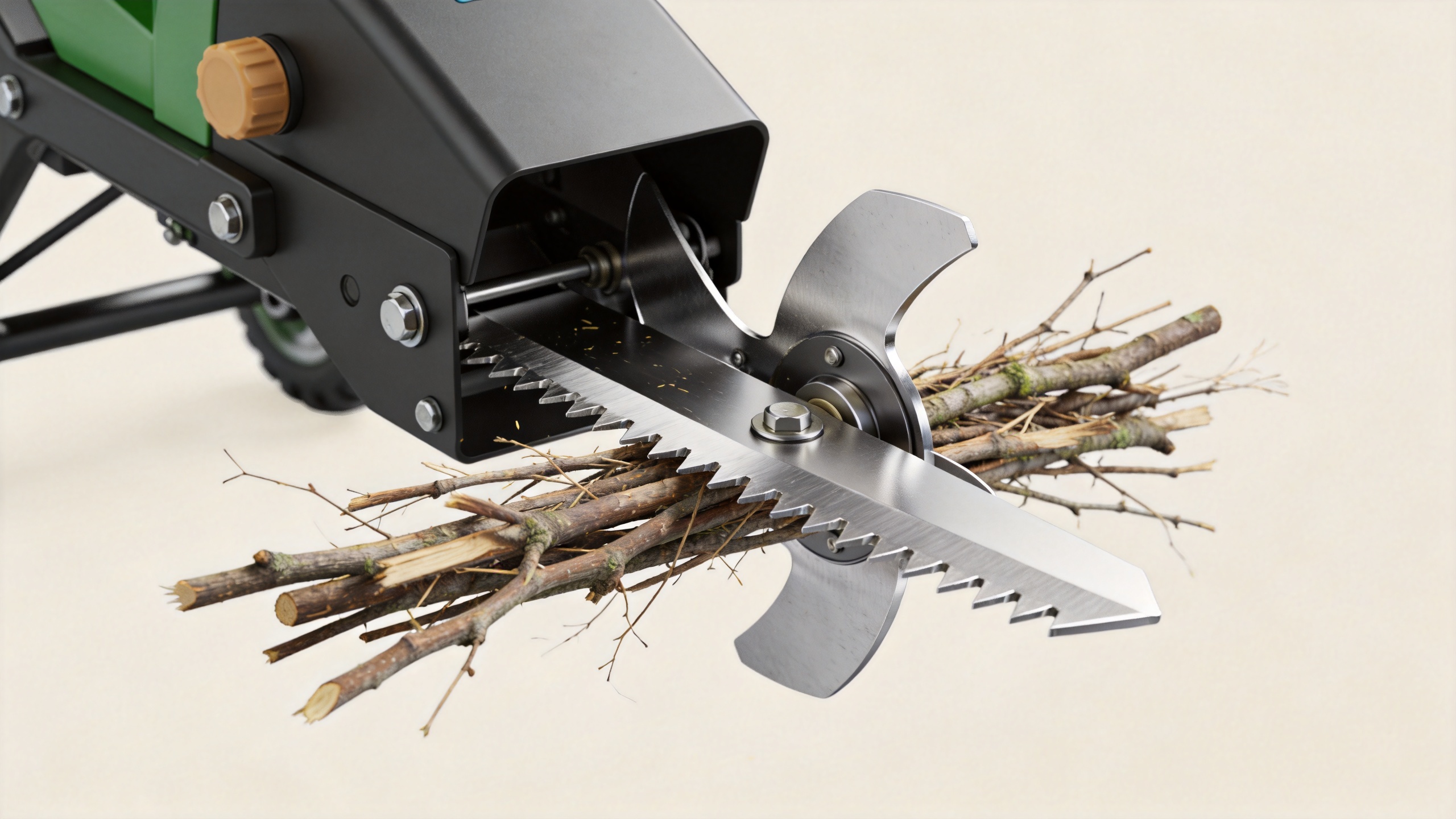
Blade condition affects machine durability too
Blade condition has a direct effect on machine durability. When a garden shredder cuts efficiently, it is less likely to spend long periods straining against material. As the edge dulls, users may push harder or keep feeding material that the machine is no longer processing cleanly. That can increase vibration, heat, and stress on the drive system.
In practice, the maintenance habit is simple: inspect cutting parts according to the manufacturer’s instructions, remove debris only with power isolated, and replace or service parts that are visibly worn, chipped, or unable to maintain the required clearance. Skipping blade maintenance leads to torn cuts and poor throughput; well, it can also make a capable garden shredder seem underpowered when the real issue is the cutting system.
Match blade material and shredder design to the job
- Mostly dry, woody pruning: Prioritise durable hardened cutting parts, adequate torque, and a garden shredder rated for the branch sizes you actually have.
- Mixed green clippings and light twigs: Look for a cutting technology that handles fibrous material without frequent bridging; prepare very wet clumps in smaller batches.
- Occasional home use: A serviceable blade system and easy access for cleaning may matter more than the hardest possible blade material.
- Frequent seasonal clearance: Consider replaceable or reversible cutters, clear maintenance guidance, and machine durability across the feed, drive, and housing—not just the blade specification.
I used to treat a “steel blade” label as enough information. It took a while to realise that material preparation, blade condition, and feed behaviour matter just as much in a garden shredder. If branches are muddy, excessively wet, or beyond the stated diameter, even a high-quality cutting assembly cannot give reliable results.
Practical steps for better cutting performance
- Sort out stones, wire, soil-heavy roots, and other contaminants before feeding a garden shredder.
- Let wet leafy waste dry slightly or mix it with suitable dry twigs if the manufacturer permits; this reduces compacted, stringy feed.
- Feed branches at a steady pace rather than forcing a large bundle into the garden shredder.
- Check the blade or cutter condition and the specified clearance before a heavy pruning session.
- Wear eye protection and stand to the side of the feed opening, following the machine manual at all times.
Conclusion: choose the whole cutting system
Blade material is a meaningful part of garden shredder performance because it influences sharpness, wear, and resistance to damage. But it is not a stand-alone promise of fast cutting. The most reliable result comes from matching the blade material and cutting technology to your material mix, keeping the cutting assembly maintained, and choosing a shredder design that supports the workload. For a garden shredder used with the right feedstock and sensible care, those combined decisions produce cleaner output, fewer interruptions, and more dependable long-term operation.
 Hot News