
 EN
EN
What Should Buyers Consider When Selecting a Battery Operated Ride On Mower Supplier?
Choosing a battery operated ride on mower is no longer only a question of cutting width, runtime, or a quiet drive. For importers, distributors, and private-label teams, the bigger decision is whether the supplier can support the machine after the container arrives. A promising sample can still become a costly programme if battery packs, chargers, documentation, spare parts, and warranty decisions are not managed as one system.
As a B2B procurement buyer, start with the work your customers will expect the machine to do, then work backward to the evidence a supplier should provide. That approach is more useful than comparing brochure claims alone. The retail market already makes deck size, charging, and maintenance visible; the supplier-side questions are usually harder to see.
Start with the end user and the selling channel
Before asking for quotations, define the intended customer: a homeowner with open lawn, a dealer serving mixed residential properties, or a professional operator managing several sites. A battery operated ride on mower that suits a broad, relatively flat garden may not suit a complex layout, long operating days, or a steep site. It depends on the duty cycle, charging access, storage conditions, and the support network your channel can realistically maintain.
Ask each prospective garden machinery supplier to explain how it matches machine configuration to terrain, grass conditions, expected cutting time, and turning needs. Wider decks can reduce passes on open ground, but they can be less efficient around trees, narrow gates, and landscaped boundaries. That is a practical reason to assess maneuverability alongside capacity rather than treating the largest deck as an automatic upgrade.
Evaluate the battery system, not just the mower
The battery, charger, controller, wiring, and machine diagnostics form one service package. A credible supplier should be able to document which battery packs and chargers are approved for each battery operated ride on mower, what storage and charging guidance applies, how technicians identify a fault, and how replacement components are supplied.
Request clear answers to these questions:
- Is the battery platform shared across other products, or unique to one mower?
- What is the approved charging process, and what happens when a user reports reduced runtime?
- Can the supplier provide parts lists and fault-diagnosis guidance for the machine, battery, and charger together?
- Which components are stocked or available for planned replenishment in your target market?
- Who makes the warranty decision, and what evidence must a dealer submit?
Do not turn this into a request for impossible promises. Instead, ask for a repeatable workflow. In battery-powered equipment service, the mower, battery, and charger often need to be assessed together. A supplier that can explain that workflow plainly is easier to support than one that only lists battery capacity.
Check manufacturing controls before approving an OEM mower programme
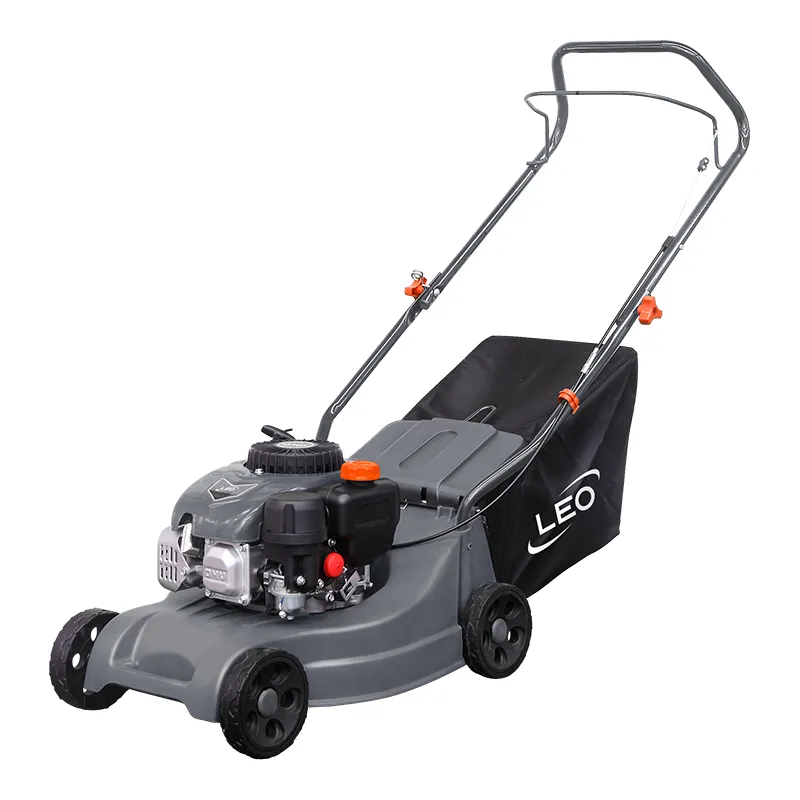
An OEM mower project needs more than a logo option. Buyers should understand where design changes are controlled, how samples are approved, how version changes are communicated, and how quality issues are traced back to a production lot. Ask for the supplier’s process for incoming components, assembly checks, functional testing, packaging verification, and corrective action when a defect is reported.
For example, Zhejiang Leo Garden Machinery Co., Ltd. describes its business as covering R&D, manufacturing, sales of lawn mowers and ride on lawn mowers, alongside other garden equipment. That breadth may be relevant to a buyer seeking a manufacturer with garden-machinery experience, but it should still be verified through current factory, product, and quality documentation during qualification. A company profile is a starting point, not a substitute for due diligence.
For a wholesale mower launch, ask the supplier to distinguish standard configuration from any custom option. Confirm who approves artwork, manuals, labels, cartons, accessories, and software or controller revisions. Small changes can affect service parts and regulatory files later, so written change notification matters.
Use compliance documents as a supplier-readiness test
Market requirements vary by destination. EU-bound buyers should ask how the supplier supports the documentation applicable to the complete machine and its battery system. Regulation (EU) 2023/1542 includes battery labelling, information, and due-diligence provisions that are phased in over time. The right question is not whether a sales sheet says “compliant”; it is whether the supplier can provide current, product-specific documentation and explain what the importer or distributor must manage locally.
Build a document checklist covering product identification, user and safety information, battery and charger records, test evidence where applicable, packaging and transport information, and traceability. Have your compliance team confirm what applies in each sales market. This protects the buyer from relying on generic certificates that do not match the final configuration.
Compare total cost of ownership and service capacity
The purchase price of a battery operated ride on mower matters, but it is only the first number. Consider freight packaging, initial spares, diagnostic tools, dealer training, warranty administration, battery handling, expected parts lead times, and the cash tied up in inventory. A lower unit cost can lose its advantage if a dealer cannot return a working mower to service quickly.
Ask each manufacturer for a proposed first-order support package: recommended fast-moving parts, lead-time assumptions, technical training material, service escalation contacts, and a warranty-claim flow. Then test the proposal with a realistic scenario: a mower stops charging in peak season, a dealer has the unit, and the customer needs an answer. Who verifies the fault? Which component is shipped? How is the case closed? The answer reveals more than a generic warranty statement.
Run a structured supplier comparison
A practical scorecard helps teams compare like with like. Weight the categories according to the channel you serve rather than choosing solely on quotation price.
| Evaluation area | What to request | Why it matters |
|---|---|---|
| Product fit | Use-case guidance for terrain, workload, layout, and charging access | Reduces mismatch between the mower and the end user |
| Battery system | Compatibility map, charger guidance, diagnostics, storage instructions | Supports safer, faster service decisions |
| OEM control | Sample approval, revision notice, labelling and manual process | Protects brand consistency and traceability |
| Quality process | Inspection points, test records, corrective-action method | Gives buyers a basis for factory qualification |
| After-sales support | Parts plan, training, escalation, warranty workflow | Determines whether dealers can keep machines operating |
| Compliance support | Configuration-specific document pack and responsibilities by market | Helps avoid gaps in market-entry preparation |
Choose the supplier that makes the programme supportable
A suitable battery operated ride on mower supplier is not necessarily the one with the most ambitious headline claim. It is the partner that can show how the product will be specified, built, documented, delivered, serviced, and improved after launch. When you compare a garden machinery supplier, look for evidence of disciplined communication as well as product capability.
Use sample testing, document review, and a service-case walkthrough before committing to a larger wholesale mower order. That process gives a buyer a more durable basis for selecting an OEM mower partner and helps ensure the final customer experience matches the promise made at the point of sale.
 Hot News