
 EN
How to Extend the Battery Life of a Cordless Lawn Mower?
A cordless lawn mower is convenient because it lets you work without managing an extension lead, but battery runtime is not fixed. Lawn height, moisture, blade condition, cutting height, terrain, and storage habits all affect what you get from one charge. The useful goal is not to chase a claimed runtime. It is to reduce unnecessary load on the cordless lawn mower and give its battery the care specified by its manufacturer.
As a garden-machinery technical consultant would start a diagnosis, look at the work before blaming the pack. If a cordless lawn mower used to finish the lawn and now stops early, check the mowing conditions, the deck, and the battery routine in that order. A short routine before and after use can make battery maintenance less of a repair issue and more of a normal part of mower care.
Start With the Load on Your Cordless Lawn Mower
A cordless lawn mower draws more energy when it has to cut long, damp, dense lawn growth. Trying to remove too much height in one pass asks the motor and battery to work harder for longer. For an overgrown lawn, raise the deck, take a first pass, then lower it gradually on a later cut if your manual allows. This approach can be slower on day one, yet it is usually easier on the cordless lawn mower than forcing a low cut through heavy clippings.
Mow when the lawn surface is dry whenever practical. Wet clippings add weight, can collect under the deck, and increase resistance around the blade. Pause and inspect if the mower sounds strained or leaves clumps behind. Cleaning the underside only after removing the battery and following the manual helps the cordless lawn mower maintain airflow and discharge performance.
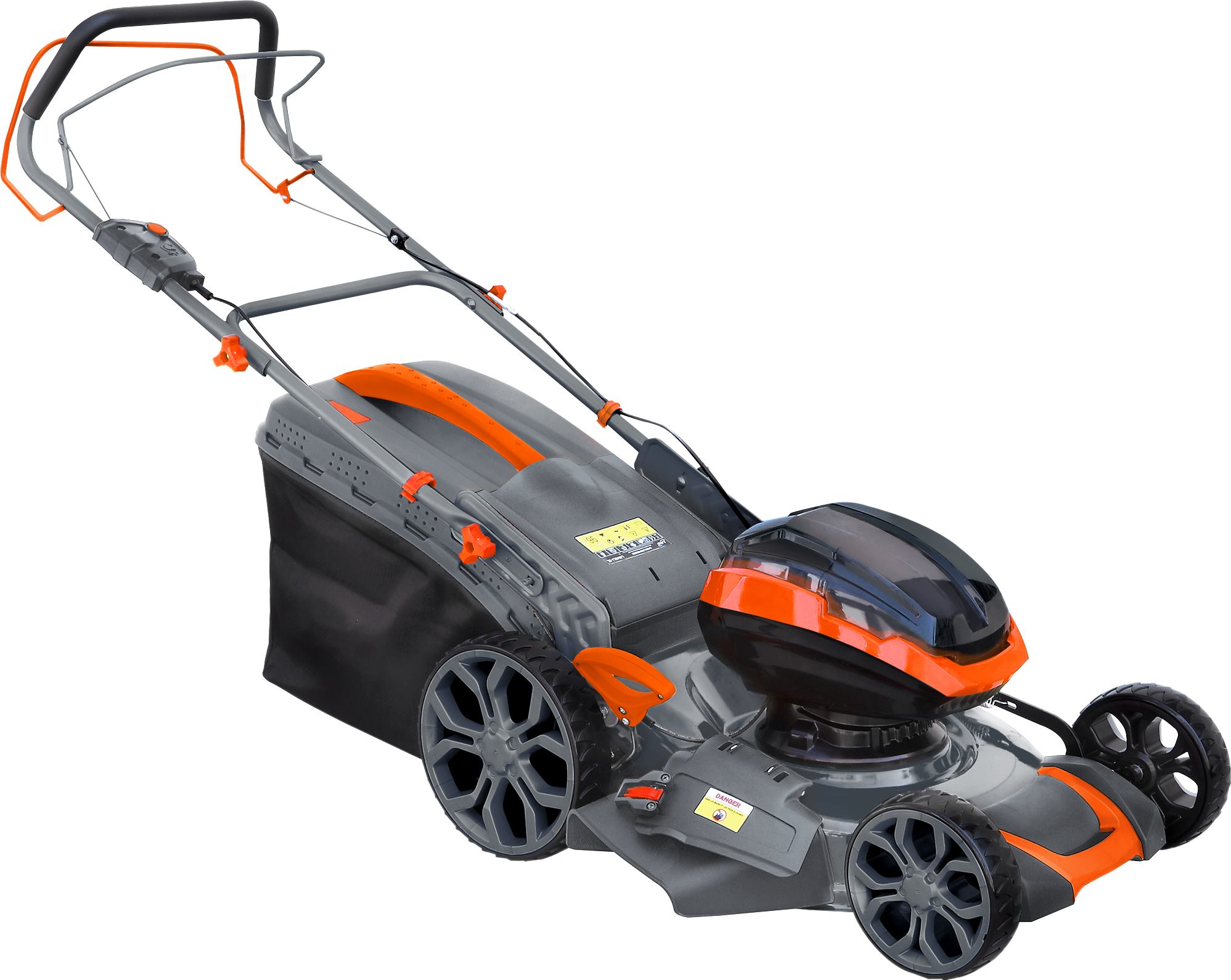 Remove the battery before inspecting or cleaning the mower deck.
Blade condition matters too. A dull or damaged blade tears rather than cuts cleanly and can make a cordless lawn mower use more energy. Inspect it with the battery removed. If sharpening or replacement is needed, use the procedure and parts stated in the product documentation or have a qualified service provider do the work.
Use Charging Tips That Match the Manual
For battery maintenance, the charger supplied or approved for your cordless lawn mower is the safe starting point. Battery systems differ in voltage, electronics, cooling, and communication between pack and charger. A charger that appears to fit is not automatically suitable. Keep the charging area dry, stable, and clear of direct heat or combustible clutter, and do not charge a pack that is visibly damaged, leaking, unusually hot, or behaving abnormally.
After a demanding mow, let the battery cool before charging if the manual calls for it. Charging a hot pack straight after hard work may trigger its protection system or shorten the useful charging window. The practical charging tips are simple: remove the battery from the cordless lawn mower, inspect the contacts, allow normal cooling, then use the approved charger in a ventilated location.
Do not leave the battery on a charger for days as a habit unless the manufacturer explicitly supports that use. Modern chargers may manage charge automatically, but their instructions still take priority. Keeping the contacts clean and dry, with no clipping debris packed around them, is another small part of mower care that helps the system make a reliable connection.
Plan Mowing for Better Power Management
Good power management starts before you press the switch. Walk the lawn first and remove sticks, stones, wire, and other obstacles. Plan a calm, steady route rather than repeatedly reversing or cutting the same thick edge. If your cordless lawn mower has selectable power or drive settings, use the setting that fits the lawn growth and ground rather than assuming the highest setting is needed everywhere.
Collection, mulching, and discharge modes can affect workload. A collection box that is packed full adds weight and can reduce airflow, while mulching very long or wet lawn growth may overload some machines. There is no universal setting for every cordless lawn mower; the right choice depends on lawn conditions and the manual. Empty the collector before it becomes cumbersome, and give the mower a brief visual check between sections of a large lawn.
For larger gardens, a second compatible battery may be more practical than draining one pack to the point where the job becomes rushed. Rotate packs only within the battery platform approved for your cordless lawn mower. Do not modify a pack, bridge terminals, or mix batteries and chargers from unrelated systems.
Store the Battery for the Season You Are In
Long-term storage is where many owners lose useful capacity without noticing. Remove the battery from the cordless lawn mower before storage. Keep it indoors in a dry location clear of heat, freezing conditions, moisture, metal objects, and direct sunlight. The manual should state the preferred storage temperature and charge level. Some lithium-ion guidance recommends a partial charge for extended storage, but that is a general principle, not a substitute for your mower manual.
During a long break, check the stored battery periodically as directed by the manufacturer. Do not store a deeply discharged pack for months, and do not leave the cordless lawn mower outdoors with its battery installed. Clean lawn growth from the deck and vents, fold or cover the mower only when it is dry, and store the charger where its cable will not be damaged.
A Quick Routine Before Each Cut
- Check that the battery case, terminals, and latch are clean and undamaged.
- Choose a cutting height suited to current lawn growth length.
- Clear the lawn and inspect the blade area with the battery removed.
- Use the approved battery and charger for the cordless lawn mower.
- Empty the lawn growth collector before airflow is restricted.
- After mowing, let the pack cool and store the cordless lawn mower and battery in a dry place.
When Reduced Runtime Needs Attention
If runtime drops suddenly under normal conditions, first repeat the checks above: dry lawn conditions, a clean deck, a sound blade, correct settings, and an approved charger. If the battery becomes swollen, cracked, excessively hot, emits an unusual smell, or no longer charges normally, stop using it and consult the manufacturer or an authorized service channel. Do not open the battery pack yourself.
Thoughtful battery maintenance, sensible charging tips, and day-to-day power management help a cordless lawn mower work within its intended conditions. That is the durable approach: match the mowing task to the machine, follow the product manual where details differ, and treat battery care as a regular piece of mower care.

 Hot News