
 EN
Ride On Mower vs Walk Behind Mower: Which One Fits Large Lawns?
A large lawn turns mowing from a quick chore into a regular equipment decision. The right ride on mower can reduce walking and make long, open passes less tiring, while a capable walk-behind mower can remain the more practical tool around narrow access openings, trees, and changing ground. The useful question is not simply “Which machine cuts more turf?” It is which machine fits the route you actually mow.
As a garden-machinery technical consultant, I would start with the property rather than the brochure. Map the open sections, the tight sections, the slopes, the storage path, and the time available on a typical mowing day. That small exercise makes a mower comparison much clearer.
Start with the work pattern, not lawn size alone
A ride on mower earns its place when much of a large lawn is open, reasonably level, and repeated often enough that operator time matters. Sitting down changes the rhythm of the job: you cover broad areas without walking behind the machine, turn at the end of each pass, and carry the cut across a longer route with less physical effort.
That does not mean every big property needs a ride on mower. A fragmented lawn can make a walk-behind more efficient than its size suggests. If you are constantly entering fenced areas, moving through narrow passages, circling landscaping, or carrying the machine between separate patches, a smaller machine may spend less time being positioned and more time cutting.
Before choosing, walk the intended route with a tape measure or a simple sketch. Check access opening widths, storage-door clearance, turning room near beds, and the path from storage to turf. A machine that cannot reach a section without extra handling does not solve the whole job.
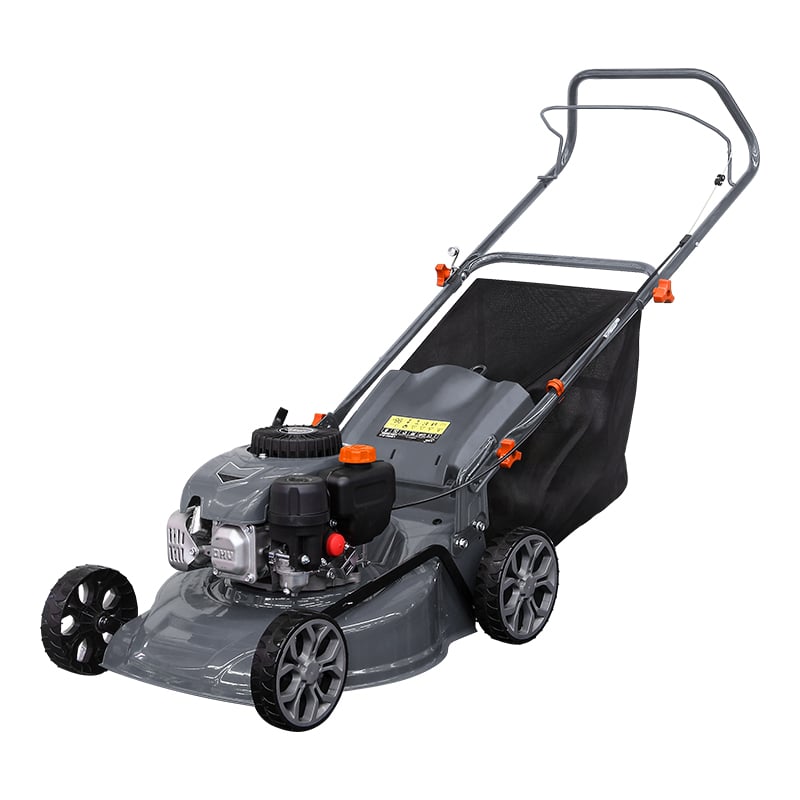
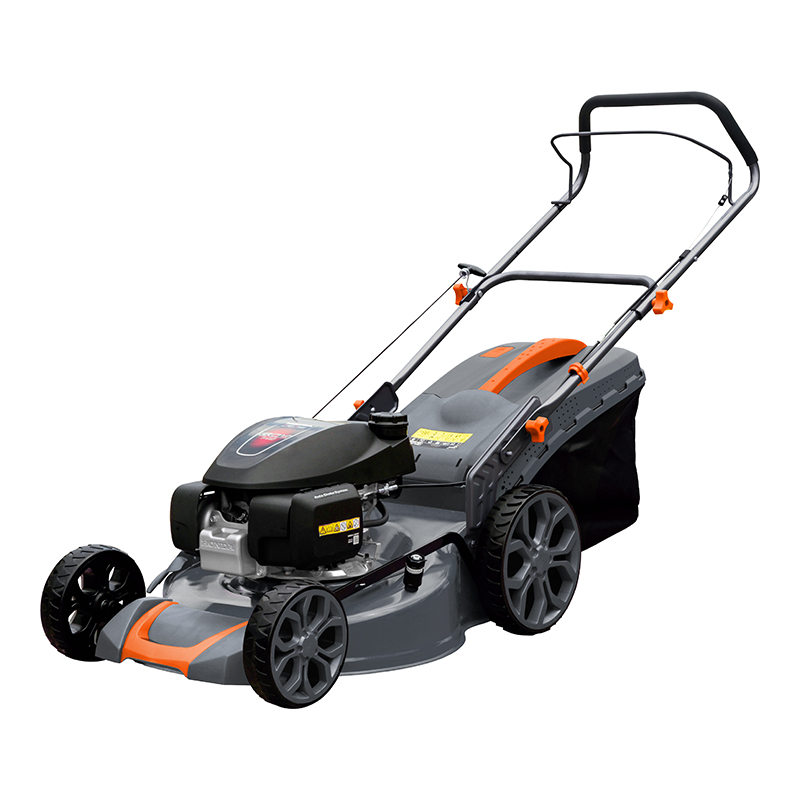
 A walk-behind mower can be easier to position where access and edging demand close control.
Where a ride on mower fits large, open areas
For a mostly open large lawn, a ride on mower is usually strongest when the goal is consistent coverage with fewer walking hours. A riding mower lets the operator maintain a steady pace across long rectangles or gentle curves, which can make a recurring mowing schedule easier to sustain. It also becomes appealing where the operator’s comfort or mobility makes a walk-behind session difficult.
A lawn tractor is one common form of riding mower. Its layout generally suits routine cutting on established turf where access is broad and the route is predictable. The practical advantage is not a universal speed claim; it is the ability to sit, steer, and keep moving across the portions of the property that suit the machine.
Still, compare the turning behavior and the space required at the end of each pass. A ride on mower that is comfortable in the center of a lawn can feel awkward in a tight corner. On a property with many islands of turf, that trade-off matters more than headline capacity.
Where a walk-behind mower stays competitive
A walk-behind mower remains a sensible choice when the lawn has narrow access, frequent obstacles, retaining edges, or several small zones. It gives the operator close control around borders and can be easier to store. For a homeowner who mows less often or does not mind the physical work, a walk-behind may deliver the needed result without committing space and budget to a ride on mower.
Walk-behind equipment also deserves a closer look when terrain changes. It is tempting to treat slope as a simple reason to buy a riding mower, but manufacturer guidance for the exact model and the site conditions should lead the decision. Wet turf, loose soil, drop-offs, side slopes, traction, and the operator’s experience all change the risk. Do not assume that a ride on mower is appropriate for every incline.
A side-by-side decision table
| Decision factor | Ride-on approach | Walk-behind approach |
|---|---|---|
| Open mowing area | A ride on mower is often well suited to long, unobstructed passes. | Works, but requires more walking over the same route. |
| Access openings and narrow access | Confirm width and turning clearance before purchase. | Usually easier to guide through constrained spaces. |
| Many obstacles | May need trimming or extra maneuvering around features. | Offers closer, more deliberate control. |
| Operator comfort | A riding mower can reduce time spent walking behind the machine. | Requires sustained walking and handle control. |
| Storage and transport | Needs room for the machine, access, and routine service. | Typically needs less dedicated storage space. |
| Terrain | Check the model manual and site conditions carefully. | Assess traction, footing, and the route before mowing. |
Calculate total ownership, not just purchase price
A good mower comparison includes the time and space around the machine. With a ride on mower, consider storage access, fuel or charging arrangements where relevant, blade maintenance, tires, cleaning, and service access. With a walk-behind, consider the physical effort, the time needed for the route, and whether repeated long sessions will affect how consistently the lawn is maintained.
For a lawn tractor or another riding mower, ask practical questions before you decide: Who will operate it? Where will it be stored? Can it pass every access opening? Is the lawn dry and stable when it is normally cut? What happens when leaves, damp turf, or a new garden bed changes the route? These questions often reveal whether a ride on mower is a fit.
Use a two-part plan for mixed properties
Some properties do not need an either-or answer. A ride on mower can handle the open core while a smaller walk-behind covers the narrow strips and detailed edges. That approach is worth considering when the central turf area is substantial but the perimeter is complex. It also helps avoid forcing one machine into work it does not handle comfortably.
For a related look at terrain and layout, see our guide to choosing ride-on and walk-behind mowers by lawn size and terrain.
Which mower should you choose?
Choose a ride on mower when your large lawn is predominantly open, access is wide, the mowing route is long, and reducing operator walking is a real priority. Choose a walk-behind when tight access, obstacles, storage limits, or variable terrain dominate the day. If the answer is mixed, plan around the section that consumes the most time and do not overlook a two-machine workflow.
The final choice should feel workable on an ordinary mowing day, not only on a clear, dry demonstration area. Measure the route, review the operating instructions for the specific model, and choose the mower that matches your lawn’s shape as well as its size.

 Hot News