EN
What Should Users Know About Lawn Mower Cutting Height Adjustment?
A lawn mower set too low can leave pale patches on a bumpy yard, while a setting that is too high may leave the finish uneven or untidy. The useful question is not just which notch to choose: it is how much leaf remains after the blades pass, and whether that height suits the turf and conditions. A careful adjustment makes the next cut easier to judge and fits into routine lawn maintenance.
What does cutting height actually mean?
Cutting height is the approximate distance between the ground and the plane where the blade cuts. It is not necessarily the number printed beside a lever. Notch positions differ between machines, and soft ground, worn wheels or an uneven surface can change the result. Consult the manual for the adjustment range of your lawn mower, then use a small test patch to check the finish.
Leaving more leaf gives the plant more surface to capture sunlight. Cutting too close can expose soil and stress the turf, especially during hot or dry weather. Longer turf can also make a yard look less formal, so a sensible setting balances appearance, plant condition and how frequently you can mow. Cutting height is a guide to that balance, not a fixed recipe for every garden.
Choose a starting height for the lawn
Identify the turf species where possible and check advice from a local extension service or turf specialist. For many lawns, Illinois Extension suggests a starting mowing height of approximately 2.5 to 3 inches (about 6.4 to 7.6 cm). That is not a universal specification: warm-season varieties, fine ornamental turf and local climates may call for different ranges. Follow the advice for your actual turf rather than copying a neighbour's setting.
Raise the cutting height when the turf is under heat or drought stress, or where tree roots and low spots make scalping likely. If the yard is healthy and actively growing, adjust within the recommended range to achieve the finish you want. If the lawn has been left long, do not try to reach the final height in a single pass; use a higher setting and reduce it gradually over several mowing sessions.
Use the one-third rule as a practical check
A common turf management guideline is to remove no more than one-third of the leaf height in one mowing. For example, to leave about 3 inches, mow when the turf reaches approximately 4.5 inches. That arithmetic gives you a starting point, not an exact measurement for every blade. During fast growth, mow more often rather than dropping the lawn mower to a much lower notch. When growth slows, the interval can lengthen.
How to adjust the machine safely
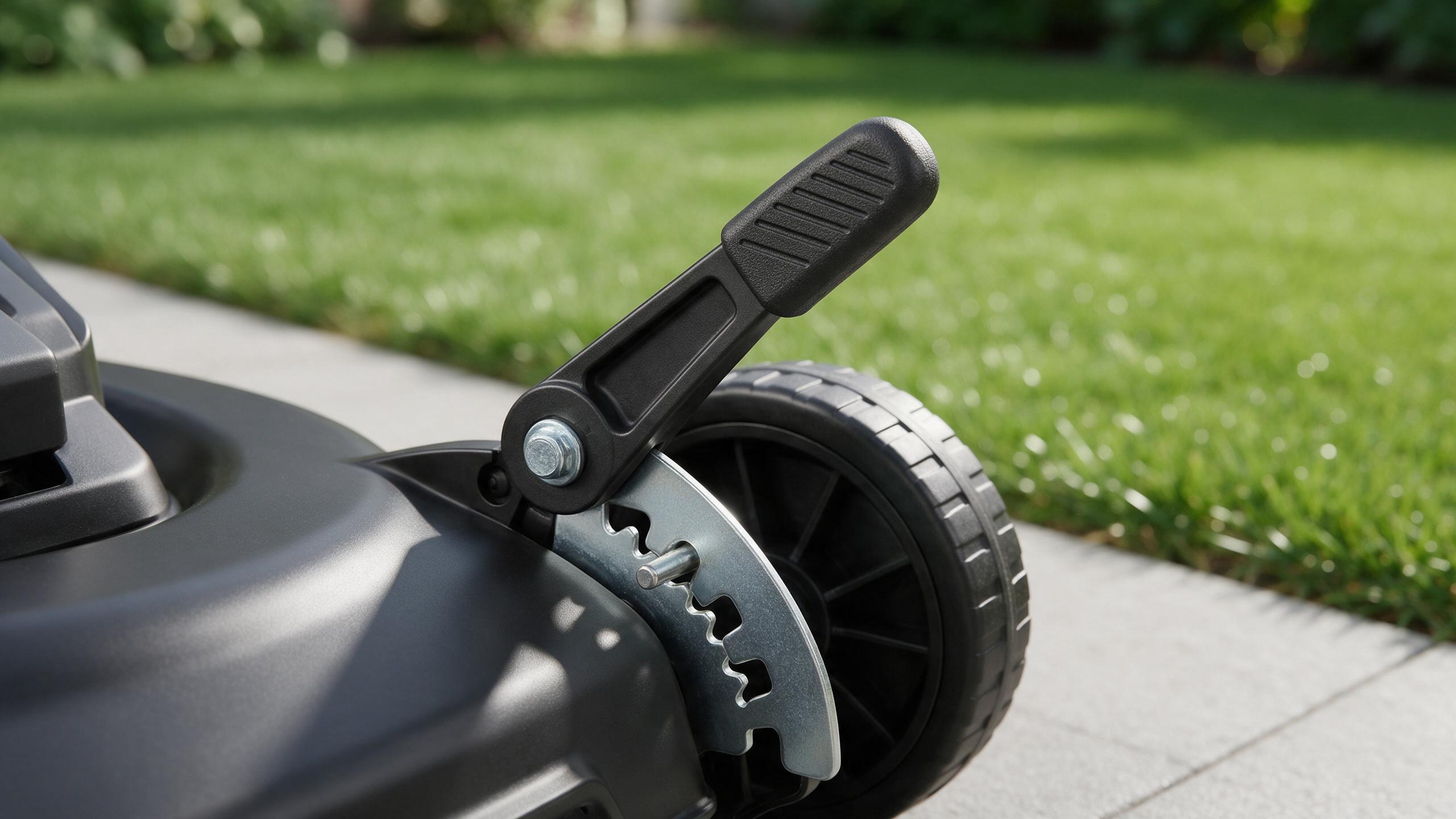
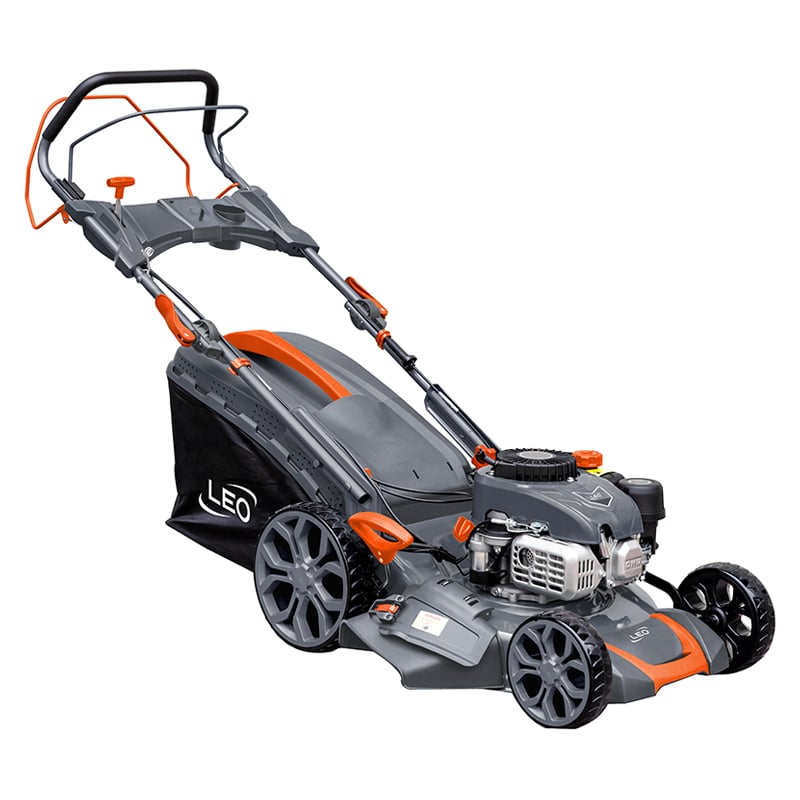
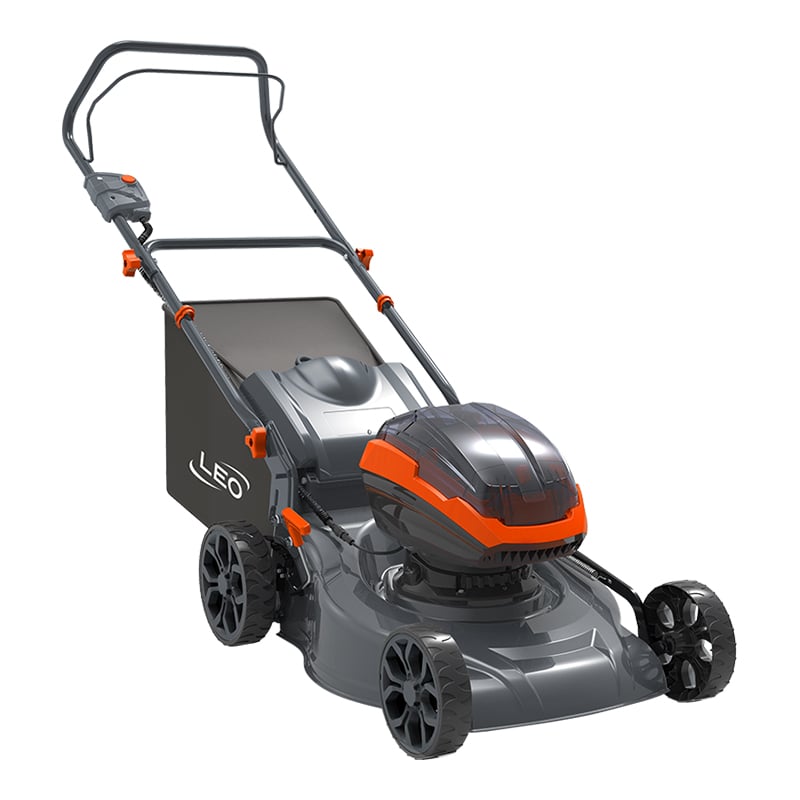
Adjustment systems vary. Some machines use a central lever to move several wheels together; others have a separate lever at each wheel, and ride-on designs may use a deck control. Look at the manual before making a change. Do not assume that every lawn mower uses the same direction or the same number of positions.
- Park on a firm, level surface, stop the engine or motor, and wait for every moving part to stop. Engage the parking brake where fitted.
- Remove the ignition key, disconnect the spark-plug lead on a petrol machine, or remove the battery or unplug an electric model as directed by its manual. Keep hands and feet clear of the blade.
- Locate the height control and move it into the desired detent without forcing it. On independently adjusted wheels, use the corresponding position at each wheel unless the manufacturer specifies otherwise.
- Confirm the lever is locked and all wheels or deck supports are secure. Inspect the area for damage; do not operate the machine if an adjuster will not stay in position.
- Reconnect the power source only when the machine is ready to use. Mow a short, clear test strip and compare the finish before continuing.
For a more accurate check, use the measurement procedure in the manual on a hard, level surface with the power source isolated. The deck edge may be at a different level from the blade. Do not reach under a running machine or rotate a blade by hand merely to estimate a setting. If safe access or measurement is unclear, ask a service technician.
Why does the lawn look uneven after adjustment?
Start with the ground, not the engine. A wheel dropping into a hollow changes the distance between blade and soil. A lawn mower can scalp a raised patch even when the lever is set correctly. Raise the deck and make a slower test pass; if the same patch is repeatedly exposed, address the uneven ground rather than lowering the rest of the yard to match it.
Next, inspect each height position with the machine safely stopped and isolated. Mismatched wheel settings, worn wheels or an adjuster that has not engaged can produce an uneven result. On a ride-on lawn mower, consult the manual for tyre pressures and deck-level checks; deck geometry can be model-specific. Have damaged or loose parts inspected instead of improvising a repair.
Blade condition matters too. Torn or ragged leaf tips can make a cut look poor even when cutting height is appropriate. Arrange sharpening or replacement according to the manual, using a qualified service provider if you are not equipped for blade work. Wet clippings and excessive growth may also clog the deck. Stop, isolate the power and follow the manual before clearing any blockage.
Seasonal mowing tips for a consistent finish
In a period of vigorous growth, check the turf more often and apply the one-third guideline. During hot, dry spells, a higher cutting height can leave extra leaf cover; avoid mowing turf that is severely stressed. In cool or wet conditions, wait until the surface is safe and the blades are reasonably dry when possible. This makes clumping easier to manage and reduces the temptation to cut too aggressively.
If you mulch, use a modest cut and watch for clumps left on the surface. A high setting on the first pass can help when growth is heavy; collect or spread accumulated clippings if they remain in thick piles. When conditions change, note the setting and the visible result so your next lawn maintenance session starts with evidence from your own yard.
A quick check before the next cut
Good turf management starts with the turf's recommended range, a level and correctly adjusted machine, and a cut that leaves enough leaf behind. Choose the cutting height for current conditions, use the one-third rule to plan timing, and inspect a test strip before mowing the whole area. These mowing tips apply across many machine types, but the controls, safety steps and permitted range depend on the specific lawn mower and its manual.
 Hot News