
 EN
How to Choose Durable Garden Equipment for Long Term Use?
Buying garden equipment for the long haul is less about finding the heaviest-looking tool and more about matching construction to the work it will actually do. A light pruner used for a few rose stems needs something different from a mower, tiller, or branch cutter used through a long growing season. As a garden machinery technical consultant would put it: start with the site, the workload, and the service plan—not the glossy finish.
For durable garden equipment, look beyond a single material claim. Corrosion resistance, joint strength, replaceable wear parts, and sensible storage all work together. Material quality matters, but it is only one part of a product design that can remain useful after repeated outdoor use.
Start with the workload, not the price tag
Before comparing garden equipment, write down the jobs, frequency, and conditions. Is the tool used weekly on damp grass, occasionally in dry soil, or for clearing woody debris? Will it sit in an unheated shed near the coast? These details determine which construction features deserve the budget.
- Light seasonal work: compact outdoor tools can prioritize comfort and easy storage, provided their joints and fasteners are still solid.
- Regular home use: choose garden equipment with reinforced handles, protected controls, and parts that can be maintained without special improvisation.
- Demanding or shared use: prioritize a rigid chassis or frame, accessible service points, and a clear route to replacement consumables.
A common mistake is choosing every piece of garden equipment by maximum power or maximum size. Bigger can add fatigue, vibration, storage problems, and repair expense. The better choice is equipment whose capacity, weight, and control layout fit the terrain and the person using it.
Read material quality as a system
Material quality should be checked at the working edge, the load path, and the finish. For hand garden equipment, inspect blades, tines, sockets, rivets, and handle connections—not just the headline material. Forged or suitably thick steel can be a sensible choice for high-load digging and cutting parts, while aluminum can reduce fatigue where the design has enough reinforcement. Stainless or coated components may help in wet conditions, but a coating is not a substitute for sound base material and careful use.
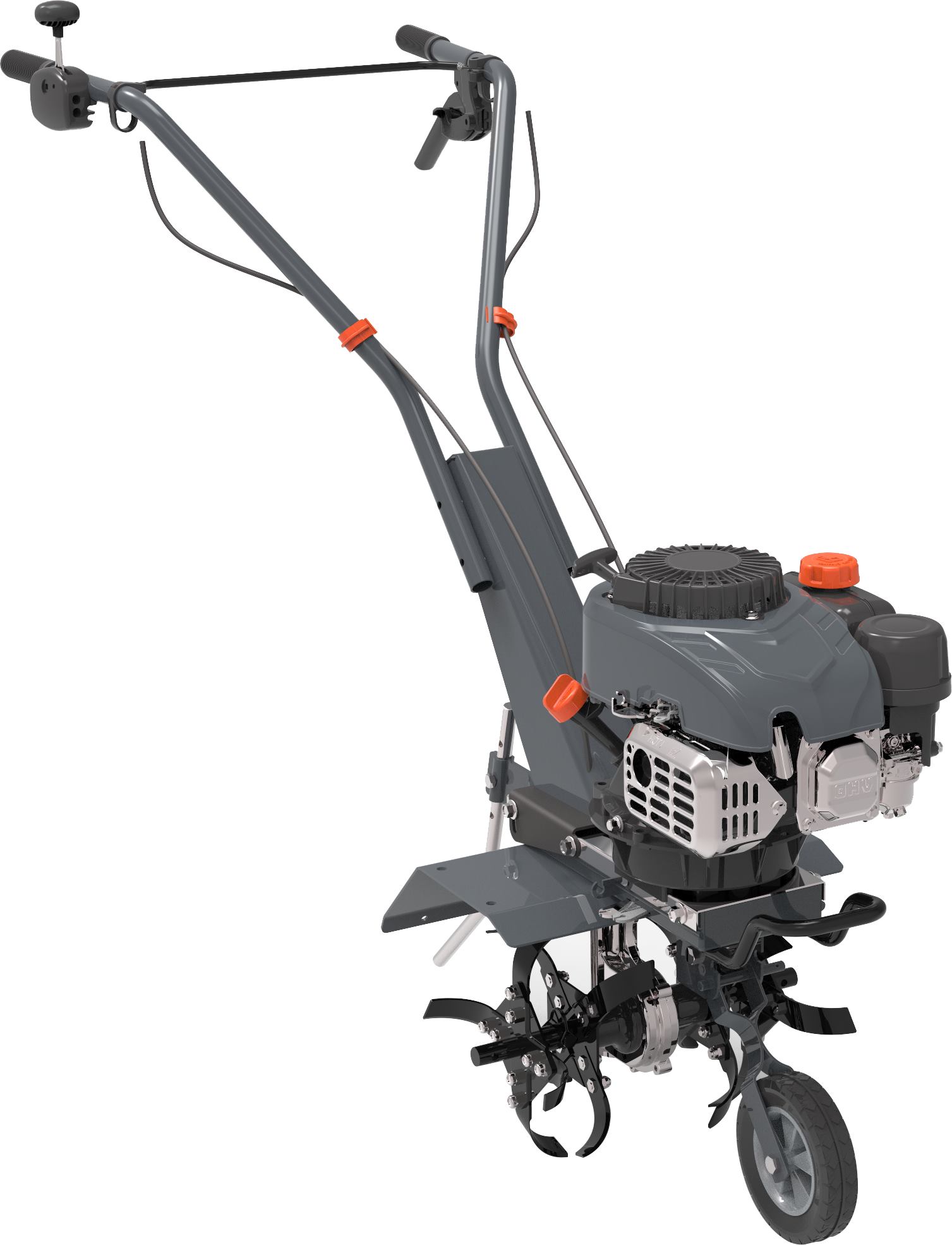
For powered outdoor tools, ask where heat, impact, and moisture meet the machine. A sturdy deck or housing helps, but so do protected cables, sealed bearings where appropriate, guarded fasteners, and drainage that does not trap debris. Look for clean welds, even gaps, and controls that return positively. None of these signs proves a product will last forever; together, they make a more credible durability case.
Judge product design at its stress points
Good product design makes stress visible and manageable. On a shovel, that may be the transition from blade to shaft. On a mower, it may be the deck, wheel mounts, blade fixation, handle pivots, and access to the underside. On cutting garden equipment, it is often the blade mount, guard, and trigger mechanism. Gently operate moving parts where possible: they should not bind, rattle excessively, or feel loose at the joint.
Also check whether the design protects the operator from premature wear. Comfortable grips, balanced weight, adjustable handles, and sensible control placement reduce the temptation to twist, drop, or force outdoor tools. Ergonomics are therefore a durability consideration as well as a comfort issue.
Make repairability part of the buying decision
Long-term garden equipment needs an after-purchase path. Before buying, ask whether ordinary wear items can be replaced: blades, belts, filters, wheels, cutting lines, switches, batteries, and fasteners all have finite lives. A tool with an accessible parts diagram, clear maintenance instructions, and local or dealer-supported service is generally easier to keep in use than one designed as a sealed unit.
Do not assume the most expensive outdoor tools are automatically easiest to repair. Instead, examine the practical details. Can the blade be sharpened or changed? Are service covers secured by standard fasteners? Can dirt be cleared without dismantling half the machine? Is there a safe way to inspect fluids, charging connections, or drive components? These questions reveal whether product design supports long-term ownership.
Inspect the details that predict early failure
| What to inspect | What a durable choice usually shows | Why it matters |
|---|---|---|
| Fasteners and joints | Secure fittings, little play, and reinforcement around high-load areas | Loose joints transfer stress into handles, housings, and controls. |
| Working surfaces | Suitable thickness, even finish, and protection against rust where exposure is likely | Edges, decks, and tines face abrasion, moisture, and impact. |
| Controls and guards | Positive action, sensible shielding, and no obvious pinch points | Well-protected controls are less vulnerable during ordinary outdoor work. |
| Service access | Clear access to cleaning and routine maintenance points | Garden equipment lasts longer when upkeep is realistic to perform. |
Protect garden equipment after purchase
Even well-made garden equipment loses life quickly when wet soil, sap, fertilizer residue, and grass clippings are left in place. After use, brush off debris, dry metal working surfaces, and check for damaged coatings or loose hardware. Sharpen cutting edges when they begin to tear rather than cut cleanly; forcing a dull blade increases load on both the tool and the user.
For petrol-powered garden equipment, follow the manufacturer’s seasonal fuel and oil guidance. For battery outdoor tools, use the supplied charging instructions and store batteries in a dry, temperature-appropriate location rather than leaving them in direct sun, freezing conditions, or on a charger indefinitely. Before storage, clean vents, decks, and guards so moisture-holding debris does not stay against the material.
Use a simple long-term selection checklist
- Define the task, terrain, frequency, and storage conditions.
- Compare garden equipment at its load-bearing joints and exposed working surfaces.
- Check material quality alongside thickness, reinforcement, coating, and drainage.
- Test product design for balance, secure controls, and reasonable cleaning access.
- Confirm that likely wear parts and service support are available before purchase.
- Plan routine cleaning, inspection, sharpening, and dry storage from day one.
The strongest long-term purchase is not necessarily the most elaborate piece of garden equipment. It is the one whose construction fits the job, whose material quality holds up to the environment, and whose product design makes maintenance and repair practical. Choose outdoor tools with those conditions in mind, and the equipment is more likely to remain dependable season after season.


 Hot News