EN
What Safety Features Are Important in Modern Ride On Mowers?
A modern ride on mower makes larger lawns and commercial turf areas more manageable, but its extra speed, weight, and cutting width make its safety system just as important as cutting capacity. When comparing a ride on mower, look beyond engine output and deck size. Ask how the machine responds when the operator leaves the seat, whether it can be started in an unsafe condition, and how it supports stable control on the ground where it will actually work.
As a garden-machinery technical consultant, I start with terrain, obstacles, and workload rather than a brochure checklist. A ride on mower used on a flat, open lawn has different priorities from one used near slopes, trees, retaining walls, or busy access areas. The right safety system is a set of layers: it helps the operator avoid an unsafe action, limits exposure to moving parts, and supports operator protection if conditions change quickly.
Start with the operator-presence safety system
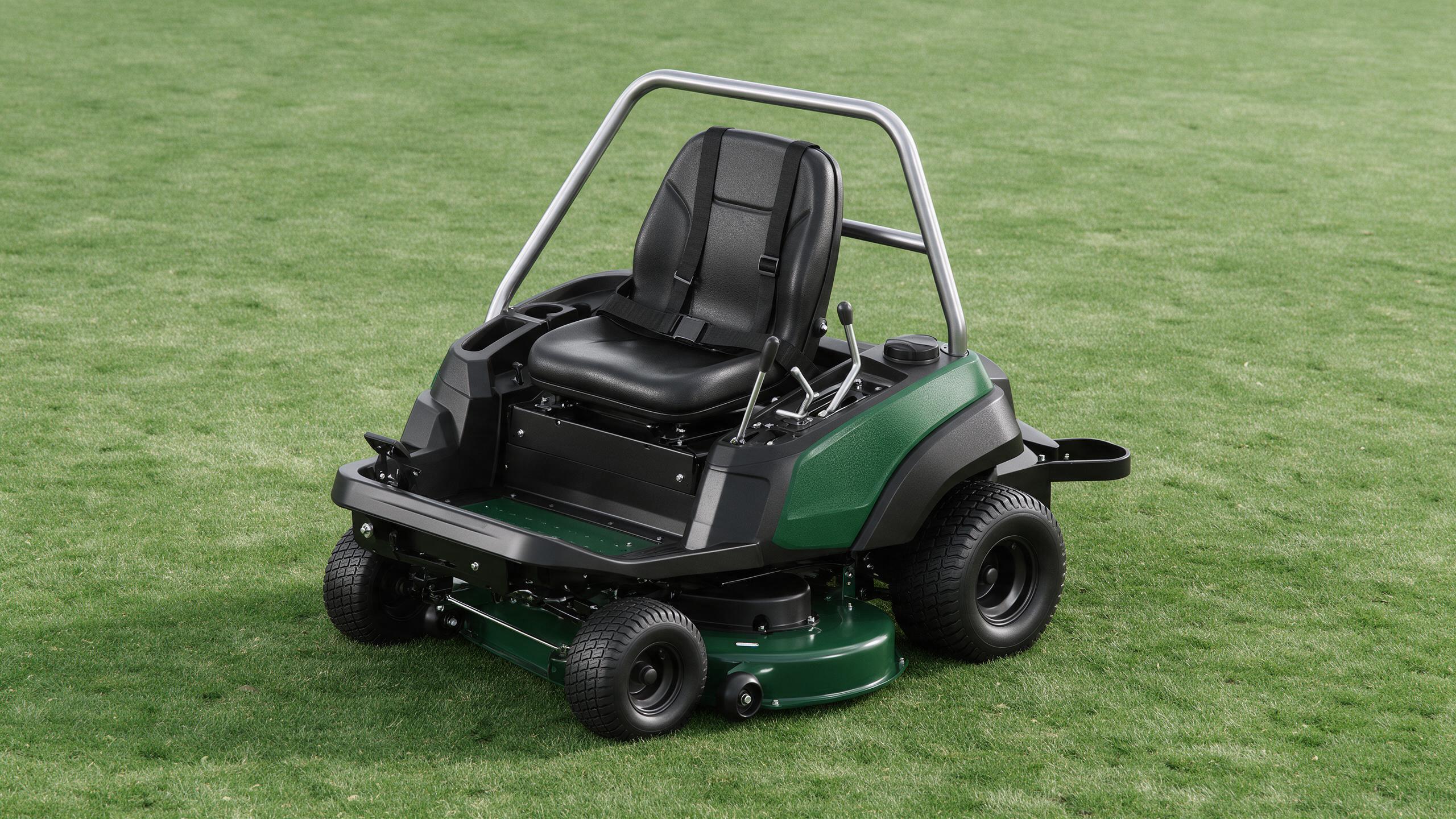
The operator-presence system is one of the first items to inspect on any ride on mower. Common designs use a seat switch to recognize whether the user is in the normal operating position. Depending on the machine’s design, leaving the seat may stop the cutting blades, stop the engine, or require the parking brake and transmission to be in a specified condition. The exact sequence varies by model, so the operator’s manual remains the controlling source.
This safety system matters because a ride on mower can still have moving blades or drive components after a user has shifted position. Check its action before work begins, following the manufacturer’s test procedure. Do not bypass a seat switch, safety switch, or wiring connection to keep a ride on mower running. A bypass may remove a key layer of operator protection and can make fault diagnosis harder later.
Look for starting, blade, and reverse interlocks
Modern mower technology commonly uses interlocks to manage several actions together. A ride on mower may require the transmission to be neutral, the parking brake to be set, or the cutting deck to be disengaged before it will start. These controls are not a substitute for careful operation; they are a barrier against a routine mistake becoming a moving-machine event.
Blade engagement controls also deserve attention. The control should be identifiable from the seat, return or disengage as designed, and work with the operator-presence system. If reverse mowing is available on a particular ride on mower, understand its activation method and use the area check required in the manual. Children, pets, stones, and hidden landscape features make reversing a higher-attention task.
Match stability features to the terrain
For a ride on mower that may operate on uneven ground, stability is not a minor specification. A wide stance, appropriate tires, responsive steering, clear speed control, and a maintained brake system all help the operator place the machine deliberately. The number I kept checking was engine size; it is easy to do that. On sloped or rough ground, though, terrain, traction, turning behavior, and low-speed control are usually more useful questions.
Some commercial machines are configured with a rollover protective structure, often called ROPS, and a seat belt. OSHA notes that where a mower has ROPS, the related seat belt should be used as intended. ROPS configuration, retrofit suitability, and slope limits are model-specific, so confirm them in the manufacturer documentation. A protective structure does not make every slope appropriate for a ride on mower; travel direction, surface condition, ditch edges, and weather still determine whether the task should be done another way.
Guards, discharge management, and operator protection
Deck guards, belt covers, deflectors, and discharge components are practical operator protection features, not cosmetic parts. They help keep hands, feet, clothing, and bystanders clear of rotating or thrown-material zones. Before using a ride on mower, inspect for loose fasteners, damaged guards, missing discharge parts, and accumulated clippings that could obscure a control or interfere with movement.
Consider the mowing area as part of the safety system. Clear debris that can be thrown, identify drop-offs and soft shoulders, and keep people out of the work zone. Near an unprotected edge, a hand-held or pedestrian-controlled tool may be the more suitable choice. A ride on mower is productive when the site suits it; it is not the right tool for every tight, steep, or obstructed section.
Braking, steering, visibility, and service access
A well-designed ride on mower should give the operator a controlled way to slow, stop, steer, and park. Evaluate pedal or lever feel, parking-brake engagement, seat adjustment, step placement, handholds, and visibility around the deck and rear of the machine. Good mower technology also makes routine checks easier: accessible fluid points, legible controls, and a clear maintenance schedule make it more likely that critical items are actually inspected.
Before each shift or mowing session, check tire condition and pressure, steering response, brake operation, blades and guards, seat switch function, fuel or battery condition, and obvious leaks. Remove the key after shutdown and wait for moving parts to stop before dismounting. These habits support the built-in safety system rather than asking it to carry the entire burden.
Use equipment standards as a buying question
For professional procurement, equipment standards are useful questions to raise with a supplier. OSHA identifies ANSI B71.1 for consumer turf-care equipment, ANSI/OPEI B71.4 for commercial turf-care equipment, and ISO 21299 for ROPS test procedures and acceptance criteria. Standards evolve and may apply differently by market and machine category, so request the current documentation that applies to the intended destination rather than assuming a general statement covers a specific ride on mower.
Ask for the operator manual, parts information, safety labels, maintenance instructions, and evidence relevant to the market where the machine will be used. This approach improves operator protection because the buyer can verify the machine configuration, train users around its actual controls, and plan service support.
A practical selection checklist
- Confirm how the operator-presence safety system behaves when the user leaves the seat.
- Check starting, brake, blade, and reverse interlocks on the specific ride on mower.
- Match tire, steering, speed-control, and stability characteristics to the site.
- Inspect guards, deflectors, seat, steps, handholds, and control labels.
- For machines with ROPS, confirm the required seat-belt practice and maintenance guidance.
- Request the documentation relevant to applicable equipment standards and operator training.
Choose a safety system that fits real work
There is no single feature that makes a ride on mower suitable for every property. The more useful approach is to compare the safety system, terrain limits, operator protection features, and maintenance requirements as one package. If your work area includes slopes, edges, narrow passages, or frequent bystander activity, be more conservative about machine selection and daily setup. A ride on mower that matches the site and is kept in working order gives the operator a clearer, more controlled way to mow.
 Hot News