
 EN
EN
Key Design Features That Improve Ride On Mower Comfort and Durability
As a garden machinery specialist who has evaluated a wide range of ride on mower configurations for professional and residential use, the question I hear most consistently is not about brand or price. It is about how a machine is actually built. Buyers who work with these machines for extended sessions learn quickly that comfort and durability are not marketing additions. They are outcomes of specific design decisions made at the engineering level. Based on what I have seen across a range of lawn types and use patterns, the machines that hold up and remain comfortable over time are the ones where those decisions were made carefully.
This article examines the design features that make a practical difference to operator comfort and long-term machine durability, with the aim of giving buyers a framework to evaluate a ride on mower on its construction merits rather than its specification sheet.
Seat Design and Suspension — Operator Comfort Over Extended Sessions
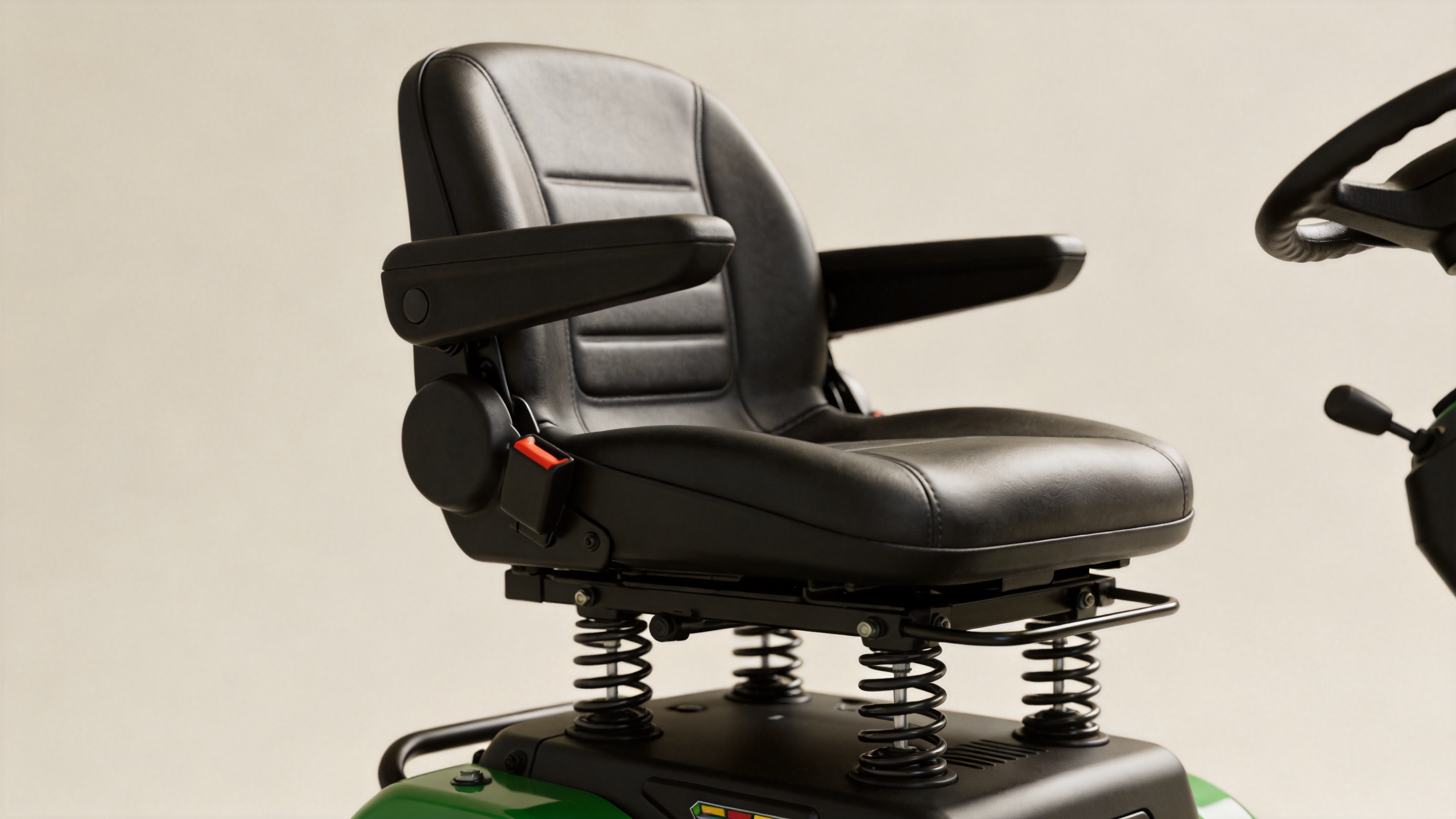
The seat is the most direct interface between the operator and the machine, and its design has a measurable effect on fatigue during longer mowing sessions. A standard seat on an entry-level ride on mower typically uses an upholstered cushion mounted directly on a fixed bracket. The limitation of this approach becomes noticeable once terrain becomes uneven: each surface irregularity transmits directly through the seat to the operator.
A seat with integrated suspension changes the situation. The most common construction uses an upholstered seat mounted on a spring-loaded or shock-absorber-equipped base that decouples vertical movement between the seat and the chassis. More refined designs use adjustable suspension tension, allowing operators of different weights to tune the suspension response to their preference. For distributors sourcing a ride on mower for professional landscaping or grounds maintenance use, the presence and quality of this suspension system is one of the first design details worth examining.
If your target operators are using the machine for half-day or full-day sessions, an ergonomic mower seat with proper suspension support is not a comfort upgrade. It is a direct factor in the machine's practical usability. Vibration fatigue accumulated over a full working day, particularly on uneven terrain, is a well-documented issue with rigid-mount seating that better seat machine design resolves.
Frame and Deck Construction — The Structural Foundation of Durability
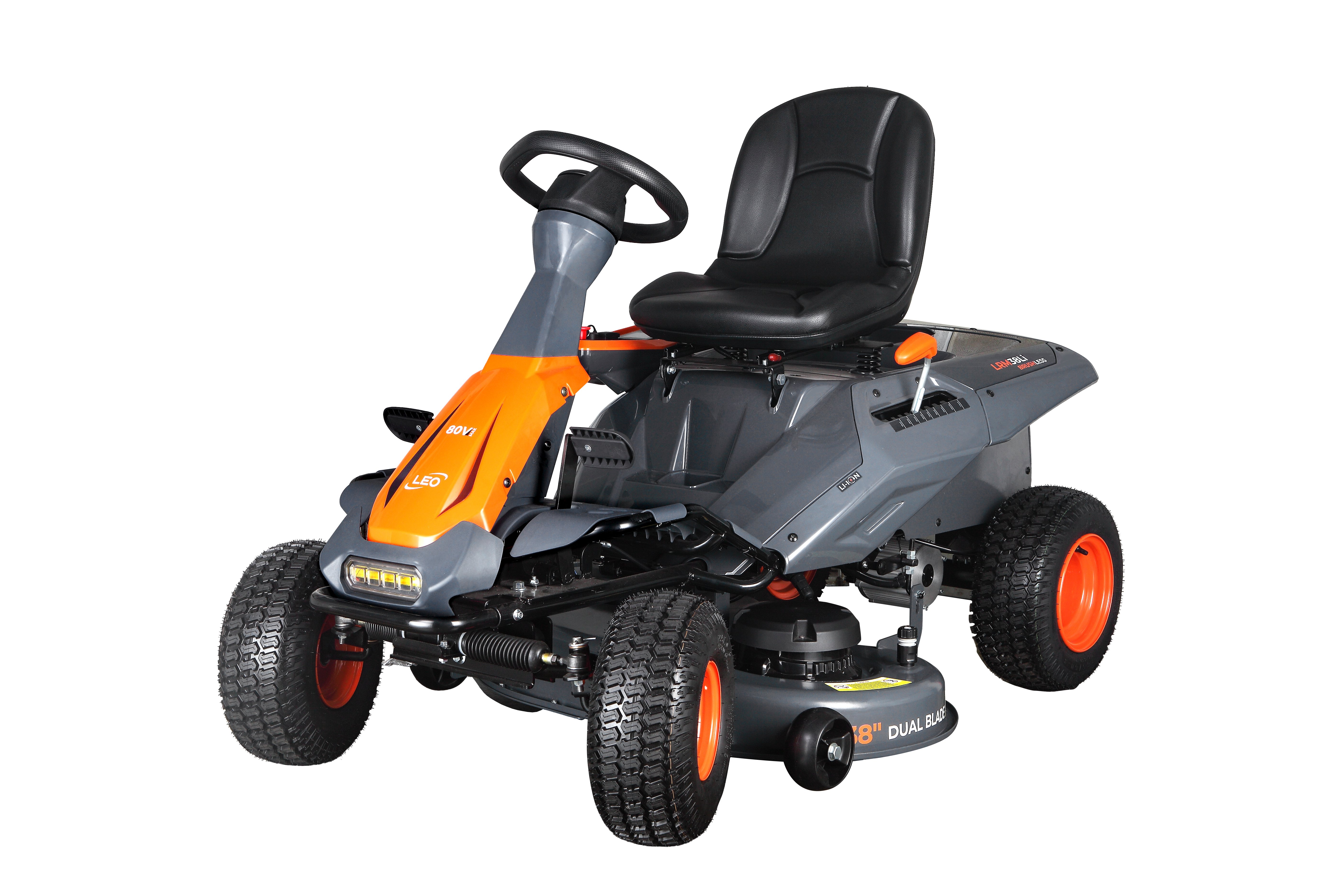
How a machine is put together determines how it holds up over time. A ride on mower operating across varied terrain, slopes, and seasonal weather conditions places continuous stress on its frame, deck, and mounting points. Material gauge and fabrication quality in the frame are the primary factors that determine service life under these conditions.
Heavy-gauge steel construction in the main frame and chassis provides the structural integrity that separates machines built for sustained commercial use from those designed for occasional domestic coverage. Welded steel frames, particularly at the deck mounting and engine mount connections, reduce the flex and vibration transmission that contributes to fastener loosening and joint fatigue over time.
The cutting deck material and construction method deserves equal attention. A fabricated steel deck, built from thicker-gauge steel than a stamped deck, offers better resistance to impact and corrosion under heavy use. For European market distribution, where machines are expected to operate in variable humidity conditions and seasonal storage cycles, a corrosion-resistant deck treatment extends the working life of the mower structure and reduces the maintenance requirement for distributors and their end customers.
Drive and Control Ergonomics — Reducing Operator Effort
Design decisions around the drive system and controls directly affect how physically demanding extended mowing becomes. A hydrostatic transmission system is one of the most significant comfort-oriented machine design choices available. Unlike a stepped gear transmission, hydrostatic drive delivers smooth, continuous speed adjustment without requiring gear changes, allowing the operator to modulate pace in response to terrain changes or obstacle proximity without mechanical interruption.
Ergonomic control placement matters alongside drive system design. Controls positioned within natural reach from the operator seat, with clearly differentiated functions and low actuation force, reduce the cumulative strain of repeated adjustments over a working session. For operators managing large areas, which is the typical use case where a ride on mower is justified over a walk-behind, this operator comfort consideration compounds over hours of use.
Adjustable operator seats that accommodate a range of operator sizes shift the machine from a fixed configuration to one that can be properly fitted to the individual using it. A seat that places the operator in the correct posture relative to the steering and controls reduces back strain and improves steering precision, which in turn affects cut quality on more demanding terrain profiles.
Cutting Deck Width and Discharge Design
The cutting deck design affects both efficiency and the working experience in ways that are sometimes underestimated at the selection stage. Standard ride on mower cutting widths range from around 42 to 54 inches for lawn tractor configurations, with the choice of width affecting not just mowing time but the machine's maneuverability around obstacles and in tighter garden layouts.
When I was first working through ride-on options for a client with a garden that included several mature trees and irregular border plantings, I spent too long comparing engine specifications and not enough time examining turning radius and deck overhang. Those turned out to be the design details that actually determined whether the machine could complete the job without leaving uncut strips around obstacles.
Discharge configuration flexibility, such as the ability to switch between side discharge, rear collection, and mulching modes without tool changes, extends the machine's usability across different seasonal conditions and grass types. This kind of integrated flexibility is a machine design decision that adds practical value for buyers who need to adapt the mowing approach to varying conditions across a season.
Sealed Components and Long-Term Maintenance Reduction
Durability in a ride on mower is not only about the structural strength of the frame and deck. It is also about how internal components are protected from the conditions they operate in. Sealed bearing assemblies on key rotating components, including deck spindles and drive shaft joints, significantly reduce the frequency of required maintenance and extend the service interval compared to open-bearing configurations that require regular greasing and are more vulnerable to contamination from grass, soil and moisture.
For distributors and importers supplying professional operators or rental markets, sealed bearing designs reduce the after-sales service burden and improve the machine's total cost of ownership. That is a practical consideration that often carries more weight in B2B procurement than the upfront specification comparison.
Evaluating Design Quality in Practice
A ride on mower's specification sheet will confirm engine output, cutting width and basic features. Evaluating the machine design decisions that actually determine operator comfort and long-term durability requires examining seat suspension construction, frame material gauge, drive system type, control placement and component sealing as separate and specific points of comparison.
Where comfort and durability over a commercial service life are the primary requirements, as is typically the case for professional landscaping, grounds maintenance, or volume retail distribution, these design details should carry more weight in the evaluation than brand positioning alone. A machine built to hold up under continuous professional use will demonstrate its quality in the field in ways that a specification sheet does not communicate.
 Hot News