
 EN
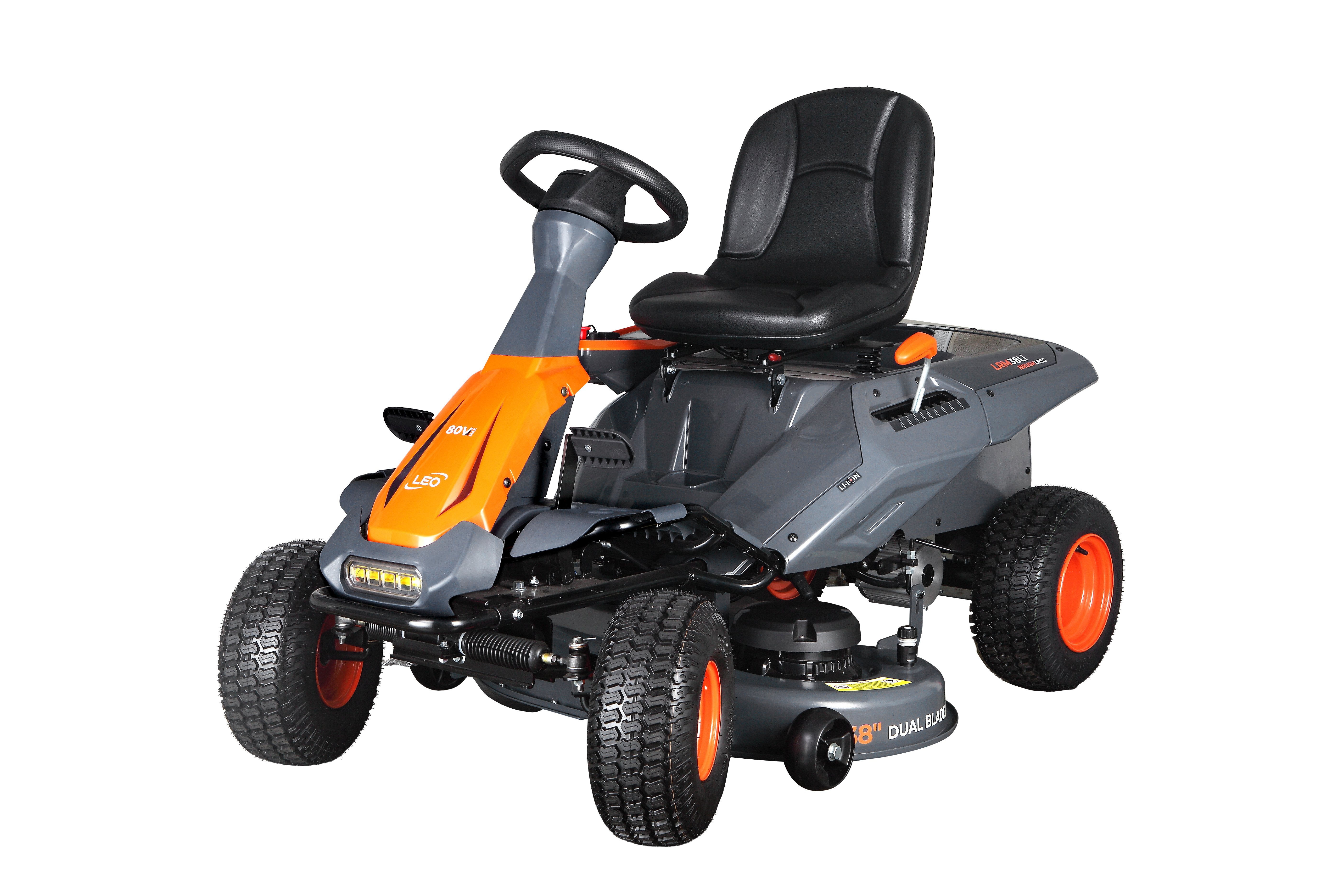
How to Choose the Right Battery Capacity for Electric Ride On Mowers?
Buying an electric ride on mower is often framed as a choice between a smaller and a larger battery. That is too simple. As a garden-machinery technical consultant, I start with the mowing job: lawn area, grass growth, slopes, travel between sections, and whether the machine must finish in one session. The right battery capacity is the one that gives an electric ride on mower enough usable energy for that real workload, with room for changing conditions.
A mower that finishes a short, dry cut with charge left may be undersized once spring growth arrives. Conversely, paying for far more battery than the job needs can add cost and charging time without improving the result. Good battery selection begins with energy, not with a single headline number.
Start with the mowing session, not the battery label
Before comparing an electric ride on mower, write down the longest normal session rather than the quickest summer trim. Consider the lawn area, obstacles that increase steering and drive time, grass height, damp patches, slopes, and the distance from the charging point. If a property has several separated lawns, include the travel between them. These details affect battery mower runtime as much as the battery rating.
A useful rule is to size for the demanding routine cut, then keep a reserve. Do not size the machine around its published claim on flat, dry, closely cut turf. Dense or tall grass raises cutting load; slopes and frequent turns add traction demand. In other words, the same electric ride on mower can deliver noticeably different runtime on two lawns of the same area.
Compare watt-hours before comparing amp-hours
Amp-hours (Ah) tell you how much charge a battery can supply, but Ah alone cannot fairly compare packs with different voltage. Watt-hours (Wh) give a more useful estimate of stored energy:
Battery energy (Wh) = nominal voltage (V) × amp-hours (Ah).
For example, an 80 V, 4 Ah battery stores about 320 Wh, while a 48 V, 4 Ah battery stores about 192 Wh. The figures do not predict mowing time on their own, but they explain why two batteries with the same Ah label may not offer comparable energy. For a ride-on system, look for the manufacturer’s stated battery energy in Wh or kWh, then compare it alongside the stated mowing coverage and charging conditions.
Voltage still matters because it is part of the system design, including how the motor and controller operate. It is not a universal performance score. A higher-voltage label should not override the real questions: How much usable energy is in the pack? How much power does the machine draw in your conditions? How well does the whole system manage heat and load?
 v
Estimate runtime from usable energy and real power draw
The basic planning formula is simple: usable battery energy divided by average power draw equals estimated runtime. It is a planning estimate, not a promise. A battery’s rated energy is not necessarily all available for mowing, and the power draw changes as blades, drive motors, terrain, and grass conditions change.
For battery selection, treat stated runtime or coverage as a starting point and apply a practical margin. If the published figure is enough only for your average cut, it may leave no reserve for taller grass, a missed week, or colder weather. I would normally prefer an electric ride on mower whose normal mowing session uses a sensible portion of the claimed capacity rather than nearly all of it.
Ask one question before becoming absorbed in specifications: how long does your most demanding regular cut actually take? That answer is more valuable than a generic runtime comparison. If you routinely mow for 75 minutes, choose a configuration that can cover that workload with a buffer under comparable conditions, not one advertised for roughly the same time under ideal conditions.
Match capacity to lawn conditions and cutting habits
Small, open, regularly maintained lawns
For a compact, mostly flat lawn cut frequently, a modest battery capacity can be sensible. The cutting load remains more predictable, and the machine may have time to recharge fully between sessions. Still check that the claimed coverage includes the drive system and deck operation, not just a light-load estimate.
Medium lawns with trees, borders, or varied terrain
These are the properties where a capacity buffer becomes particularly valuable. Stops, turns, reversing, uneven ground, and transitions between lawn areas all influence electric ride on mower runtime. A slightly larger battery may prevent a routine job from becoming a two-stage task. More capacity is not automatically better, but a narrow margin tends to be inconvenient.
Large lawns, long grass, or slopes
For larger properties or more demanding grass, start with the longest expected mowing session and be conservative. Thick spring growth can increase blade load, while sustained slope work can increase traction demand. This is also where charging workflow matters: a machine that can recharge only after a long break may not suit a schedule that requires same-day completion.
Do not confuse battery capacity with overall mower performance
Battery capacity supports the work an electric ride on mower can do between charges. It does not by itself guarantee cut quality, traction, handling, or durability. Deck design, blade condition, drive configuration, tyre grip, terrain, and operator habits all influence performance. Most electric systems will handle routine lawn conditions well; the caveat is that a dull blade or overgrown grass can make a much bigger difference than buyers expect.
That is why a good comparison includes the cutting deck, recommended operating conditions, slope guidance, charging time, service access, warranty terms, and local parts support. For distributors and professional buyers, it is also worth confirming whether the battery is integrated or removable, how replacement packs are handled, and what charging infrastructure the end user will need.
Check the charging plan before you decide
A capacity choice only works when the machine can be charged around the mowing schedule. Compare charger type, typical full-charge time, safe storage guidance, and the availability of a suitable power supply where the mower is parked. A larger pack can reduce mid-job charging, but it may take longer to replenish. The appropriate answer depends on whether the mower is used weekly at home, shared across a property, or operated through a busy maintenance schedule.
Charging time is often the hidden bottleneck for large cordless jobs. If a user needs to mow several areas in one day, an electric ride on mower should be evaluated as a system: battery capacity, charger output, expected workload, and the realistic time available between sessions.
A practical electric ride on mower battery checklist
- Measure the actual job: record the longest normal mowing session, terrain, grass condition, and obstacles.
- Compare energy fairly: use Wh or kWh, not Ah alone, when voltage differs.
- Use published coverage carefully: confirm the test conditions and leave a reserve for demanding cuts.
- Review the complete machine: deck, drive system, slope guidance, handling, and service support affect real-world performance.
- Plan charging: make sure the battery and charger fit the available downtime.
- Choose for the normal workload plus margin: avoid both an undersized pack and unnecessary capacity that does not improve your operating routine.
Final decision
The right battery capacity for an electric ride on mower is not a single universal number. It comes from matching usable battery energy to the area, terrain, grass conditions, and schedule of the people who will operate it. Use voltage and amp-hours to understand the pack, but make the final decision using watt-hours or kWh, realistic runtime, a charging plan, and a sensible reserve. That approach makes battery selection more reliable and helps the mower deliver the runtime and performance expected in everyday work.
 Hot News