
 EN
Battery Operated Ride On Mower vs Gasoline Ride On Mower: Which Technology Is Better?
A battery operated ride on mower and a gasoline ride-on mower can both keep a large lawn manageable, but they solve the working day in different ways. As a garden-machinery technical consultant, I would start with the job rather than the power source: lawn area, turf conditions, terrain, storage, charging access, service support, and the time available between cuts all matter. Rather than asking whether a battery operated ride on mower wins in every situation, ask which machine suits the work you repeat through the season.
This mower comparison looks at the trade-offs behind an electric riding mower and a gasoline machine. Battery technology has moved the conversation beyond small walk-behind tools, yet fuel-powered equipment can still make sense for demanding schedules, remote properties, and long uninterrupted mowing sessions.
Quick answer: match the technology to the workday
A battery operated ride on mower is often a strong fit for regularly maintained lawns when you have reliable charging space, want a quieter operating experience, and can complete the expected work within the model’s stated runtime. A gasoline ride-on mower may fit better when cutting windows are long, turf is often heavy or overgrown turf, refuelling must be quick, or a contractor cannot pause the route to recharge. Neither conclusion replaces the operator manual, especially for deck use, towing, slopes, and battery care.
| Decision factor | Battery operated ride on mower | Gasoline ride-on mower |
|---|---|---|
| Daily routine | Charge between jobs and plan work around stated runtime. | Refuel quickly when fuel is available. |
| Noise at the point of use | Usually lower mechanical and engine noise. | Engine sound remains a planning consideration. |
| Routine service | Fewer engine-related maintenance tasks, but battery care remains important. | Requires attention to fuel, oil, filters, and seasonal engine care. |
| Long continuous work | Depends on battery capacity, terrain, cutting load, and charging plan. | Often simpler where repeated refuelling is practical. |
| Purchase evaluation | Compare battery system, charger, runtime conditions, warranty, and local support. | Compare engine service access, fuel use, drive system, and local support. |
How battery technology changes the mowing routine
A battery operated ride on mower changes the beginning and end of a mowing session, not just the energy source. Instead of checking fuel and engine fluids before every job, the operator checks charge state, cable condition, connector condition, and the charging environment. That can be convenient for a homeowner, estate team, or dealer demonstration fleet with an established charging routine.
However, battery technology needs realistic planning. Runtime varies with turf height, moisture, cutting width, terrain, blade load, operator habits, and ambient temperature. A battery operated ride on mower that handles a maintained lawn comfortably may have a shorter working window in wet, dense turf. Ask for runtime under conditions similar to yours, and plan a charging point that is dry, suitable for the equipment, and used according to the manufacturer’s instructions. Do not assume that one model’s stated charge time or temperature guidance applies to another.
An electric riding mower also changes the discussion around operating emissions. It has no tailpipe emissions at the point of use. That is meaningful in enclosed storage areas and around frequently occupied properties, but an honest mower comparison also considers the electricity source, battery production, transport, and expected equipment life. The cleaner choice depends on the full use case, not one line on a specification sheet.
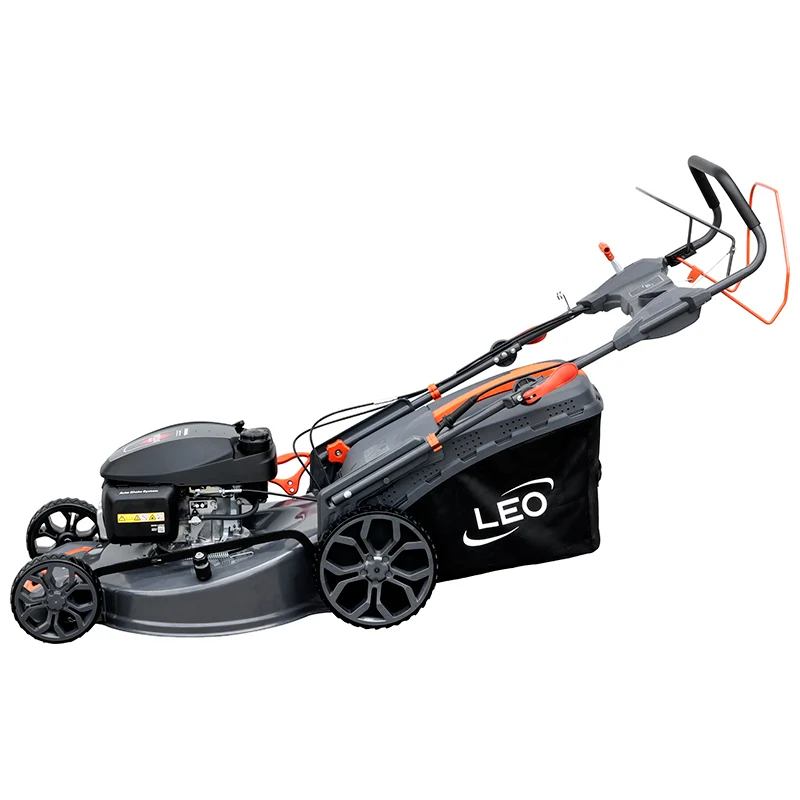 Compare the complete work routine, including charging or refuelling, rather than power source alone.
Where gasoline still has a practical role
Gasoline equipment remains relevant because its refuelling workflow is familiar and fast. For a dispersed property, a long commercial route, or a site where power access is unreliable, a gasoline ride-on mower can be easier to keep working throughout the day. The machine is not constrained by a charger location in the same way a battery operated ride on mower is.
That convenience carries an operating routine of its own. Fuel quality, oil, filters, belts, cooling areas, and seasonal storage affect reliability. Neglecting engine maintenance over winter can turn a seemingly simple spring start into a service visit. For buyers comparing an electric riding mower with gasoline equipment, local parts availability and technician capability should be considered alongside purchase price.
Cutting performance is about the whole machine
Power source is an easy shortcut in a buying discussion, but it does not determine cutting quality on its own. In practice, deck design, blade condition, cutting height, travel speed, turf moisture, collection or mulching setup, and terrain have major influence. A battery operated ride on mower can be capable on a well-managed lawn, while a gasoline machine can struggle if the deck is clogged, blades are dull, or the operator drives too quickly through dense growth.
For this reason, evaluate the actual work cycle. Note the largest mowing area, the narrowest access point, the amount of leaf or clipping collection, the usual turf condition, and whether mowing happens in one session. This mower comparison should also include manoeuvrability and storage dimensions. A wider deck may reduce passes in open ground, but it can be less convenient around trees, beds, access openings, and irregular boundaries.
Safety and terrain come before technology
A battery operated ride on mower is not automatically a safer choice on slopes, and a gasoline engine does not make a mower suitable for terrain beyond its instructions. Stability depends on the individual model, ground condition, tyre grip, operator technique, and slope limits. Follow the manufacturer’s manual for the specific machine. OSHA guidance likewise emphasizes manufacturer slope limits; if instructions are unavailable, do not use a broad rule of thumb as a substitute for a proper terrain assessment.
Before choosing either an electric riding mower or a gasoline model, inspect drainage, soft edges, ditches, obstacles, and places where traction changes after rain. Keep bystanders clear, do not carry passengers unless the machine is designed for them, and stop work if conditions differ materially from the plan.
Compare total ownership, not only the ticket price
The purchase price is only one part of efficiency. For a battery operated ride on mower, calculate charger access, electrical installation needs, likely charging downtime, battery warranty terms, replacement-battery availability, and service coverage. For gasoline equipment, estimate fuel logistics, scheduled service, consumables, storage procedures, and downtime for maintenance. A lower initial price can lose relevance if the machine does not fit the route or support network.
For distributors and fleet buyers, battery technology also raises a planning question: can the team explain charging, storage, transport, and seasonal care clearly to end users? Garden-machinery suppliers that work across petrol, cordless, and electric categories can help buyers compare options, but the final selection still needs model-specific specifications and local service confirmation.
A practical selection checklist
- Measure the area and record the longest normal mowing session.
- List turf conditions: maintained turf, seasonal growth, damp patches, and collection needs.
- Check slope limits and terrain suitability in the manual for each shortlisted machine.
- For a battery operated ride on mower, confirm stated runtime conditions, charger requirements, and protected charging space.
- For gasoline equipment, confirm service intervals, fuel storage approach, and local parts support.
- Compare deck width, turning needs, storage dimensions, operator comfort, and after-sales support.
So, which technology is better?
A battery operated ride on mower is often the more suitable option for buyers who value a quieter routine, have dependable charging access, and mow a predictable area within the machine’s documented operating range. A gasoline ride-on mower can remain the more suitable tool where long, variable, or remote working days make rapid refuelling and broad service familiarity more valuable.
This is a practical choice rather than an ideological one. Compare the battery operated ride on mower and gasoline alternative against the same lawn, terrain, schedule, storage space, and support plan. When those details are clear, the choice becomes less about technology labels and more about dependable, efficient mowing.

 Hot News