EN
What Battery Capacity Is Suitable for Different Lithium Ion Lawn Mowers?
The suitable battery capacity for a lithium ion lawn mower is the amount of usable energy that covers your actual mowing workload with some reserve. A small, regularly cut lawn may suit a compact pack; a larger property, dense turf or a self-propelled machine may call for more energy or a second compatible pack. Start with the mower maker’s coverage or runtime figures, then allow for conditions that make the job harder. There is no single amp-hour rating that fits every machine.
Read the numbers before comparing capacity
Battery capacity is often shown in amp-hours (Ah). The voltage system describes a different property: its electrical operating level. Compare energy in watt-hours (Wh), using nominal voltage multiplied by amp-hours. For illustration, a nominal 36 V, 4 Ah pack holds approximately 144 Wh, while a nominal 36 V, 6 Ah pack holds approximately 216 Wh. At the same nominal voltage, the latter has half as much rated energy again. These figures are examples, not specifications for a particular lithium ion lawn mower.
Across different voltages, Ah alone can mislead. A nominal 18 V, 4 Ah pack represents about 72 Wh; a nominal 36 V, 4 Ah pack represents about 144 Wh. Use nominal voltage consistently, rather than mixing nominal and maximum marketing voltages. The Wh number is a comparison of stored energy, not a direct promise of cutting power or working time. Controller limits, motor design, battery condition and load all affect what reaches the blade.
Match battery capacity to the mowing job
Compact walk-behind machines and small lawns
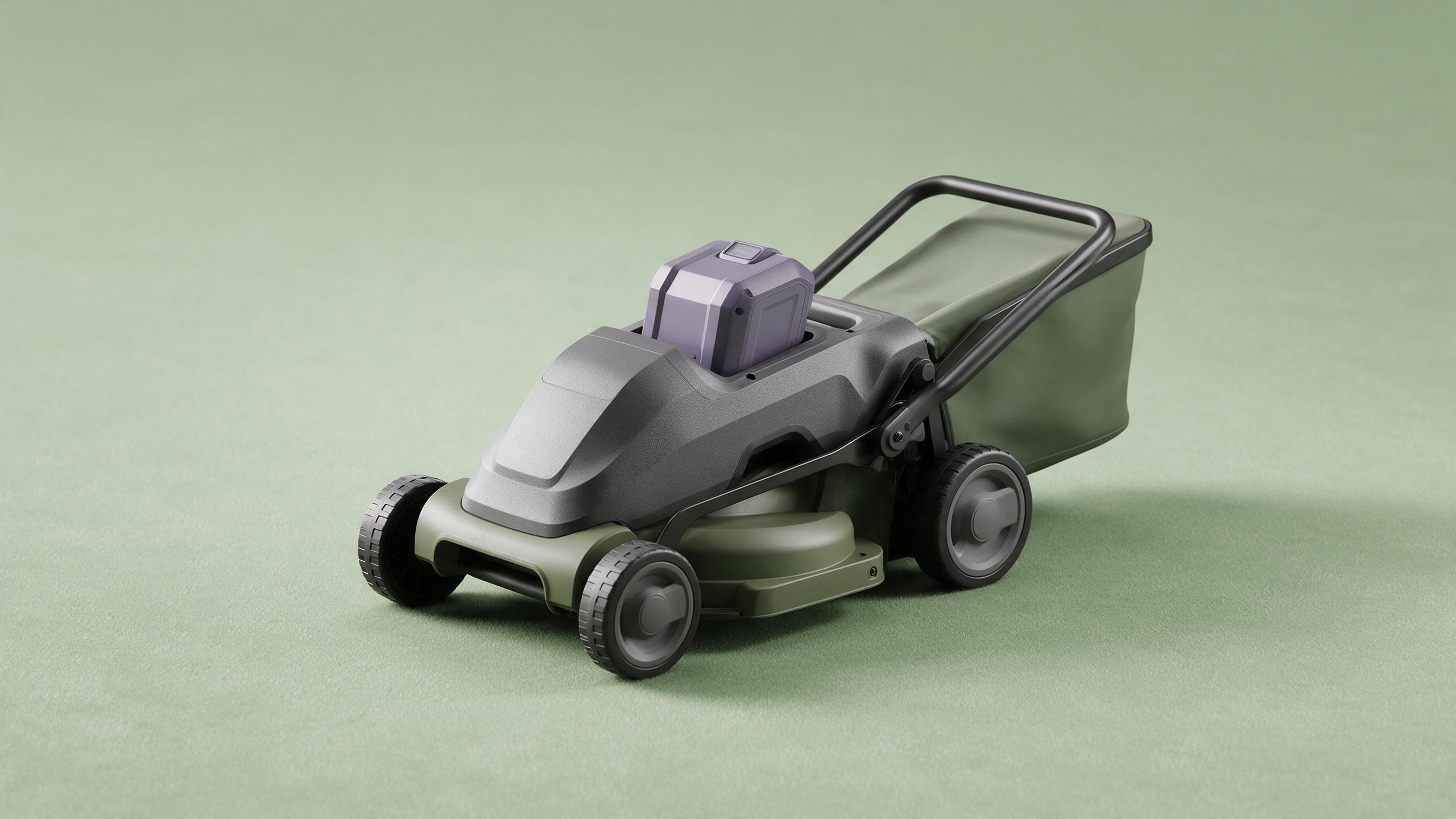
For a compact lithium ion lawn mower, measure the area of turf rather than the whole property. Paths, patios and planting beds do not need cutting. If the lawn is flat and cut often, compare the maker’s tested coverage with your measured area and look at the size and weight of the supplied pack. A lighter battery may make the mower easier to handle, but a smaller reserve leaves less room for long or damp growth.
If the rated coverage is close to your lawn area, ask how that figure was measured. A demonstration on a similar lawn or a documented runtime under stated conditions is more useful than an unqualified headline. A spare pack is an option only when it is approved for the machine and included in your budget.
Medium or complex gardens
A medium-sized garden can demand more working time than its area suggests. Narrow sections, trees, frequent turns and collection-bag stops add to the session. In mower selection, compare rated energy and deck width together: a wider deck may reduce passes, but its actual energy demand also depends on the mower and mowing conditions. Do not infer a precise runtime from width alone.
For this kind of lithium ion lawn mower, consider a larger compatible pack or a second pack if the first is unlikely to finish the job. Check charging time as well as capacity. A charger that takes longer than the available break may leave the mower idle; a spare pack changes that planning problem but adds cost and storage needs.
Large lawns and ride-on machines
Large areas and ride-on use involve different loads. The battery may support propulsion and other functions as well as cutting, so a pack suitable for a walk-behind machine is not a universal benchmark. Ask the supplier for the energy available in the complete mower configuration, the tested coverage, slope limits and charging arrangement. A lithium ion lawn mower intended for this workload should be assessed as a machine and battery system, not by comparing a single Ah figure in isolation.
Some machines use more than one pack. Packs in series add voltage; packs in parallel add Ah at the same voltage. The system’s total nominal Wh is the sum of the individual pack energies, but only when the maker specifies that those packs operate together in that configuration. Do not assume that two installed batteries discharge simultaneously: some systems switch between them. Do not combine incompatible packs or modify wiring to gain capacity.
Estimate working time without treating it as a promise
When you know the battery’s nominal Wh and have a measured average electrical load in W for the same mower and conditions, an initial estimate is Wh divided by W. For example, 216 Wh divided by a hypothetical average load of 432 W is 0.5 hours, or 30 minutes. That is an arithmetic illustration, not an expected runtime for a particular lithium ion lawn mower. Usable energy can be lower than the nominal rating, and actual load changes throughout a cut.
Long growth, damp turf, slopes, collection, self-propulsion and a dull blade can increase the work required. Temperature and an ageing battery can also change available performance. The most useful comparison is a timed cut of a representative section, using the normal cutting height and collection mode. Extrapolate cautiously to the remaining area and leave reserve for tougher sections; do not rely on the estimate for a safety-critical decision.
Check compatibility and ownership costs
First, confirm the exact model accepts the battery capacity you want. A pack may fit a product family but not be approved for every mower or charger. Check the required number of packs, their mounting space and the charger rating in the manual. A higher Ah pack is not a safe substitute if the manufacturer has not approved it for that voltage system and model.
Consider the whole package: batteries included, replacement availability, charger cost and whether approved packs are shared with other tools. Sharing can reduce the number of packs a household needs, but only if the compatibility list confirms it. For a distributor evaluating a lithium ion lawn mower, request the applicable battery and charger list, declared Wh, tested coverage conditions and replacement arrangements before comparing quotations.
A practical selection checklist
- Measure the area to cut and note slopes, obstacles and how often the turf is maintained.
- Record the battery’s nominal voltage and Ah, or use its stated Wh; compare the entire approved configuration.
- Check the manufacturer’s coverage and working time claims against the test conditions, not just the largest number on the carton.
- Allow a reserve for heavier cutting and battery ageing; consider a compatible spare when charging breaks are inconvenient.
- Confirm pack, charger and machine compatibility, then review weight, replacement costs and storage guidance.
For further discussion of garden machinery and available specifications, visit Zhejiang Leo Garden Machinery. Ask for the actual model documentation before making a final battery capacity decision. Matching the lithium ion lawn mower to the lawn and the charging routine is more useful than choosing by Ah alone.
 Hot News