
 EN
How Does a battery operated ride on mower Reduce Operating Costs?
A battery operated ride on mower can lower operating costs because it changes where money and working time go. Instead of budgeting around fuel storage, routine engine service, and a long list of small combustion-engine parts, an owner can assess electricity, battery care, cutting-deck upkeep, and labour as one operating system. That does not make every battery operated ride on mower the lower-cost choice for every property. The right answer depends on acreage, terrain, mowing frequency, local electricity prices, and whether the machine can complete the required work inside its real runtime window.
For a contractor, grounds manager, or homeowner with a larger lawn, the useful question is not simply “electric or petrol?” It is whether a battery operated ride on mower produces a lower total cost for the work completed over a season. This guide separates the costs that may fall from the costs that still need planning.
Start with total operating cost, not the purchase price
The purchase price is visible on day one; operating cost accumulates in smaller decisions. A practical comparison for a battery operated ride on mower includes energy, scheduled maintenance, unscheduled repairs, operator time, downtime, and eventual battery replacement. A petrol machine has its own strengths, particularly where very long runs, remote sites, or refuelling logistics dominate. But a battery operated ride on mower can simplify several recurring cost categories when its capacity matches the work.
| Cost area | What changes with battery power | What still requires attention |
|---|---|---|
| Energy | Electricity replaces regular petrol purchases and fuel handling. | Charging timing, tariff, and runtime planning. |
| Drivetrain service | No engine oil, spark plugs, or fuel filters for the electric drive. | Electrical-system checks and manufacturer-specified service. |
| Cutting performance | Quiet, responsive electric equipment can suit repeated scheduled mowing. | Blades, deck cleaning, belts where fitted, tyres, and safe storage. |
| Labour and downtime | Fewer routine engine-service tasks may reduce interruptions. | Route planning, charging discipline, and repair support. |
1. Lower routine drivetrain maintenance cost
The clearest service expense advantage of a battery operated ride on mower is the absence of a petrol engine and its routine consumables. Owners do not schedule oil changes, oil-filter changes, spark-plug replacement, carburettor attention, or fuel-filter service for an electric drivetrain. That can reduce both parts spend and the time spent arranging service. Retail guidance on electric lawn equipment also commonly notes that battery models generally need less maintenance than gas-engine models.
There is an important qualification: a battery operated ride on mower is not maintenance-free. Blades still dull, grass residue still accumulates beneath the deck, tyres still need inspection, and fasteners, safety switches, and moving deck components still need attention. In sandy conditions or during frequent mowing, blade condition can affect cut quality and workload more than many buyers expect. The saving comes from removing specific engine-service tasks, not from eliminating responsible mower care.
2. More predictable energy spending supports energy saving
A electric ride-on mower shifts the energy conversation from fuel purchases to kilowatt-hours. Electricity cost can be easier to estimate when charging happens at a known site and during planned hours. That visibility helps a manager compare cost per completed mowing session rather than reacting to changing fuel prices. Electric motor systems can use energy efficiently, but a buyer should not apply efficiency figures from cars or other equipment directly to a mower. Terrain, grass height, deck load, weather, battery condition, and driving style all affect actual consumption.
For useful energy economy, record the electricity used for a normal cut, the area completed, and the charge remaining. After several sessions, a electric ride-on mower can be evaluated using local data instead of promotional assumptions. If the property regularly exceeds available runtime, extra charging time or another battery may erase some of the benefit. If the route fits the charge comfortably, the same electric ride-on mower may deliver steadier running costs and fewer fuel-handling tasks.
3. Less time spent on fuel and engine preparation
Operating cost includes people’s time. A electric ride-on mower can reduce tasks around buying, transporting, storing, and refilling petrol. It also avoids common engine-start preparations associated with stale fuel, cold starts, or fuel-system issues. For teams maintaining several sites, that simplification can improve productive use at the beginning and end of a workday.
That benefit is strongest when charging becomes part of the normal handover routine. Park the electric ride-on mower where it can be charged safely, inspect it after use, and start the next shift with a known state of charge. Poor charging habits create the opposite result: an operator waiting for power during a scheduled job. In other words, the productive use gain is operational, not automatic.
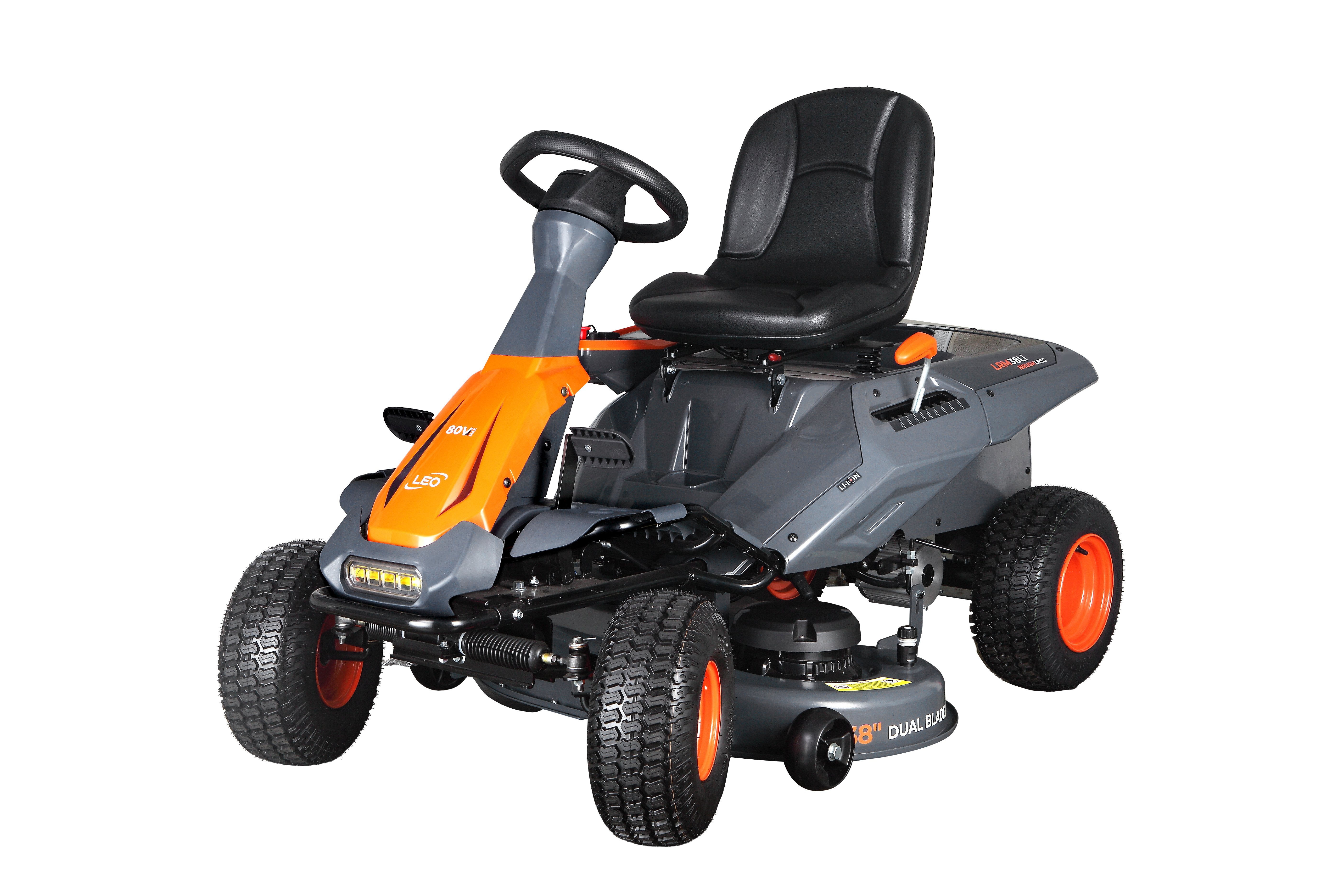 Electric ride-on mowing can shift routine operating costs from fuel and engine servicing to planned charging and mower care.
4. Fewer fuel-related risks and interruptions
Fuel contamination, storage limits, spillage, and seasonal fuel deterioration can create avoidable expenses for petrol equipment. A electric ride-on mower removes those particular issues from daily operation. It may also be easier to schedule in locations where lower local noise is valuable, although actual sound levels depend on the model, deck, surface, and operating conditions.
The battery-powered equipment advantage should be balanced against battery-management risks. Follow the manufacturer’s charging, storage-temperature, transport, and inspection instructions. A replacement battery is a significant lifecycle item, so include its expected service life and replacement availability in any comparison. A low fuel bill alone does not establish the lifetime service expense of a electric ride-on mower.
5. Better uptime can improve labour productive use
When a machine is available when it is scheduled, crews avoid re-routing work and customers avoid missed cuts. A electric ride-on mower may support better uptime by reducing the number of recurring engine-service visits. It can also simplify daily checks: charge status, blade condition, deck cleanliness, tyres, and safety controls are visible operational priorities.
Before buying, test the electric ride-on mower against the hardest normal conditions, not the easiest demonstration lawn. Include slopes, damp grass, tall growth, towing needs if applicable, turning space, and a full work cycle. Ask a dealer about service access, spare parts, diagnostic support, and battery availability. Those questions matter because downtime can cost more than the energy bill.
A simple way to compare the numbers
Use one season of expected work. For each option, estimate: energy or fuel; routine service; blades and deck care; repairs; operator time; transport or refuelling time; and a sensible battery-replacement allowance. Divide the total by mowing hours, acres, or completed visits. This framework makes the electric ride-on mower comparison more honest than claiming a universal percentage saving.
For many regular mowing routes, a electric ride-on mower can reduce operating costs through lower engine-related service expense, better energy visibility, and less fuel handling. For very long, isolated, or unusually demanding jobs, petrol may still be operationally practical. A sound decision is the machine that completes the work reliably while keeping energy economy, labour productive use, and lifecycle service expense in view.
Frequently asked questions
Does a electric ride-on mower need maintenance?
Yes. A electric ride-on mower still needs blade sharpening, deck cleaning, tyre checks, safety inspections, and the service listed by its manufacturer. It mainly avoids routine petrol-engine consumables.
How can I judge whether a electric ride-on mower will save money?
Track your normal mowing hours, fuel or electricity price, service invoices, refuelling time, and likely battery replacement cost. Compare total cost per completed job, not just the initial price.


 Hot News