
 EN
What Battery Capacity Is Needed for a Battery Operated Ride On Mower?
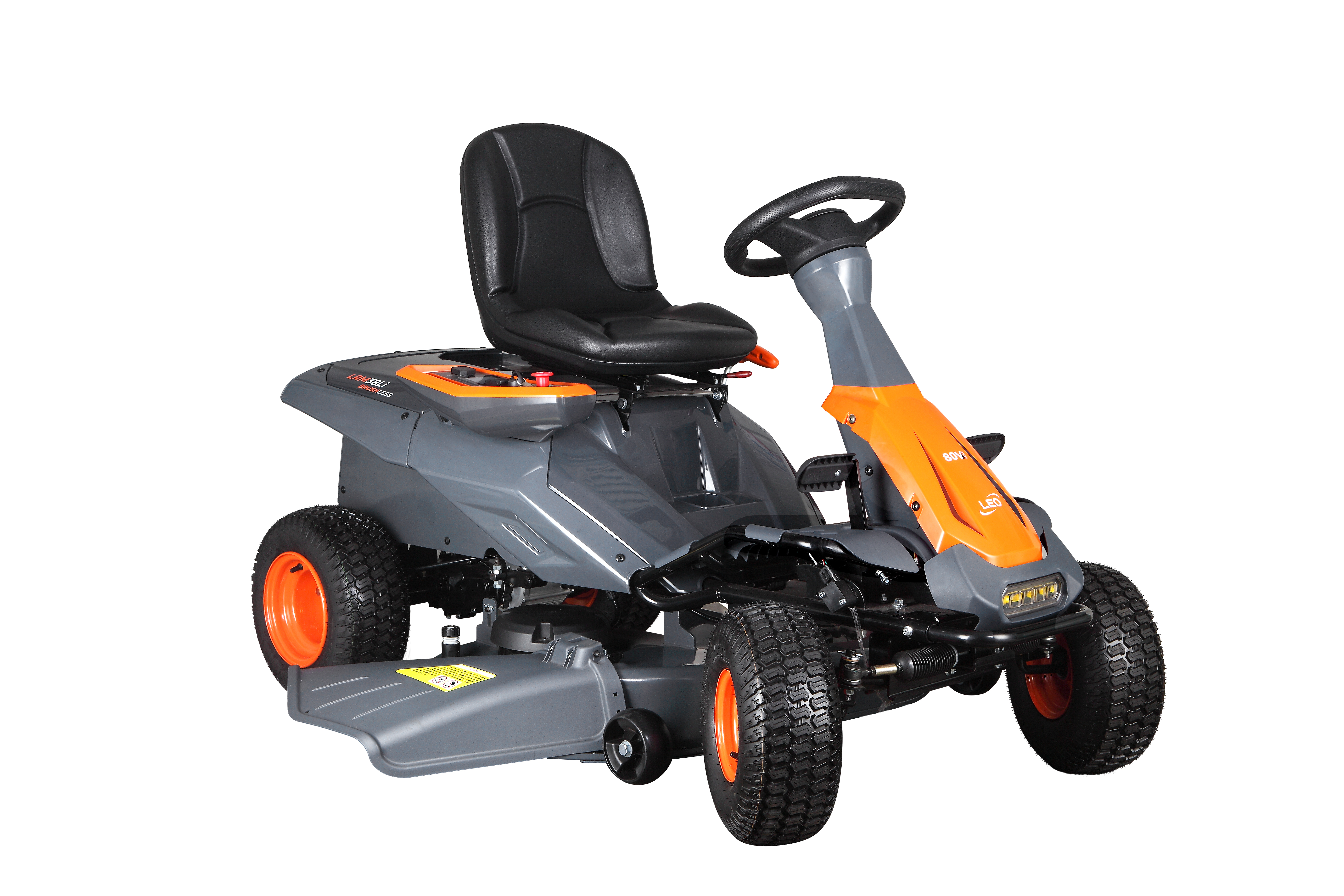
Choosing a battery operated ride on mower is not mainly about finding the largest amp-hour figure on a label. The useful question is whether the stored energy can finish your usual cut with a sensible reserve. As a garden-machinery technical consultant, I start with the site: lawn area, slopes, grass height, deck width, and how often the machine will be used. Those conditions determine the battery capacity required far better than a single headline runtime claim.
A battery-electric ride-on mower can be an excellent fit for routine mowing where low noise, no fuel handling, and straightforward day-to-day operation matter. It will not suit every large or demanding site, however. Thick, damp grass and long slopes ask more from the drive and cutting motors than a dry, level lawn maintained on schedule.
Start with watt-hours, not amp-hours alone
When comparing battery-electric riding mowers, look for battery energy in watt-hours (Wh). Amp-hours (Ah) describe charge capacity, but they do not tell the whole story unless voltage is known. The basic comparison is:
Watt-hours = battery voltage × amp-hours.
For example, a 48 V, 50 Ah pack represents 2,400 Wh, while a 72 V, 50 Ah pack represents 3,600 Wh. The two packs have the same Ah rating but not the same stored energy. That is why a ride-on electric mower should be compared by its usable Wh capacity and its documented conditions, rather than Ah alone.
Usable energy may be lower than the nominal pack figure because the battery-management system protects the cells from harmful deep discharge. That reserve is a good thing for battery life, but it means planning should not assume every listed watt-hour becomes cutting work.
Estimate the working time from mower power
A practical estimate begins with average electrical load. The machine draws energy for traction, blade motors, controls, lights, and sometimes cooling. Because the load changes throughout a cut, use a range rather than a promise.
Estimated working time (hours) = usable battery Wh ÷ average mower power in W.
Suppose a mower has 3,000 Wh of nominal energy and you plan conservatively around 2,550 Wh of usable energy. If the average mowing load is 2,000 W, the rough working time is about 1.25 hours. If the lawn is flat and regularly cut, the average draw may be lower. If grass is wet or overgrown, it may be higher. A ride-on mower needs a margin because operating at the edge of its capacity turns a normal mowing session into a recovery exercise.
That is why published “up to” area figures need context. They can be useful for comparison, but they are not a replacement for checking your property and cutting conditions.
Match battery capacity to your property and mowing routine
Small, level lawns maintained frequently
For a compact, mostly level lawn cut before it becomes heavy, a battery-electric riding mower may need only enough energy for one short session plus a reserve. In this setting, manoeuvrability, deck width, and a convenient charging system can matter as much as a very large battery capacity. Buying excessive capacity can add cost and charging time without solving a real problem.
Medium lawns with mixed grass conditions
For mixed terrain or a lawn that sometimes gets a little ahead of schedule, choose a model with a larger usable-energy margin. The number to protect is not the ideal runtime on a sunny day; it is the working time needed when grass is denser, a slope increases traction demand, or the deck is doing more work.
Large, sloped, or irregular properties
On a large property, the machine needs enough capacity to cover the full planned cut without routinely reaching low charge. If you regularly mow steep ground, tow attachments, or tackle tall grass, the calculation may point to a larger pack, a spare approved pack where the design permits it, or a different power solution. There is no universally right answer here: the better fit depends on how much energy your job actually consumes.
Four factors that shorten real-world working time
- Grass load: Wet, tall, thick, or weedy grass raises blade load. It will usually work longer in dry grass kept to a regular cutting schedule.
- Terrain and speed: Climbing, repeated turns, soft ground, and high travel speed increase the power drawn by the mower.
- Deck and blade condition: A wider deck can cover more ground, but cutting load still varies. Dull or damaged blades can reduce cut quality and make the mower work harder.
- Battery condition and temperature: Age, storage practice, and operating temperature can affect available energy. Treat nominal capacity as a starting specification, not an eternal guarantee.
A common mistake is assuming that a single battery capacity figure guarantees a certain acreage. It does not. The number that matters is the energy the mower can deliver under your actual workload.
Check the charging system before you buy
A suitable battery-electric rider also needs a charging system that fits your routine. Ask where the machine will be parked, whether the charging point is protected from weather, how long a full recharge takes, and whether the electrical supply matches the manufacturer’s requirements. Use only the approved charger and follow the manual’s temperature and safety instructions; charging limits are model-specific.
For overnight charging, such a mower can be convenient if the next cut is predictable. For back-to-back commercial or shared-property use, compare charge time and practical downtime just as carefully as battery capacity. A larger battery that cannot be recharged when needed may not improve productivity.
A simple selection checklist
- Measure the usual mowing area and note slopes, tight turns, and rough patches.
- Estimate how long the job takes now, including travel and any heavy sections.
- Compare nominal battery energy in Wh, not Ah alone, for each candidate mower.
- Use a conservative average mower power estimate and retain a reserve rather than planning to empty the pack.
- Check deck width, cutting conditions, blade maintenance, and any towing use that can raise energy demand.
- Verify charger type, full-charge time, storage conditions, and local electrical availability.
So, what capacity should you choose?
The right battery capacity is the capacity that covers your normal working time with reserve under demanding, non-ideal conditions. Start with watt-hours, estimate the mower power required by your lawn, then allow for hills, grass load, and battery protection limits. If a specification only gives amp-hours or an acreage claim, request the voltage, usable energy, and the conditions behind the figure.
For buyers comparing battery-electric riding mowers, that approach is more reliable than chasing the biggest number. A well-matched pack, a practical charging system, and realistic mowing habits will do more for dependable working time than an optimistic runtime headline.
Frequently asked questions
Does a higher Ah rating necessarily make an electric ride-on mower a better fit?
Not by itself. A higher Ah rating can mean more stored energy when voltage is the same, but compare watt-hours when systems use different voltages. The right mower is one whose usable energy matches the work you need it to do.
How much reserve should an electric ride-on mower have?
Plan for a reserve rather than regular low-charge operation. The exact margin depends on the model and your conditions, but hills, damp grass, and delayed mowing are reasons not to size the mower for an ideal day only.
Can a charging system change the capacity I need?
It can change the practical answer. If charging is convenient and the mower has time to recharge between sessions, a smaller battery may work. If the machine must complete long sessions with little downtime, larger usable energy and charging logistics become more important.

 Hot News