EN
How Do Different Cutting Deck Designs Affect Ride On Mower Results?
A ride on mower can leave a clean, even lawn or a trail of clumps and missed strips, and the cutting deck is often part of the explanation. Its width, shape, blade arrangement and discharge route work together to lift and cut the turf, then move the clippings out of the housing. The right design depends on the site: a wide open field and a lawn threaded with trees call for different compromises.
To compare options, look beyond the advertised cutting width. Consider the condition of the turf, the finish expected after each pass, the space available for turning, and how easily the deck can be maintained. This guide explains how those details affect mowing quality without assuming that one configuration suits every property.
What the cutting deck actually does
The cutting deck is the housing around the blade system. It controls the space in which blades rotate and helps direct the movement of air and clippings. The mower structure holds the deck at a chosen height, while the blades cut the standing leaf material. A suitable combination of housing shape, blade type and discharge opening can help produce a more consistent finish, provided the deck is adjusted and operated as instructed.
Design alone does not determine the result. Tire pressures, blade condition, travel speed, cutting height and accumulated debris can all affect mowing quality. When comparing a ride on mower, ask the supplier how the deck is intended to handle the conditions you normally face rather than treating one feature as a universal answer.
Deck width: coverage versus access
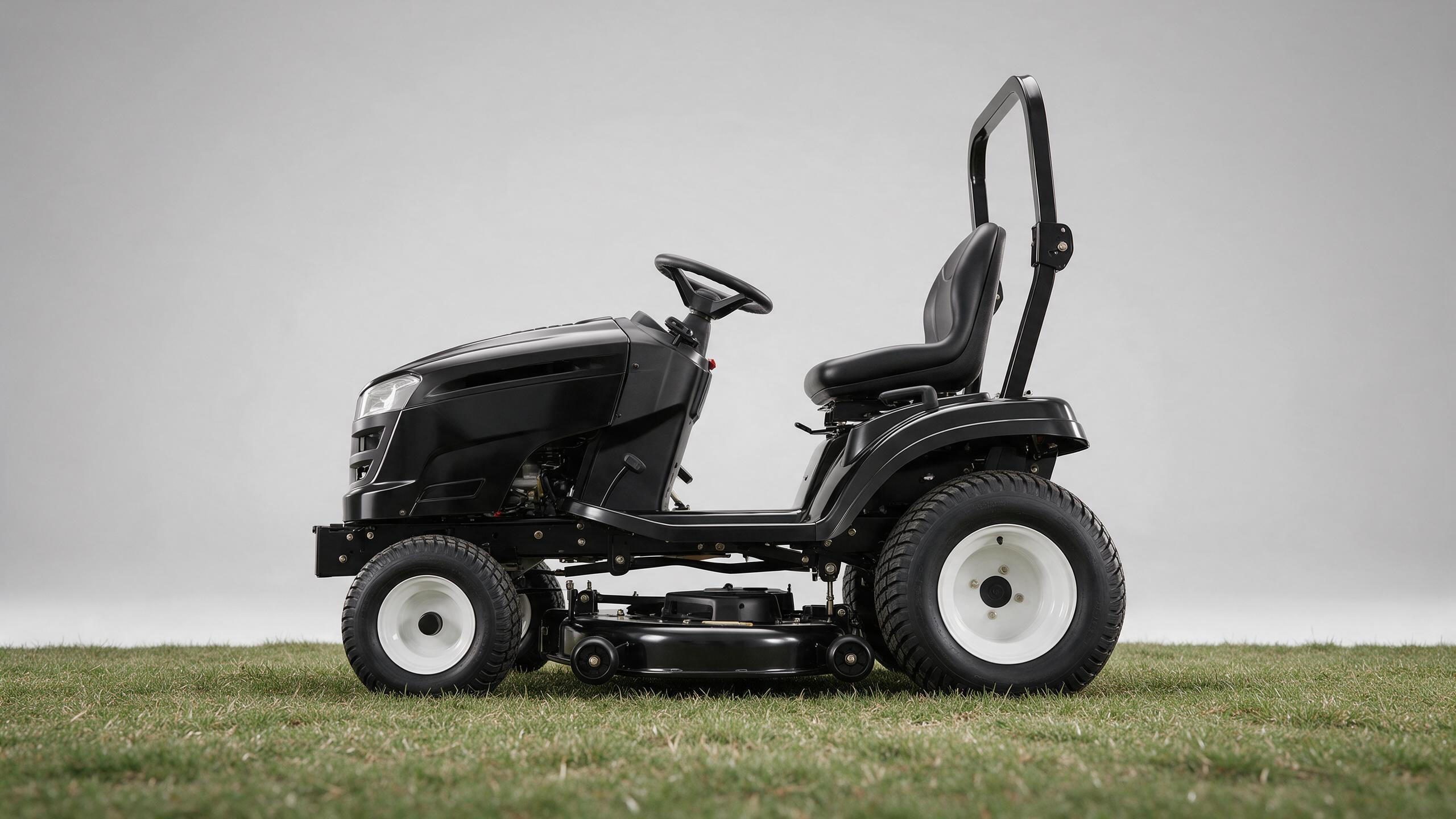
A wider cutting deck covers more ground in one straight pass. On an open, relatively level area that may reduce the number of passes required. But a wide deck also needs room to enter openings, pass between trees and turn around planted beds. Time spent reversing or finishing inaccessible edges can offset the advantage of that extra width.
A narrower cutting deck can be easier to guide through a complex layout, although it may require more passes across a large lawn. Measure the narrowest access point and check the full external width of the ride on mower, including any chute, not just the nominal cutting width. Where a property has both open areas and narrow routes, compare the whole job rather than the largest open section alone.
Deck shape and the path of clippings
The underside of a cutting deck guides airflow and cut material. A deck configured for side discharge directs clippings through an outlet at the side. It may suit open areas where leaving a dispersed layer is acceptable, but the operator must account for the discharge direction near paths, planting and other people. Keep the manufacturer-supplied guard or deflector in place, and stop mowing when bystanders enter the work area.
A rear-collection arrangement carries clippings toward a collector where the particular ride on mower supports that configuration. This can help when a tidy surface or removal of clippings is the priority. Collection introduces another practical step: the container needs emptying, and the path to it needs inspection and cleaning according to the manual. Capacity and compatibility vary by model.
A mulching configuration is designed to keep clippings in the deck longer so the blade system can cut them into smaller pieces before returning them to the lawn. It works as a system: the housing, any baffles or plug, and the specified blades need to be compatible. A conversion kit should be approved for that exact machine; closing an outlet with an improvised cover is not a substitute.
Blade arrangement and mowing quality
Some decks use one blade; wider designs may use two or more. More blades can cover a wider working path, but blade count by itself does not prove a cleaner cut. Spacing, overlap, blade profile and deck airflow all contribute to the result. A poorly adjusted or worn blade system can leave strips even when the ride on mower has ample cutting width.
Use the blade specified for the deck and its intended discharge mode. A blade designed for collection may move material differently from one supplied for mulching, and parts are not necessarily interchangeable. Ask for the correct part numbers and service instructions before choosing between otherwise similar machines. Do not infer blade performance from shape alone.
Uneven mowing quality can also come from a deck that is not level relative to the ground. Before changing settings, park on a firm, level surface, stop the engine, remove the key and follow the manual's isolation procedure. Check tire pressures against the manufacturer's instructions and inspect the deck and blades as directed. If a blade is bent or damaged, have it replaced with the specified part; do not try to straighten it.
Height control, ground following and scalping
The mower structure connects the cutting deck to the chassis and determines how the deck is supported and adjusted. Some designs use deck wheels or rollers to help limit contact with the ground, while others suspend the housing differently. These features do not turn a machine into a slope-rated mower: the operator must still follow the model's terrain and slope limits.
On uneven ground, a wide rigid deck may contact a high spot while another section hangs over a dip. The result can be scalping, where too much turf is removed in one patch. A suitable height setting, ground-following arrangement and considered route can reduce that risk, but no deck can compensate for every surface. Ask how the actual ride on mower is adjusted and demonstrated on ground similar to your site.
Wet conditions and clipping load
The volume of material entering the cutting deck changes with growth, moisture and mowing frequency. Wet, long growth can clump, adhere underneath the housing or overload the discharge route. Illinois Extension notes that mulching mowers do not perform at peak efficiency when the lawn is wet or when more than one-third of the leaf blade is removed. Treat that one-third figure as general lawn-care guidance, not as a machine capacity rating.
If conditions allow, wait until the lawn is dry enough for a clean cut. If growth has become excessive, a higher initial setting and a later pass may be appropriate; follow the machine manual and avoid taking an excessive amount off at once. Slowing travel speed can give the blade system more time to handle a heavy load. Stop and shut down the ride on mower before checking any blockage, and use the prescribed procedure rather than reaching into the deck while parts may still be moving.
Construction and servicing considerations
Deck material and construction affect repair and ownership considerations, but a label alone is not enough to rank durability. Compare the deck shell, edges, mounting points and access to belts, spindles and blades. A fabricated housing and a stamped housing can differ in construction and repair approach; actual strength and service life depend on the specific design and use.
For a fleet, ask whether wear parts are available locally and how the cutting deck is accessed for routine work. Check the manual for cleaning, lubrication and inspection schedules. Clipping buildup can change airflow, so regular cleaning may support consistent mowing quality. Do not work under a deck supported only by a jack; use the manufacturer's approved support and safety procedure or a qualified service provider.
Which configuration fits your property?
- Open areas: Compare a wider cutting deck with a discharge option appropriate for the site, while checking transport and gate clearance.
- Trees and narrow passages: Prioritise access, turning room and the overall mower structure; a smaller deck may reduce follow-up trimming.
- Frequently maintained lawns: Consider a manufacturer-approved mulching setup when the surface can be cut often and conditions are suitable.
- Clipping removal: Check collection compatibility, outlet access and emptying arrangements before selecting the ride on mower.
- Uneven ground: Assess ground following, height adjustment and the model's stated terrain limits together, not deck width in isolation.
Ask for a demonstration in representative conditions and compare the finished surface, remaining clumps and time spent navigating obstacles. Zhejiang Leo Garden Machinery supplies garden machinery for garden, courtyard and road-maintenance applications; buyers can discuss the specifications and available configurations with the company. The useful choice is the cutting deck and blade system that fit the actual work, not merely the largest number on a specification sheet.
 Hot News