EN
What Are the Benefits of Commercial Lawn Mowers for Large Properties?
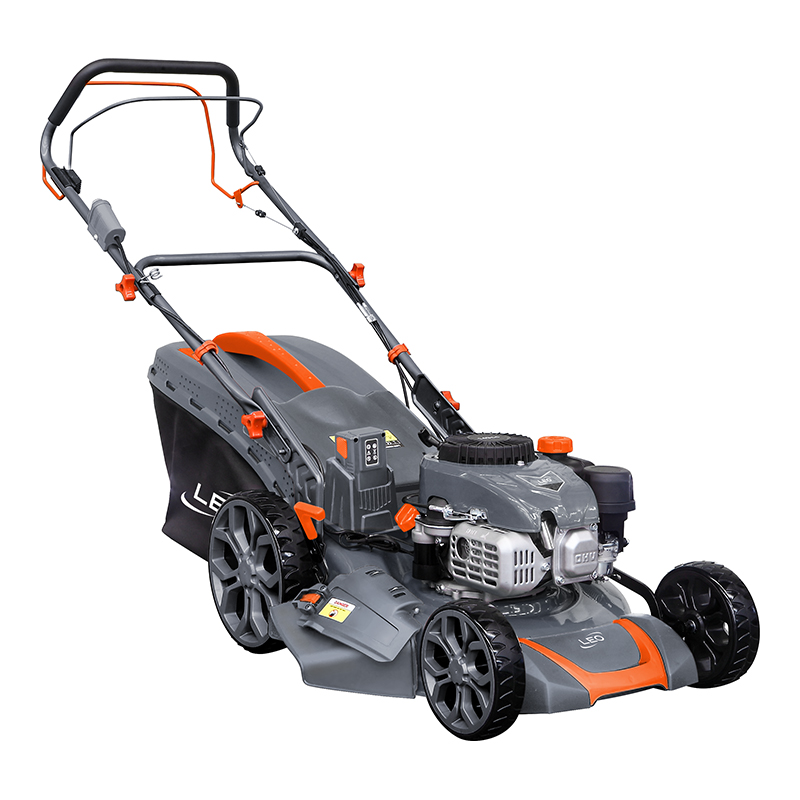
For a large property, mowing is not a small weekly chore; it is an operating task that has to fit around weather, staff time, access routes, and the condition of the turf. A commercial lawn mower can make that work more manageable because it is selected around sustained workloads rather than occasional cutting. The benefit is not simply a bigger machine. It is a more deliberate match between a property’s acreage, terrain, turf conditions, and maintenance routine.
From a professional landscaping viewpoint, the useful question is not whether a commercial lawn mower is inherently right for every site. It is whether its cutting capacity, control, service access, and operator comfort solve the bottlenecks on this particular large property. That distinction keeps the purchase focused on daily productivity instead of brochure comparisons.
Why a large property changes the mowing decision
On a compact lawn, a few extra passes may not matter. On a large property, repeated passes, long travel distances, and changing turf density compound quickly. A commercial lawn mower is built around the demands that follow: longer operating periods, regular use, and the need to return a consistent cut across broad areas.
The working conditions deserve as much attention as the property’s nominal size. Open sports turf, estate lawns, roadside verges, orchards, and grounds with trees or narrow gates all create different constraints. A wide machine may cover open ground efficiently, yet a smaller or more maneuverable configuration can be the sensible choice where access is limited. The number many buyers first check is engine displacement; in practice, usable torque, traction, deck design, and the route through the site can matter more.
1. More useful cutting capacity, not just a wider deck
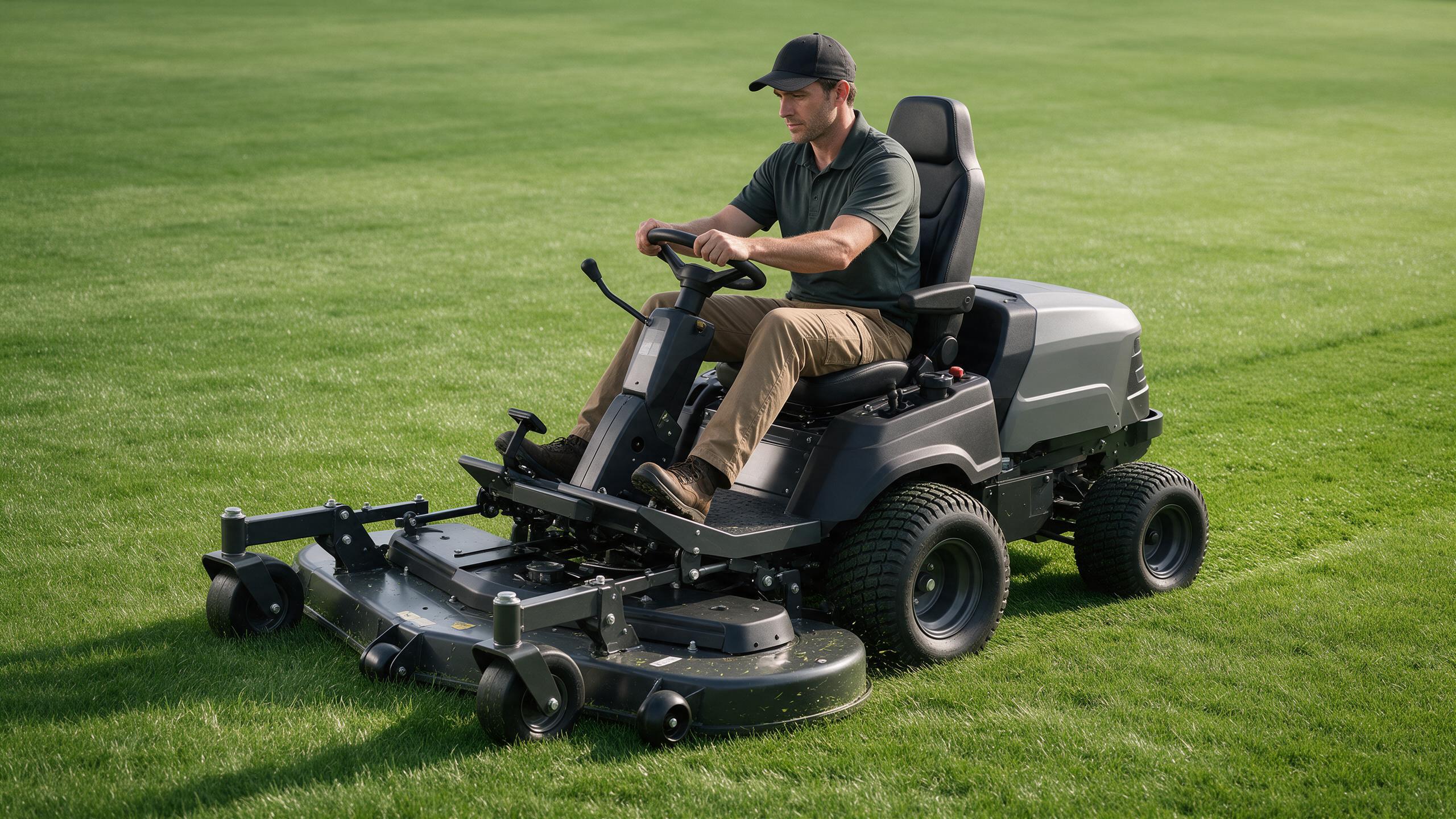
A key benefit of a commercial lawn mower is the opportunity to match cutting width to the part of the site that consumes the most time. A wider deck can reduce the number of passes over open turf, which supports productivity when the machine can travel and turn freely. Commercial wide-area machines are available in configurations up to 72 inches, but that does not mean every large property needs the largest deck available.
Consider the whole cutting path: access openings, trailer loading, slopes, trees, drainage channels, and areas that need close trimming. A deck that is too wide for those constraints can create extra repositioning work. A practical approach is to map the open acreage separately from detailed zones, then select a commercial lawn mower that improves throughput on the former without making the latter awkward.
- Open, relatively smooth ground: a broader cutting path may reduce passes.
- Tree-lined or landscaped grounds: turning response and deck clearance can become more valuable.
- Mixed terrain: traction, stability, and a route that avoids repeated backtracking deserve priority.
2. Better support for professional landscaping productivity
For professional landscaping teams, productivity is more than acres per hour. It includes loading and unloading, refuelling or charging, turning at boundaries, clearing clippings, and getting the equipment ready for the next property. A commercial lawn mower can support a more repeatable workflow because the configuration is chosen for frequent, demanding use.
Start by defining the workday. Does one operator maintain a single campus, or does a crew move between several sites? Are there long straight runs, wet patches, steep sections, or formal areas where finish quality matters? Cutting width, ground speed, and maneuverability work together, so no single specification tells the complete story. A mower that moves quickly but loses traction on slopes or requires multiple awkward turns may not improve the actual schedule.
It also helps to separate mowing from trimming and transport in the plan. When each task has a clear place in the route, operators spend less time improvising. This is where a commercial lawn mower can contribute to productivity: it gives the team a platform sized for the core cutting task while the rest of the workflow is designed around it.
3. Durability matters when the work is continuous
Large-property maintenance exposes equipment to longer run times, vibration, dust, debris, and repeated starts and stops. Commercial equipment is generally specified for heavier use than homeowner machinery, but durability should be evaluated through accessible service points, component quality, parts support, and a realistic maintenance schedule—not through vague claims about lifespan.
A consistent maintenance plan is a direct operational advantage. Checking blades, belts, fasteners, filters, tire condition, and fluid levels before problems grow can reduce avoidable interruptions. This is particularly relevant for a property manager or contractor with fixed service windows: an unexpected stoppage can leave a visible area unfinished when turf growth is at its peak.
Before selecting a machine, ask the supplier how routine service is handled, what consumables are needed, and how replacement parts are identified. For B2B buyers, documentation and serviceability may be as important as headline power. Zhejiang Leo Garden Machinery Co., Ltd. focuses on garden machinery including lawn mowers and ride-on mowers, which makes category knowledge and product documentation useful points to discuss during supplier evaluation.
4. Operator control can protect finish quality and time
A commercial lawn mower should help an operator maintain an even, controlled pace over the conditions it will actually meet. On a large property, fatigue and poor visibility can affect cut quality as much as raw power. Seat position, controls, vibration management, sight lines, and the ease of adjusting cutting height are therefore practical considerations.
This is also where terrain changes the recommendation. A fast, wide setup may suit open, level ground. On uneven land, slopes, or ground that is frequently damp, stability and traction may take precedence. There is no universally right format: the better fit depends on the terrain, the skill of the operator, and the access pattern across the site.
5. A commercial mower can support a more predictable maintenance plan
Predictability is a real benefit for estate managers, municipalities, contractors, and grounds teams. When the mowing route, machine capacity, and maintenance intervals are planned together, it is easier to schedule labor and avoid an overloaded day after rain or rapid growth. The result is not a promise that weather stops affecting work; rather, the operation has more capacity to recover when conditions shift.
For buyers sourcing garden machinery for distribution or fleet use, that predictability should extend to supplier communication. Confirm the product specifications for the intended market, packaging needs, service documentation, and spare-parts process before committing to a program. European-oriented buyers may also need to verify applicable conformity, noise, and labeling requirements for the exact model and destination; those requirements should be checked against current documentation rather than assumed from a category description.
How to decide whether a commercial lawn mower fits your site
Use a short site review before narrowing the product type:
- Measure the working area: distinguish open cutting zones from obstacles and detail work.
- Walk the route: note access openings, slopes, soft ground, narrow passages, and loading constraints.
- Define the service window: estimate how often the property needs cutting and when operators can work.
- Match configuration to conditions: compare deck width, control layout, traction, discharge or collection needs, and maintenance access.
- Review support: request current model documentation, parts information, and service guidance from the supplier.
The most productive commercial lawn mower is the one that fits this whole system. A very wide deck may be useful on open acreage, while a different configuration may be more efficient for properties with confined areas, slopes, or frequent transport. Making that choice deliberately is what turns commercial equipment into a practical advantage.
Conclusion
The benefits of a commercial lawn mower for a large property come from better alignment between equipment and workload: fewer unnecessary passes on suitable turf, a more repeatable workflow for professional landscaping, components and service routines intended for frequent use, and operator control that suits the terrain. Evaluate the site before the specification sheet, verify model-specific details with the supplier, and choose a setup that supports reliable work across the season.
 Hot News