
 EN
Petrol Lawn Mower Maintenance Checklist for Professional Users
A professional crew asks more of a petrol lawn mower than an occasional homeowner does. It may cut several sites in one day, move through damp grass, and ride in a vehicle between jobs. That workload turns routine care into a reliability process. A missed inspection can mean poor cut quality, an avoidable stoppage, or a machine that is unsafe to handle.
This checklist is designed for operators, grounds teams, and service managers. It does not replace the manual for your particular petrol lawn mower; oil grades, blade torque, service intervals, and safety procedures remain manufacturer-specific. Use the manual as the controlling document, then use this routine to make everyday checks consistent across the fleet.
Start with safe isolation
Before any mower service, park the petrol lawn mower on level ground, stop the engine, let hot parts cool, and remove the spark-plug lead in the manner specified by the manufacturer. Keep ignition sources away from fuel. Wear gloves when working near the deck or blade, and do not reach beneath a mower that is supported only by a jack or positioned on a slope.
A useful rule is simple: if a check needs hands near moving, sharp, or hot parts, isolate first. This matters most after a hard impact, when a rushed operator may be tempted to clear debris or inspect a blade immediately.
Daily pre-start equipment checklist
Complete this walk-around before the first cut and after any impact with a hidden object. It takes a few minutes, but it gives the operator a baseline for the day.
- Fuel: Check for leaks, damaged caps, loose lines, or stale-fuel concerns. Refill only when the engine is cool and use the fuel type stated in the manual.
- Oil: Check the level on level ground using the prescribed method. Do not assume that a full tank or recent use means the oil level is correct.
- Guards and controls: Confirm the discharge guard, grass bag, handles, cable routing, stop control, drive control, and fasteners are secure and functional.
- Wheels and deck: Look for loose wheel hardware, cracked housings, packed grass, and signs of a deck strike.
- Work area: Remove stones, wire, toys, branches, and other objects before the petrol lawn mower enters the area.
If an operator finds a leak, a damaged guard, unusual vibration, or a control that does not return correctly, tag the machine out rather than adding it to the day’s workload.
Blade maintenance: protect cut quality and the drivetrain
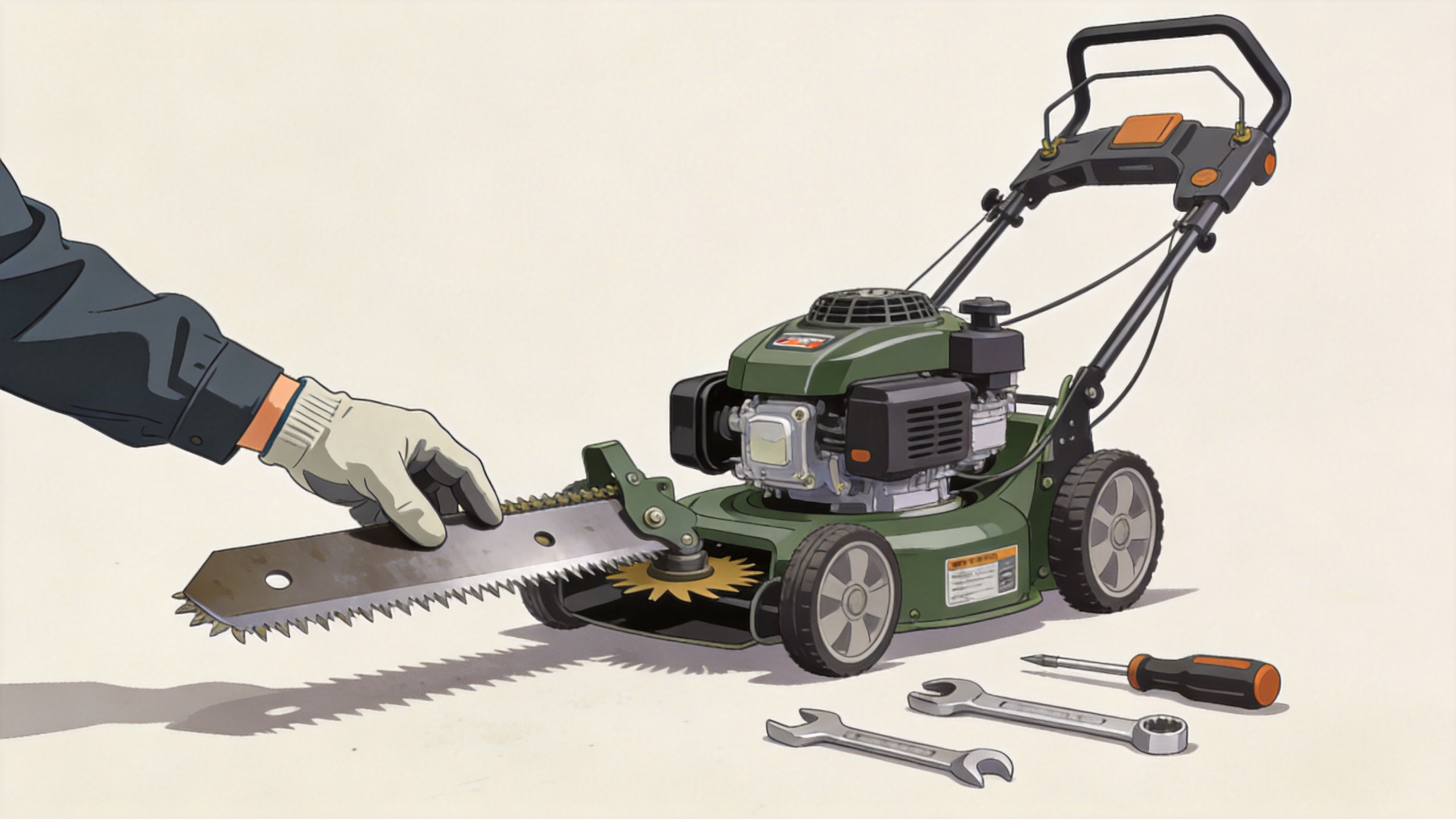
Blade maintenance begins with inspection, not sharpening. With the engine isolated, check for cracks, bends, missing metal, damaged blade tips, and a loose blade bolt. A blade that has struck an obstacle can look acceptable from above while still being distorted. Do not straighten a bent blade; replace it with the correct approved part.
Keep the blade sharp and balanced. A dull blade tears grass instead of cutting cleanly, while an unbalanced blade can add vibration to the spindle, crankshaft area, and operator controls. The right interval depends on soil, debris, mowing hours, and grass conditions. For a contractor’s petrol lawn mower, inspect the blade frequently and schedule sharpening based on condition rather than a calendar guess.
After blade work, recheck the mounting hardware and follow the manual’s torque specification. A clean underside of the deck also helps airflow and discharge. Scrape accumulated clippings only after isolation; do not use a pressure washer where it can force water into bearings, seals, or electrical components.

Engine care on a professional schedule
Good engine care is mostly about clean lubrication, clean air, sound ignition, and observation. Check the oil level daily. Change oil at the interval in the engine manual, or sooner where dust, heat, slopes, and long operating days justify closer attention. Record the date, hours if available, oil type, and technician initials in the fleet log.
Inspect the air filter regularly. A dusty filter restricts airflow and can make a petrol lawn mower feel underpowered or run poorly. Clean or replace it only by the specified method; some elements must be replaced rather than washed. Inspect the spark plug and its lead during planned mower service, and replace components at the stated interval or when wear is evident.
Listen as well as look. Hard starting, hunting idle, smoke, fuel smell, reduced power, and a new vibration are useful fault signals. They do not identify a single cause, so avoid a quick adjustment without diagnosis. Note the condition, stop use if safety or damage is possible, and have a competent technician assess it.
After-use routine for every petrol lawn mower
- Allow the petrol lawn mower to cool in a safe, ventilated area.
- Brush grass and debris from the deck exterior, cooling fins, wheels, and collection areas.
- Inspect the blade zone and discharge path after isolation.
- Look for fresh oil or fuel leaks, loose fasteners, cable damage, and impact marks.
- Record faults before the next operator takes the machine.
This handover habit avoids a familiar problem: a machine that was usable for the last operator is assumed to be ready for the next one. Small defects tend to become expensive when they are not recorded.
Weekly and periodic mower service checks
Set a weekly review for high-use machines and adjust the interval for operating hours. Include deck cleaning, blade condition, wheel and handle fasteners, self-propel drive operation where fitted, cable condition, and air-filter condition. Review the manual for lubrication points; not every modern petrol lawn mower has grease points, so adding grease indiscriminately is not good engine care.
At the same review, compare the operator log with the machine. Repeated hard starts, uneven cutting, or vibration deserve follow-up even if the mower still completes a job. This is where a practical equipment checklist becomes more than paperwork: it creates a history that helps a service team identify a recurring problem.
Fuel management and seasonal storage
Use clean fuel from an approved container and avoid storing petrol where heat, sparks, or poor ventilation create a hazard. For extended storage, consult the manual’s fuel instructions. General agricultural-extension guidance commonly advises draining fuel in a safe area and allowing the engine to run until it stops, but your manufacturer may specify a stabilizer or a different procedure. Follow the documented procedure for that model.
Before downtime, complete blade maintenance, check oil, clean the deck and cooling areas, inspect the air filter, and store the petrol lawn mower in a clean, dry, secure location. Label any machine awaiting parts or repair so it cannot return to service by accident.
When to stop work instead of carrying on
Remove a petrol lawn mower from service for fuel or oil leaks, a cracked or bent blade, missing guards, persistent vibration, uncontrolled engine speed, damaged controls, smoke, or a serious deck impact. The right response is not to finish one more area; it is to isolate the machine, document the fault, and arrange qualified mower service.
For operating safeguards that complement this maintenance routine, review our gasoline lawn mower safety guidelines. A reliable petrol lawn mower is the result of daily care, timely engine care, and a team that treats abnormal signs as actionable information.




 Hot News