
 EN
How to Extend Lithium Battery Life in Ride On Mowers?
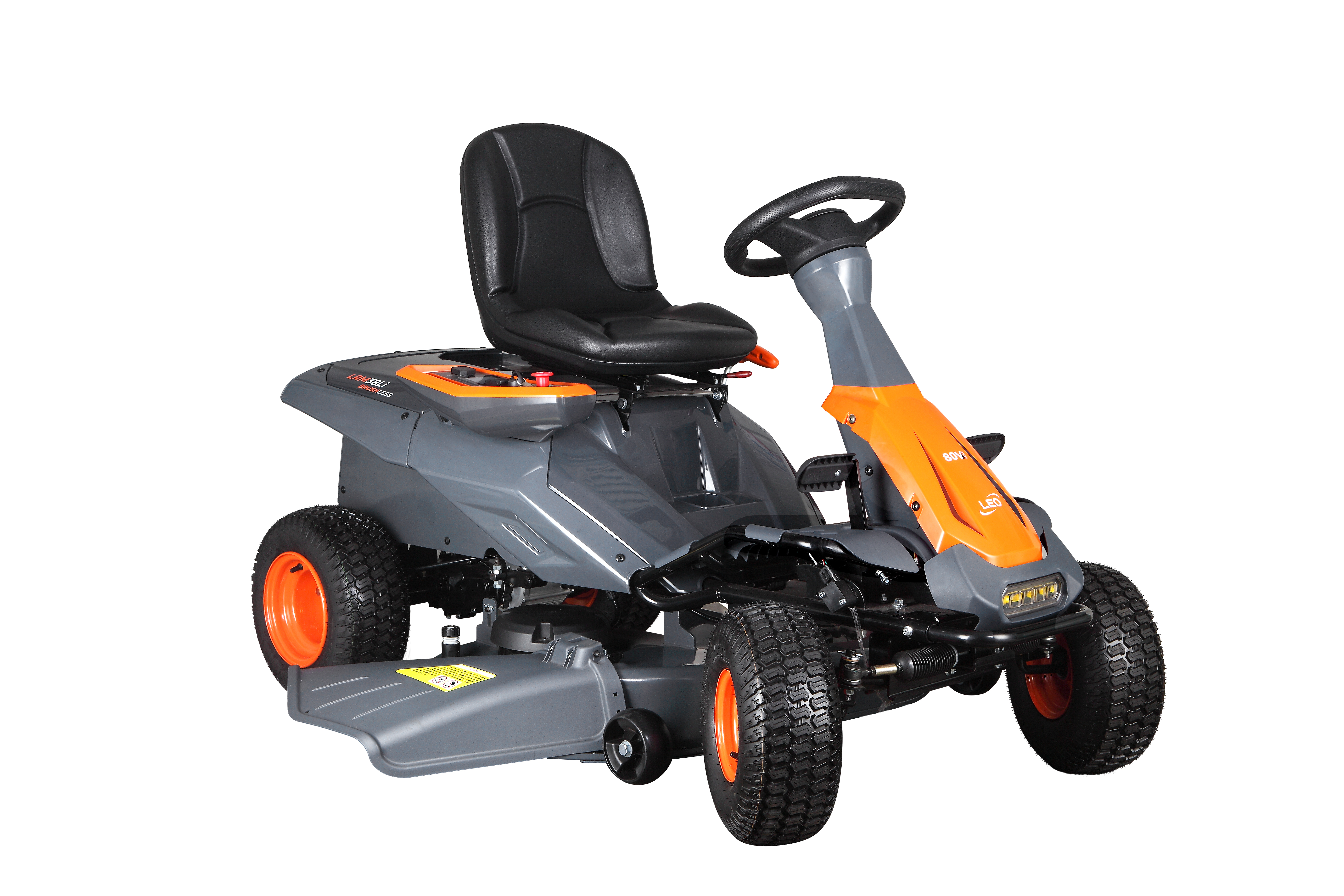
A lithium ion ride on mower can make routine lawn work quieter and simpler, but its battery pack deserves the same attention as the deck, tires, and controls. Battery age is influenced by heat, charging habits, storage conditions, and the load the machine sees on each cut. The useful goal is not to chase a universal percentage on the display. It is to operate your lithium ion ride on mower within the limits in its operator manual and notice small changes before they become a no-start day.
As a garden-machinery technical consultant, I start with the working conditions rather than a claim on a spec sheet. Is the mower parked in a hot metal shed? Is it charged immediately after a heavy cut? Does damp turf or deck buildup make the drive system work harder? Those everyday details affect battery lifespan more than many owners expect.
What shortens battery lifespan in a lithium ion ride on mower?
Lithium batteries age both with use and with time. Heat is a recurring concern: a pack left in direct sun, a very hot enclosure, or a warm shed after mowing has less opportunity to cool. Repeatedly asking a lithium ion ride on mower to cut tall, wet turf at high speed can also raise electrical load and temperature. That does not mean normal work is harmful; it means the machine needs sensible operating conditions and time to cool.
Charging at unsuitable temperatures, using damaged equipment, and leaving a pack at an unsuitable state for a long seasonal layup can also reduce useful capacity. Exact limits vary among mower designs. The charging cycle guidance in the operator manual and battery label takes priority over rules copied from a phone, car, or lead-acid mower battery.
Use the correct charging cycle
For a lithium ion ride on mower, use the supplied or approved charger, a dry outlet, and the sequence stated in the manual. Connectors should seat fully without forcing them. If the mower has just completed a demanding cut, park it safely and allow heat to dissipate before charging if the manual calls for that. A warm pack, a hot charger, or a repeated fault message is a reason to stop and inspect rather than to keep restarting the process.
Do not treat every recharge as a crisis. Lithium systems are managed differently from older starter batteries, and many packs have built-in controls. What matters is avoiding habits that push the system into repeated low-battery warnings or long periods of neglect. Plan the mowing route, empty a packed clipping collector when needed, and recharge according to the stated procedure. That gives the battery management system a more predictable charging cycle.
- Charge indoors or in a sheltered, ventilated location when the manual permits it.
- Keep the charger, cable, and socket dry and free of mowing debris.
- Do not use a frayed lead, cracked housing, swollen pack, or connector that is discoloured or unusually hot.
- Record recurring warning lights or abnormal charge times for a qualified service technician.
 Allow the machine to cool as directed before beginning its approved charging routine.
Reduce unnecessary load while mowing
Good mower maintenance supports the battery because a clean, freely operating machine draws power more predictably. Before using a lithium ion ride on mower, inspect the deck for compacted clippings, check tire pressure against the manual, and confirm that blades are in serviceable condition. A dull blade tears rather than cuts cleanly and can make the machine work longer in difficult turf. Wet, overgrown turf may call for a slower pass, a higher cutting setting, or more than one cut instead of forcing the mower through at full pace.
Right, so the battery is not the only component to watch. Drive resistance, a dragging brake, debris around moving parts, and a clogged cooling path can all increase demand. After each use, remove loose clippings only after shutdown and follow the manual's cleaning instructions. Avoid directing water into battery compartments, charging ports, displays, or electrical connections.
Store a lithium ion ride on mower for the off-season
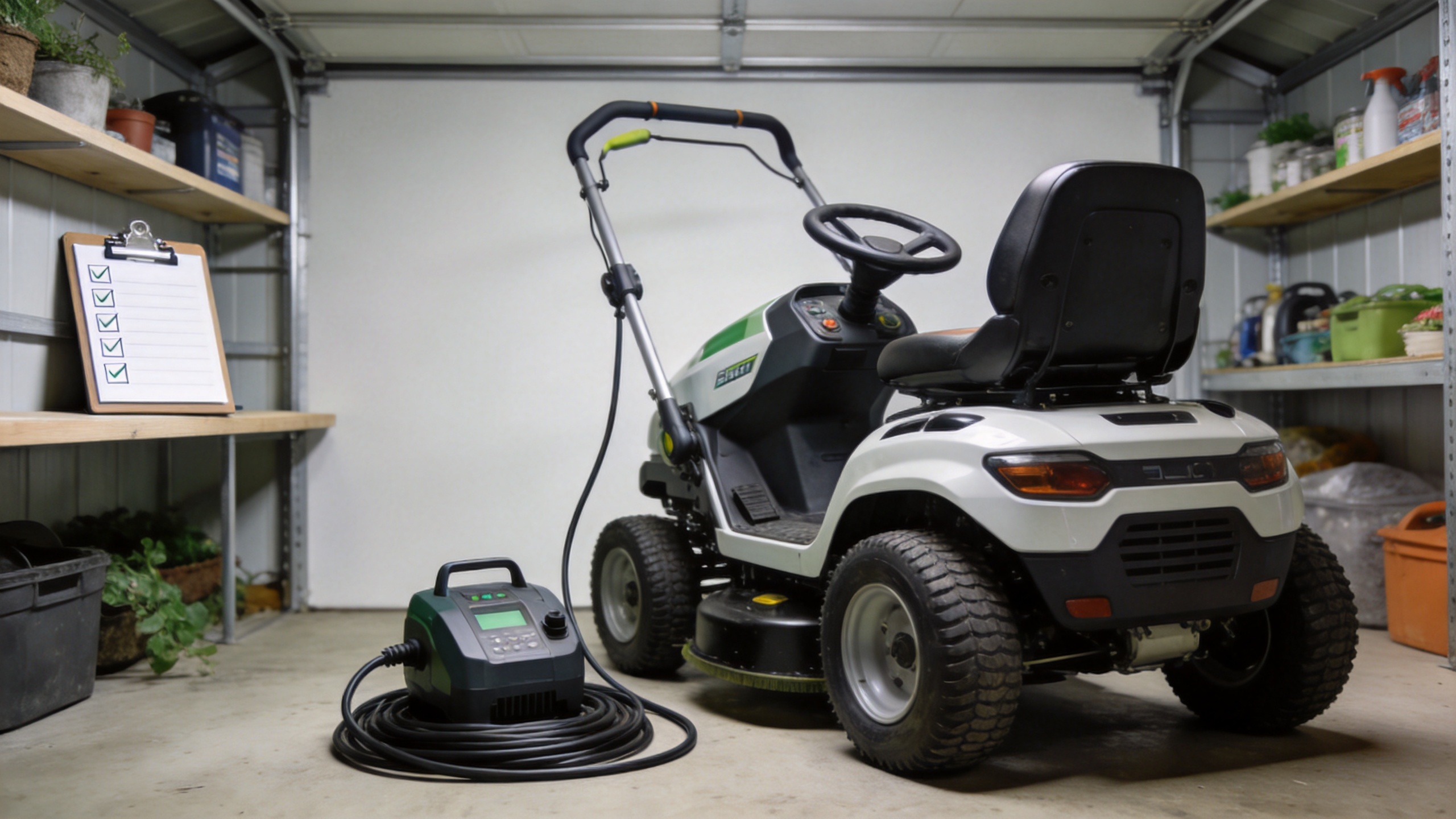
Long storage deserves a separate routine. First clean and dry the lithium ion ride on mower, then inspect the pack area and electrical system for moisture, damaged insulation, loose connectors, or signs of overheating. Store the machine in a cool, dry place separate from direct sunlight and large temperature extremes. If removal is permitted, follow the manual for handling and placement of the battery; not every ride-on design uses a removable pack.
Before storage, use the manufacturer’s specified charge level and check interval. There is no safe one-size-fits-all number for every lithium ion ride on mower. Some manuals call for an occasional check during extended storage, while others give a particular preparation sequence. Set a calendar reminder based on that document, not on a generic trickle-charger routine meant for lead-acid batteries.
Check the electric system, not only the battery
A loss of runtime is not automatically a worn-out battery. The electric system includes the charging port, harnesses, fuses, interlocks, traction components, and control electronics. With the key off and the machine secured, look for dirt, moisture, loose fasteners, rubbed wiring, or connectors that do not latch firmly. Do not dismantle a sealed battery or bypass an interlock on a lithium ion ride on mower.
Arrange professional diagnosis when the display reports a persistent error, the battery case appears swollen or damaged, charging stops unexpectedly, a connection becomes excessively hot, or runtime changes suddenly under the same mowing conditions. Those symptoms need a model-specific assessment; continuing to operate or charge the machine can create a safety issue.
A simple routine for longer service
- Before mowing: Check charge status, deck cleanliness, tires, and the visible electric system.
- During mowing: Match speed and cutting height to turf conditions so the lithium ion ride on mower is not under needless strain.
- After mowing: Park safely, remove debris, let the machine cool when required, and follow the approved charging cycle.
- Before storage: Dry the machine, use the manual's storage charge instruction, and choose a cool, dry location.
- When something changes: Treat new warnings, heat, damage, or sudden runtime loss as a service question rather than a reason to improvise.
Final takeaway
Extending battery lifespan in a lithium ion ride on mower comes down to consistent care: correct charging, sensible mowing load, clean components, and manual-led seasonal storage. Keep mower maintenance and electric system checks in the same routine as blade and tire inspections. You will not control every aspect of battery ageing, but you can give the lithium ion ride on mower the stable conditions it needs for dependable service across mowing seasons.


 Hot News