
 EN
How to Select a Cordless Lawn Mower Based on Battery Capacity?
A cordless lawn mower is easiest to choose when you treat the battery as part of a mowing system, not as a single number on the carton. Battery capacity matters, but lawn growth height, moisture, cutting width, drive system, charge time, and whether you own a second pack all affect whether the job ends in one session. As a garden-machinery technical consultant, I would start with the lawn and the working routine, then compare batteries on the same basis.
The practical question is not “Which battery is biggest?” It is “How much usable energy and charging flexibility does this cordless lawn mower need for my normal cut, with some margin for tougher days?” That distinction avoids buying an electric mower that looks adequate in a specification list but stops near the last strip of turf.
Start with the mowing job, not the battery label
Walk the lawn mentally before comparing packs. Estimate the area, note narrow passages and slopes, and ask how often lawn growth becomes long or damp before you mow. A small, regularly cut lawn places a different load on a cordless lawn mower than a larger lawn with dense spring turf growth. A self-propelled drive, a wide deck, overgrown turf, damp clippings, and frequent bag filling can all increase energy demand.
- Small, maintained lawns: a compact battery system may suit a straightforward cut when the mower is used regularly.
- Medium lawns or mixed conditions: look for enough stored energy to finish the usual session without planning around a recharge.
- Large lawns, overgrown turf, or shared use: assess a larger battery capacity together with a spare battery and charger turnaround.
It depends on your routine. A buyer who mows weekly can often choose differently from someone who cuts every few weeks after rain. The latter case calls for more capacity margin, not merely a higher voltage label.
Compare battery capacity in watt-hours when platforms differ
Battery capacity is commonly shown in amp-hours (Ah). Ah is useful when you are comparing batteries on the same voltage platform: a 5 Ah pack stores roughly twice the charge of a 2.5 Ah pack at the same voltage. Across different platforms, however, watt-hours (Wh) make the comparison clearer.
The simple calculation is voltage × Ah = Wh. For example, a 40 V 5 Ah battery represents 200 Wh, while a 20 V 10 Ah battery also represents 200 Wh. Their mower designs and output may differ, so equal Wh does not promise equal cutting results, but the calculation gives you a more honest starting point for battery capacity.
Do not confuse capacity with motor power. Capacity is closer to the size of the energy tank; power describes how quickly a machine can draw and use energy. A cordless lawn mower needs both a suitable battery capacity and a cutting system able to handle your lawn conditions.
Turn claimed runtime into a realistic runtime plan
Runtime is a working estimate, not a fixed property of the pack. Manufacturers may state a duration or area under defined conditions. Use it as a comparison point, then add a buffer for your own lawn. Thick or damp turf makes the motor work harder. A self-propelled electric mower also uses energy to move the machine, while a larger deck may require more energy per pass even though it reduces the number of passes.
For a useful runtime plan, make three notes after the first few cuts:
- How much charge remains after your normal lawn is complete.
- Whether mowing after rain, allowing the lawn to grow longer, or using self-propel changes the result.
- How long the charging system takes to return a depleted pack to a usable level.
If a normal session regularly finishes with the battery nearly empty, the setup has little reserve. That is where a second compatible battery can be more practical than relying on an optimistic runtime figure. It lets you continue while the first pack enters the charging system, and it may also be useful if the same platform powers other garden tools.
Match the charging system to your schedule
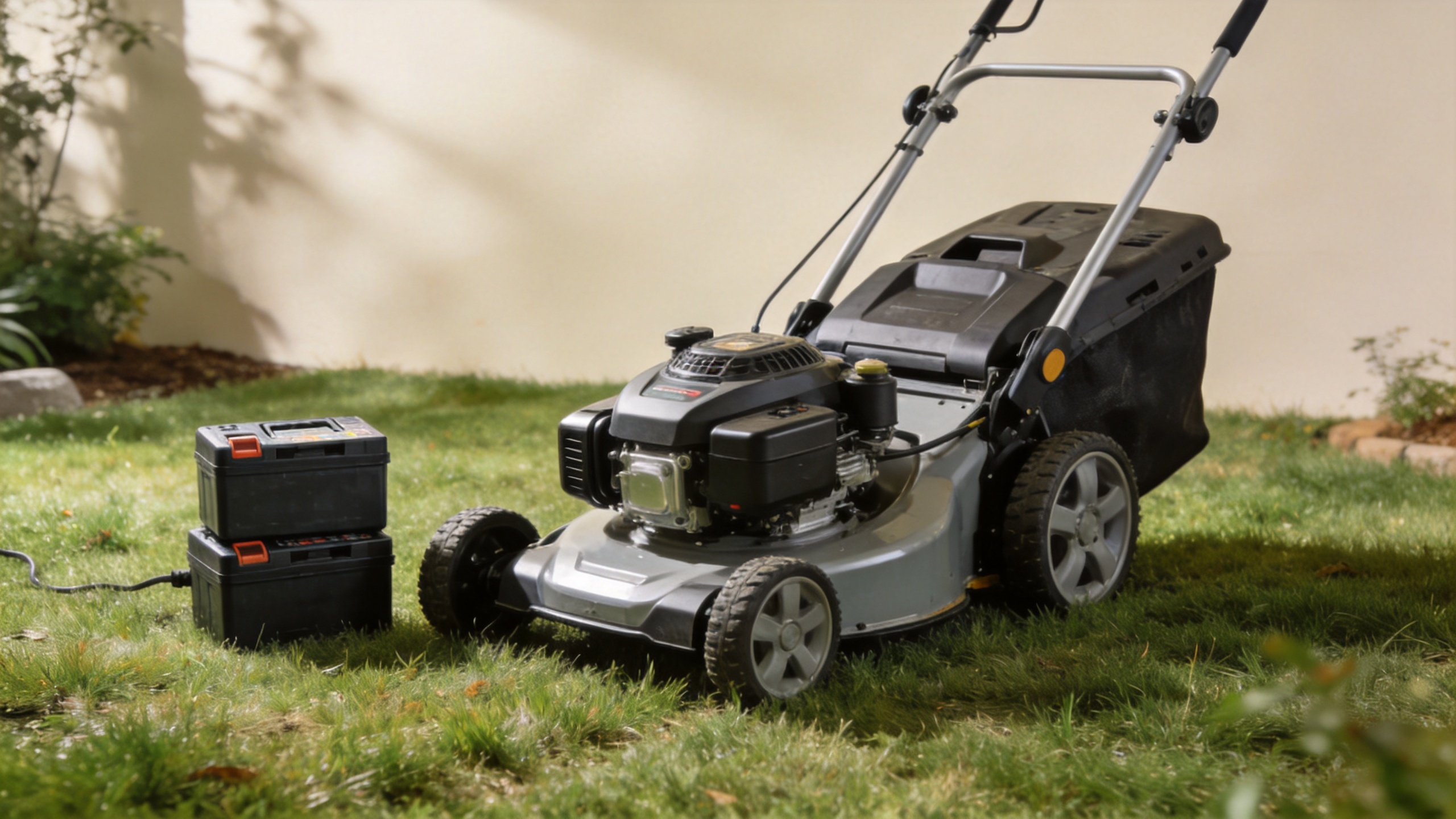
Charging is part of the ownership decision. Check whether the charger is included, whether it is intended for the battery size you plan to buy, and how it indicates a completed charge. A larger pack can extend a mowing session, but it can also take longer to recharge. For a weekend-only routine, that may be acceptable. For contractors, shared gardens, or a lawn that must be completed in a narrow time window, two batteries and an appropriate charger may be the more workable arrangement.
Keep the charging system in a dry, ventilated location and follow the mower and battery manuals for use, charging, transport, and seasonal storage. Guidance for lithium-ion batteries often favors avoiding prolonged heat and following the maker’s state-of-charge instructions during extended storage. Small habits here can help the battery capacity remain useful over time.
Check the mower’s energy demands alongside the battery
A battery comparison is incomplete without the mower. Ask these questions before selecting a cordless lawn mower:
- Is it a push model or does it use self-propel drive?
- What deck width and cutting modes will you actually use?
- Will it collect clippings, mulch them, or alternate between both?
- Does the mower accept more than one battery, and does it switch batteries automatically?
- Is the battery platform likely to be useful for other tools you own or plan to add?
For instance, a narrow push mower may cover a modest, open lawn efficiently with moderate battery capacity. On a complex lawn with obstacles, the same nominal capacity can produce a different runtime because turning, restarting, and heavier turf changes the load. This is why an electric mower should be chosen by working conditions rather than lawn size alone.
A simple battery-capacity decision checklist
Before purchasing a cordless lawn mower, compare the following on the exact configuration you will use:
- Record the battery voltage, Ah, and calculated Wh.
- Compare advertised runtime only against similar cutting conditions.
- Add capacity margin for wet, dense, or occasionally overgrown turf.
- Confirm the charging system and whether a spare battery is available.
- Check the cost and availability of replacement batteries before committing to a platform.
- Choose a mower type, deck size, and drive arrangement that fit the lawn rather than assuming a bigger battery fixes every mismatch.
A well-matched battery capacity supports a calmer mowing routine: fewer interrupted cuts, less dependence on ideal weather, and a clearer plan for charging. Select the cordless lawn mower as a system—battery, mower, charger, and lawn conditions together—and the runtime figure becomes much more useful.
Frequently Asked Questions
Is a higher Ah battery the right choice in every case?
Not necessarily. Higher Ah generally gives more stored energy within the same voltage platform, but it can add weight and charge time. Compare Wh when voltage differs, then weigh the result against lawn conditions and the charging system.
How many batteries should I buy with a cordless lawn mower?
One battery may suit a small lawn with plenty of time to recharge. Consider a second compatible battery when your usual runtime leaves little reserve, the turf is often demanding, or you need to complete the lawn without waiting for a recharge.
Does a self-propelled electric mower need more capacity?
Often, yes. The drive system draws energy in addition to the blade motor. Check the stated runtime for the self-propelled configuration and allow a margin for your terrain and lawn condition.
 Hot News