
 EN
How to Improve Garden Maintenance Efficiency with Battery Equipment?
Garden work becomes slow when every task starts with a different setup, a cable route, or a trip back to the shed. Thoughtful battery garden equipment changes that rhythm. It can help an operator move from mowing to trimming to clearing without handling fuel or rearranging extension leads. The practical benefit comes less from a large tool collection and more from matching the battery system, task order, and runtime plan to the property.
From a contractor’s perspective, productivity is usually lost in small interruptions rather than in the cutting stroke itself. A battery, charger, and tool should be treated as one work system. With that approach, battery garden equipment can support efficient maintenance on compact residential sites, around obstacles, and during short repeat visits.
Start with the maintenance route, not the tool catalogue
Before choosing or deploying battery garden equipment, divide the site into task zones. Note the lawn area, edges, hedges, paths, leaf build-up, slope, and access points. Then put the jobs in an order that avoids rework. For example, clear loose branches first, mow the main area, trim the edges, and finish by blowing debris from hard surfaces. Trimming before mowing can leave material to collect again; blowing before trimming often means repeating the same path.
This route also exposes where cordless tools are genuinely useful. A small, awkward lawn with entrances, trees, and beds may reward quick changes between a mower, trimmer, and blower. A large open area with long, continuous demand may need a different plan, more battery capacity, or another machine category. There is no universal winner: battery garden equipment works most efficiently when the workload is matched to its intended duty cycle.
Build a battery plan around active work, not advertised assumptions
Runtime varies with turf height, moisture, cutting setting, blade condition, tool load, temperature, and operator technique. That means a simple “one battery per job” rule can leave a crew waiting halfway through a visit. Instead, time a typical session for each task over several visits. Record active cutting or trimming time, not travel, loading, or customer discussion. This creates a more useful baseline for battery garden equipment.
- Assign packs to task intensity. Reserve the highest-capacity compatible packs for mowing, dense trimming, or heavier blower work. Use smaller packs where the tool and task are lighter.
- Set a charging rotation. Start with charged packs, identify which pack will recharge first, and avoid treating the charger as an afterthought.
- Leave an operational buffer. A spare compatible pack is a continuity tool, not merely an accessory, when a visit cannot pause.
- Review the record after seasonal changes. Spring growth, wet turf, and neglected edges can change the energy needed for the same route.
My default assumption used to be that cordless was invariably the smarter choice. That holds for many distributed garden tasks; it becomes less convincing when a property demands sustained, high-load work across a very large area. The practical question is not whether battery garden equipment is modern, but whether the battery plan fits the day’s real workload.
 Organized charging and tool staging reduces avoidable delays between garden tasks.
Standardize the platform where it makes sense
A shared platform can simplify training and reduce the number of chargers and pack types that travel with a crew. Where tools are designed for the same compatible battery family, operators can rotate packs between suitable tools instead of maintaining several isolated charging routines. This is one reason battery garden equipment can improve productivity for recurring light-to-medium maintenance work.
Compatibility must be confirmed from the manufacturer’s documentation for the specific tools and batteries in use. Do not force a pack into a different system or rely on a visual fit. Use the specified charger, inspect contacts for dirt or damage, and follow the tool manual for charging, transport, and storage. Those habits support both electric machinery availability and safer daily handling.
Reduce non-cutting time with a simple ready-to-work routine
The highest-value habit is often preparation. At the end of each shift, clean clippings and dust from the tools, check guards and cutting parts, set batteries aside for charging according to their instructions, and stage the next day’s tools by route. On arrival, do a short walk-through for stones, wire, toys, irrigation fittings, and wet patches before starting battery garden equipment.
A two-minute pre-start check can avert a much longer interruption. Check that the mower deck or trimmer head is clear, that the cutting height suits the turf condition, and that charged packs are secured. Keep the work area organized so a trimmer, blower, and spare battery are not buried under transport gear. For efficient maintenance, every handoff between tools should feel planned rather than improvised.
Use each tool where it has the strongest productivity role
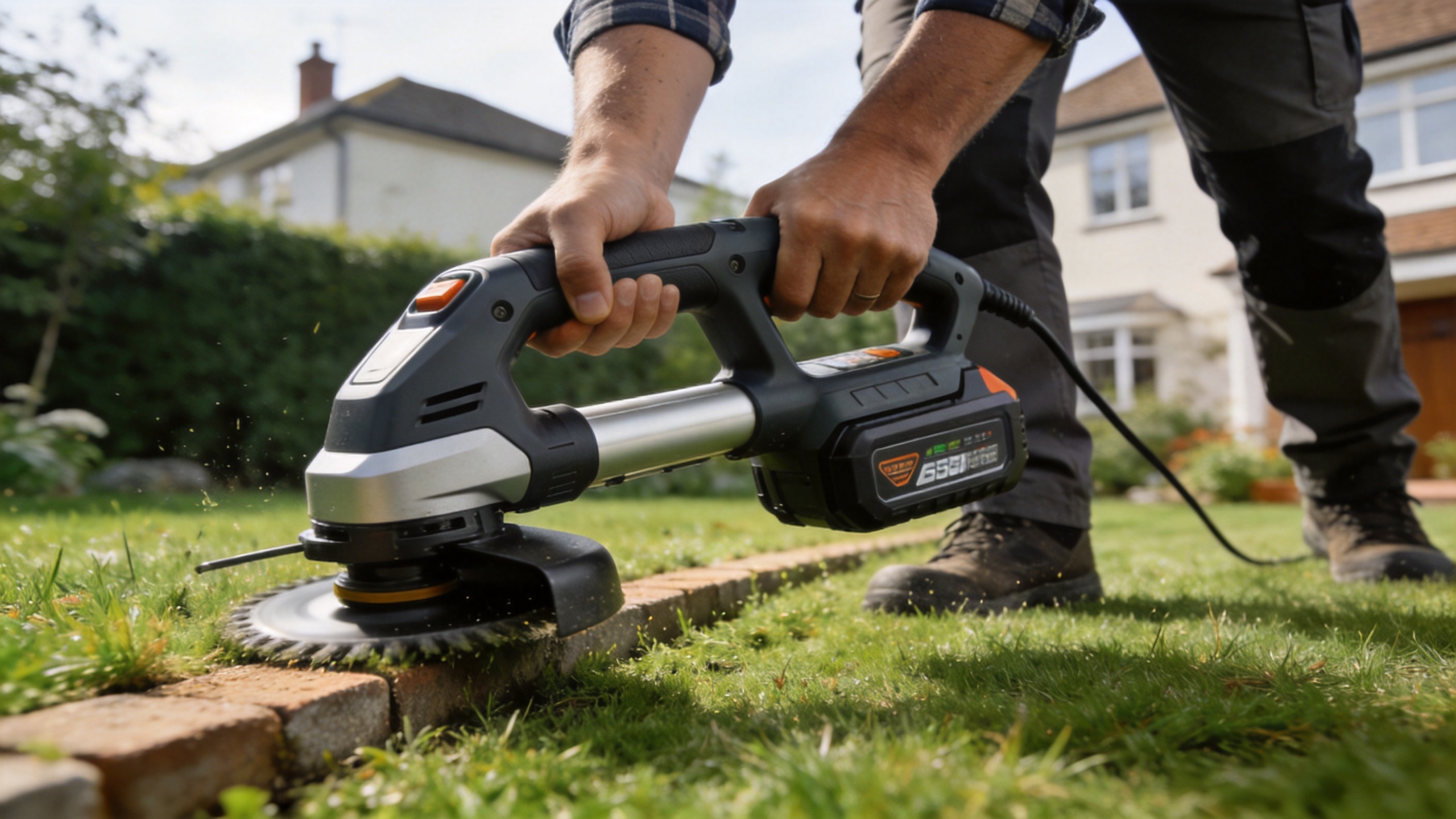
Battery garden equipment is most useful when the operator avoids asking one machine to do every job. A mower handles open turf; a trimmer finishes borders and confined areas; a blower gathers light debris; a hedge tool is scheduled when the growth condition calls for it. This task-specific approach limits repeated passes and helps preserve runtime for the work that actually needs it.
For a weekly route, group short tasks at nearby properties where possible. The reduced unloading and setup time can matter as much as the cutting time. For a single larger property, stage tool changes close to the work zone and keep charged packs protected from direct sun, standing water, and impacts. Productive cordless tools are part of a system, not a reason to ignore site conditions.
Protect battery condition between visits
Battery care affects whether battery garden equipment is ready at the next appointment. Common manufacturer guidance is to charge and store packs in a cool, dry place, avoid visibly damaged packs, and use the intended charger. Remove a pack from the tool for extended storage when the manual directs it. If a pack is cracked, unusually hot, swollen, leaking, or behaving abnormally, take it out of service and follow the manufacturer’s disposal or service guidance.
Do not leave the storage routine to memory. Label charged and used packs, give them a stable home, and include them in the weekly tool inspection. That small discipline supports productivity because the morning crew can see its available energy at a glance rather than discover a gap on site.
Measure the improvement after a few visits
Track three items for two to four comparable visits: active tool time, waiting time for batteries or setup, and any return passes caused by poor task order. Then adjust one part of the system at a time. You may find that an extra compatible pack, a cleaner loading sequence, or moving the trimming stage changes the day more than adding another tool.
The aim is not to claim that battery garden equipment suits every property. The aim is to make its strengths useful: cable-free movement, fast transitions, and a more orderly maintenance route. When battery capacity, charging, task order, and tool care are planned together, battery garden equipment can make regular garden work calmer, more predictable, and easier to manage.
 Hot News