
 EN
Why Are Ride On Mowers Widely Used by Commercial Landscaping Companies?
For a commercial landscaping company, mowing is not simply a maintenance task. It is a recurring production job with a route to complete, labor to schedule, fuel and maintenance to manage, and a finish standard to protect. That is why a ride on mower is widely used wherever properties have enough open turf to reward faster coverage. The machine lets one operator cut broad areas from a seated position, leaving more of the crew’s time for trimming, edging, cleanup, irrigation checks, and client-facing detail work.
From a contractor’s point of view, the value is not just that a ride on mower feels easier to use. It is that the right machine can make the workday more predictable. On a school field, business park, estate, amenity area, or large residential route, a commercial lawn mower can turn a long push-mowing assignment into a repeatable workflow. Still, the site determines the fit. A ride-on is not automatically the right tool for every lawn.
1. Faster open-area coverage supports crew productivity
The clearest reason landscaping companies choose a ride on mower is area coverage. A wider cutting deck reduces the number of passes required across open grass, while a seated operator can travel between passes without the physical effort of pushing a machine for hours. Typical lawn tractors are commonly offered with decks in the roughly 42- to 54-inch range and may reach travel speeds around 6 to 7 mph, although specifications differ by model and conditions. In commercial work, those capabilities matter because labor hours are often the largest controllable cost.
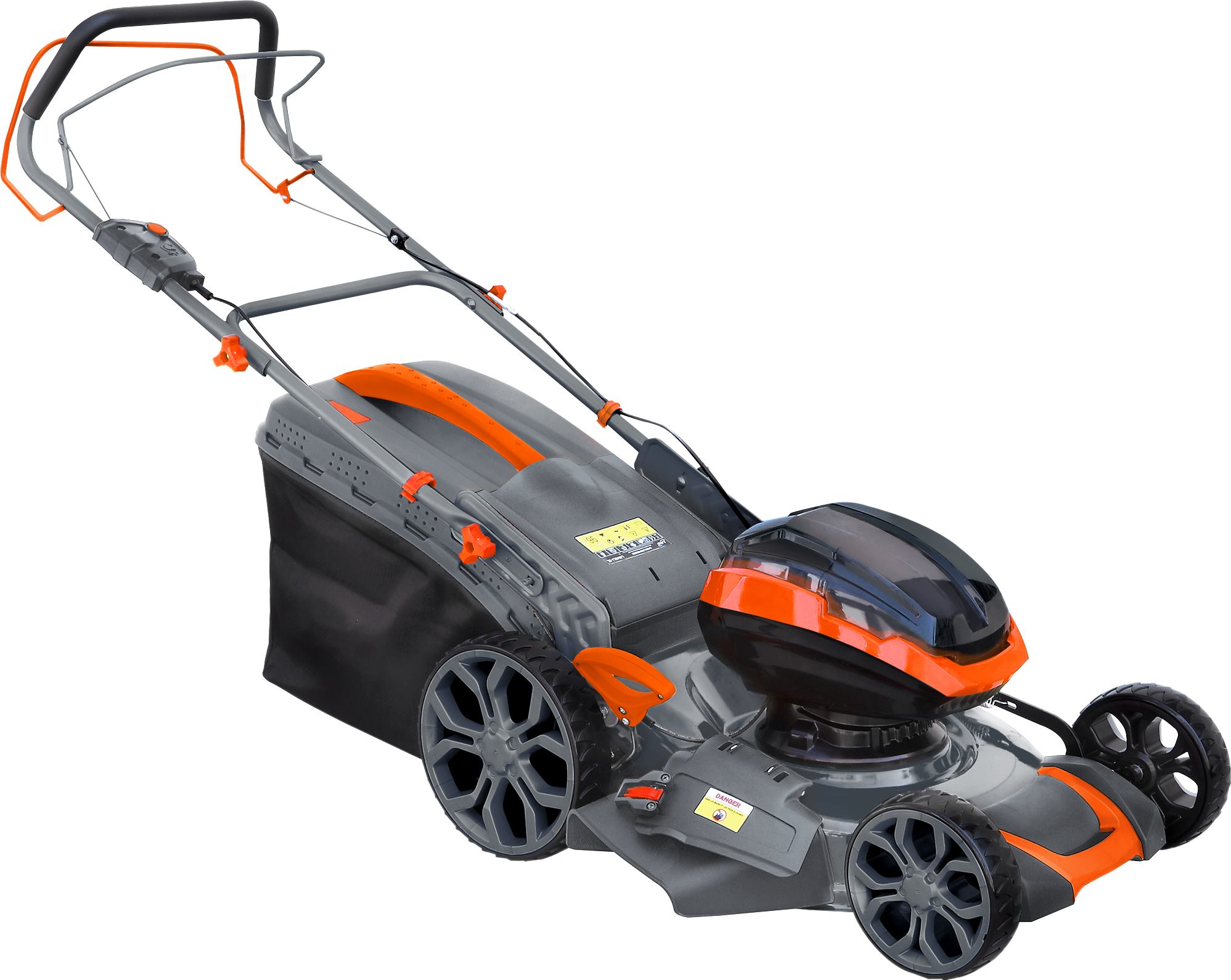
Higher productivity does not mean rushing. It means matching the machine to the site so the operator spends less time walking behind equipment and less time overlapping passes. A landscaping business can then allocate people where judgment matters more: detailing boundaries, managing obstacles, checking the turf condition, or preparing the next property. This is especially helpful when grass growth accelerates and a weekly route suddenly becomes harder to keep on schedule.
2. Operator comfort helps maintain quality through a full shift
Commercial mowing is repetitive. After several properties, fatigue can affect steering accuracy, attention around obstacles, and the consistency of the cut. A ride on mower reduces the continuous pushing and vibration exposure associated with a walk-behind unit. An adjustable seat, accessible controls, and a smooth drive system can make long sessions more manageable for operators of different sizes and experience levels.
Comfort should be treated as a practical business factor rather than a luxury. A crew member who can remain alert through an extended route is more likely to notice debris, uneven ground, pedestrian traffic, or a patch of wet grass that needs a different approach. For a commercial lawn mower fleet, good ergonomics also make it easier to train new operators and rotate staff without turning the equipment into a bottleneck.
3. The right deck and drive improve workflow flexibility
Commercial properties rarely present one simple rectangle of turf. A useful ride on mower needs to balance deck width with maneuverability. Wider decks can reduce passes on playing fields and broad verges, but a machine that is too large for gates, tree lines, beds, or parked vehicles can create extra trimming work. In other words, a larger deck may not remain faster once the layout becomes complicated.
That is why landscaping companies often look at turning radius, steering response, reverse procedures, and transmission control before focusing only on engine output. Hydrostatic transmission, where available on a given model, can provide continuously variable speed control rather than repeated gear changes. That can help an operator slow down around fixtures and resume an efficient working pace on open ground. A tight-turning design can also reduce the uncut strips left near trees and borders, although it will not eliminate the need for hand-held finishing tools.
4. A ride on mower can improve the economics of a route
Equipment cost should be evaluated against the work it replaces. A ride on mower usually requires a larger initial investment than a walk-behind unit, plus transport, storage, service, blades, filters, and possible repair costs. But if it consistently shortens mowing time on suitable sites, it may reduce labor hours per visit and improve route capacity. The important calculation is total cost of ownership: purchase price, downtime, consumables, service access, fuel or energy use, and the value of having a machine available during the busiest growing weeks.
For a landscaping business, availability is often more important than headline speed. A machine with a parts plan, routine inspection schedule, and clear service support is more useful than a faster-looking alternative that sits idle during peak season. Before choosing garden machinery for a fleet, managers should ask how quickly blades, belts, filters, and drive components can be inspected or replaced, and whether another unit can cover a route during maintenance.
5. Collection, mulching, and discharge choices fit different contracts
Commercial sites do not all require the same finish. A ride on mower may collect clippings for formal lawns, mulch regularly maintained turf, or discharge grass where the contract and site conditions permit. The right choice depends on grass length, moisture, appearance expectations, disposal rules, and the client’s tolerance for visible clippings.
Collection can deliver a tidy result but introduces stops to empty the box. Mulching can reduce collection workload when grass is cut regularly and conditions are appropriate, but wet or overgrown grass may still clog a deck or leave an uneven finish. Operators should plan for those trade-offs rather than assume one mode will suit every job. This flexibility is one reason ride-on equipment remains useful across varied commercial maintenance contracts.
6. Safety and terrain assessment are part of productivity
A productive machine is only productive when it can be operated safely. Commercial teams should include a walk-around inspection in the daily routine: check the blade area, tires, controls, guards, operator-presence system, parking brake, and surrounding ground conditions. Start interlocks and blade shutoffs are important safeguards, and debris should be removed before mowing begins.
Slopes deserve particular caution. A ride on mower may be poorly suited to a steep, uneven, or wet gradient even if the area looks efficient on a site plan. Loss of traction, scalping, and rollover risk can turn a time-saving choice into a safety incident. The sensible approach is to follow the manufacturer’s slope guidance, assess conditions on the day, mow in the recommended direction, and use a more suitable machine or method where required. This is a case where professional judgment protects both people and productivity.
How to decide whether a ride-on fits the job
Before adding a ride on mower to a fleet, review the properties rather than the brochure alone. Measure the usable turf, identify gates and narrow access points, note slopes and obstacles, define the finish standard, and estimate the current labor time. Then compare the machine’s deck width, turning behavior, operator controls, collection options, transport needs, service plan, and safety features against the real route.
The most suitable commercial lawn mower is determined by the property rather than its physical size. Yet for large, reasonably open, regularly maintained sites, a ride on mower gives landscaping companies a strong combination of coverage, operator comfort, flexible cutting management, and route-level productivity. Paired with proper training, maintenance, and a realistic terrain assessment, it becomes a practical part of a professional garden machinery fleet rather than just a larger mower.
 Hot News