
 EN
Why Are Cordless Lawn Mowers Suitable for Noise Sensitive Areas?
A quiet garden matters more when homes sit close together, shift workers sleep nearby, or a shared boundary turns ordinary mowing into a neighbourhood issue. A cordless lawn mower can be a sensible starting point because its electric drive removes the combustion noise associated with petrol equipment. That does not make every cordless lawn mower equally quiet, and it does not remove the need for considerate timing. It does, however, give homeowners and landscape teams a useful way to reduce one of the most noticeable parts of routine lawn care.
As garden-machinery specialists often find, the useful question is not simply whether a battery mower is quieter. It is whether a particular cordless lawn mower can keep a given lawn presentable without creating avoidable disturbance or making the work impractical. The answer depends on the site, the lawn conditions, the mower setup, and the way it is used.
Why noise changes the mower decision
Noise-sensitive areas include compact suburbs, townhouses, schools, care settings, holiday parks, and properties beside outdoor work or relaxation spaces. In these places, mower sound travels across fences and hard surfaces, and the distinctive engine note of conventional equipment can be more intrusive than its volume alone suggests. A low noise mower is therefore not only about operator comfort; it is about making regular maintenance easier to live alongside.
A cordless lawn mower typically avoids engine combustion and idling noise. The remaining sound comes mainly from the blade, airflow, wheels, lawn-blade contact, and the electric motor. On short, dry turf, that difference can make conversation at a distance easier and lessen the attention drawn to a mowing session. On wet, overgrown, or debris-strewn lawn cover, blade and airflow noise still rise, so mowing technique remains important.
Published comparisons often describe electric mowers as quieter than petrol models, but decibel figures are not interchangeable. A reading can change with the test distance, cutting height, blade condition, terrain, and whether the machine is under load. For that reason, compare manufacturer sound information only when it is measured in a similar way, and consider how the mower sounds at the property boundary rather than relying on one headline number.
How electric equipment can reduce everyday disruption
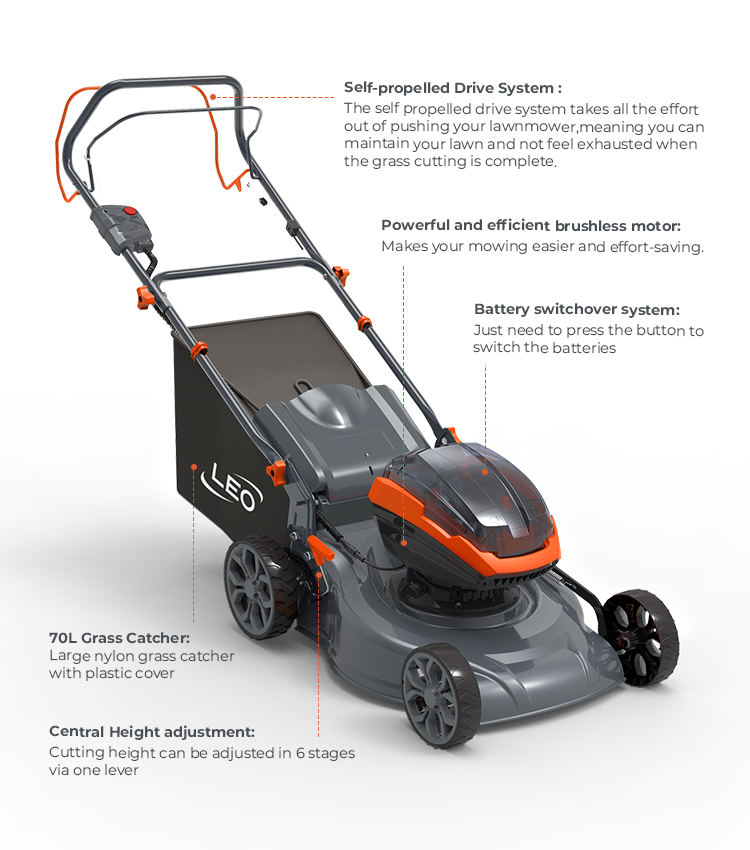 A battery-powered mowing setup can suit regular care in close residential settings.
The quiet-operation advantage of electric equipment is most useful when it supports a predictable routine. A cordless lawn mower starts without a pull cord, does not need to warm up at idle, and stops promptly when the handle is released. These small operational details can reduce the extra noise around the actual cut.
- Less engine character: An electric drive generally produces a smoother sound profile than an internal-combustion engine.
- Shorter preparation: Battery-powered operation can reduce noisy setup and shutdown time.
- More flexible scheduling: A cordless lawn mower can suit brief, regular cuts when the lawn surface is dry and manageable.
- Lower local disturbance: A carefully chosen low noise mower may be easier to use near patios, windows, and shared fences.
These benefits are conditional, not automatic. A dull blade tears lawn blades and increases cutting effort. A full collection box can make an operator stop and restart repeatedly. Fast travel over loose stones or an uneven path adds rattles that no battery system can hide. Keeping the blade well-maintained, the deck clean, and the route clear helps a cordless lawn mower deliver the calmer experience people expect.
Why smaller urban gardens are a natural fit
Urban gardening often means modest lawns broken up by beds, narrow access, furniture, and frequent turns. Here, a compact cordless lawn mower can be easier to guide than a heavier petrol machine, especially when the lawn is maintained little and often. Regular cutting also reduces the amount of lawn growth removed in one pass, which can help the blade cut more cleanly and keep the session shorter.
Before choosing a cordless lawn mower, map the actual mowing area rather than the full plot size. Note slopes, tall lawn growth at the edges, and the distance between charging and storage. Then compare battery capacity, claimed coverage, deck width, collection method, and whether a second battery is practical for the schedule. For a small, level lawn, runtime may be straightforward. For a larger or steep site, battery changes and cutting pace become real constraints.
Quiet operation still has boundaries
Quiet operation does not mean silent operation, nor does it override local requirements. Many communities set their own limits on when garden machinery may be used, and those rules can differ by location. Check the relevant local guidance and any property-management rules before planning early-morning or evening work. Even where a cordless lawn mower is acceptable, a considerate schedule is still good practice.
It also helps to look beyond the motor. Mowing at a moderate pace, avoiding repeated passes near a neighbour’s window, and postponing work when the lawn surface is soaked can reduce disturbance. If the lawn growth is tall, raise the cutting height for the first pass instead of forcing a cordless lawn mower through a heavy cut. That approach protects turf quality, reduces strain on the battery system, and can make the work sound less aggressive.
When a cordless lawn mower may be the wrong fit
A cordless lawn mower is not automatically the right answer for every noise-sensitive site. Very large grounds, persistent wet growth, demanding slopes, or crews that mow for long uninterrupted periods may need a different equipment plan. In those cases, evaluate battery rotation, charging capacity, deck size, and operator workflow before treating quietness as the deciding factor. A machine that repeatedly runs out of charge can create more interruptions rather than a smoother maintenance routine.
For many homes and light-duty sites, though, a cordless lawn mower offers a balanced route: less engine-led noise, simple handling, and a better match for regular lawn care near other people. Choose the mower around the lawn’s conditions, maintain it well, and pair it with thoughtful working hours. That is how a quieter tool becomes a genuinely neighbour-aware choice.
A quick suitability checklist
- Measure the mowable lawn area and identify slopes or dense-growth zones.
- Check battery runtime against the real job, not only the advertised maximum.
- Compare sound information using like-for-like test conditions where possible.
- Plan cuts when the lawn surface is dry and local quiet-hour rules permit the work.
- Maintain the blade and deck so the cordless lawn mower cuts efficiently.
Used with those checks in mind, a cordless lawn mower can make routine maintenance more compatible with close neighbours and the expectations of a quieter outdoor space.
 Hot News