
 EN
What Maintenance Schedule Should Gasoline Lawn Mowers Follow?
A gasoline lawn mower does not need a workshop-level overhaul every weekend. It does need a repeatable routine. The useful shift is from fixing a hard-starting machine in spring to giving the mower small, timed checks while it is clean, cool, and easy to inspect. This gasoline lawn mower schedule separates before-use checks, hour-based engine service, cutting-system care, and storage work so an owner can plan around actual use rather than guesswork.
Start with the operator manual for your particular gasoline lawn mower. Engine families differ in oil capacity, filter design, blade hardware, and service intervals. The schedule below is a practical framework; where the manual gives a different interval or oil specification, the manual takes priority.
Use the manual as the master schedule
For a gasoline lawn mower, hours tell a clearer story than calendar months. A small urban lawn may add only a few hours in a season, while a contractor or large-property owner can reach a service interval quickly. Record the date, hour-meter reading if fitted, oil type, and work completed in a notebook or on your phone. That single habit makes engine service far less vague.
One common small-engine schedule calls for an initial oil change after the first five hours, air-filter cleaning at roughly 25 hours or annually, and an oil change at roughly 50 hours or annually. Treat those figures as a reference point, not a universal rule. Dusty mowing, hot weather, heavy turf growth, or frequent slopes can justify more frequent gasoline lawn mower checks.
Before every mowing session: a five-minute mower care check
Before starting a gasoline lawn mower, look for loose fasteners, fuel seepage, damaged cables, or turf clippings packed around the deck. Check the engine-oil level on level ground according to the dipstick procedure in the manual. Confirm that the fuel is fresh enough for the engine’s fuel guidance and that the cap is secure. Look at the blade area only with the engine off; remove the spark-plug lead and keep it clear of the plug before hands go near the blade or underside of the deck.
- Clear loose turf clippings and debris from the deck exterior and cooling areas.
- Check the cutting-height setting and wheels for obvious damage.
- Listen for a new rattle or vibration after startup; stop and inspect rather than mowing through it.
- Watch the cut. Torn turf-blade tips are a useful signal that blade condition needs attention.
This brief mower care routine catches issues while a gasoline lawn mower is still a simple inspection job rather than a larger repair appointment.
After each use: clean first, then inspect
Once the engine has stopped and cooled, brush off clippings from the deck, discharge path, and engine cooling fins. Do not direct a high-pressure stream at bearings, cables, or electrical parts. Dry, packed turf clippings retains moisture and can hide cracks, loose guards, and corrosion.
Pay attention to the quality of the cut. A dull or bent blade can leave ragged turf-blade tips and create extra drag. In practical use, the difference between a newly sharpened blade and one that has worked through a season is visible in the clean finish of the cut. Balance and refit a blade only as the manual specifies; replace one that is cracked, badly worn, or bent. If vibration persists after blade work, book a qualified repair inspection rather than continuing to use the gasoline lawn mower.
At 25 hours or during the active season
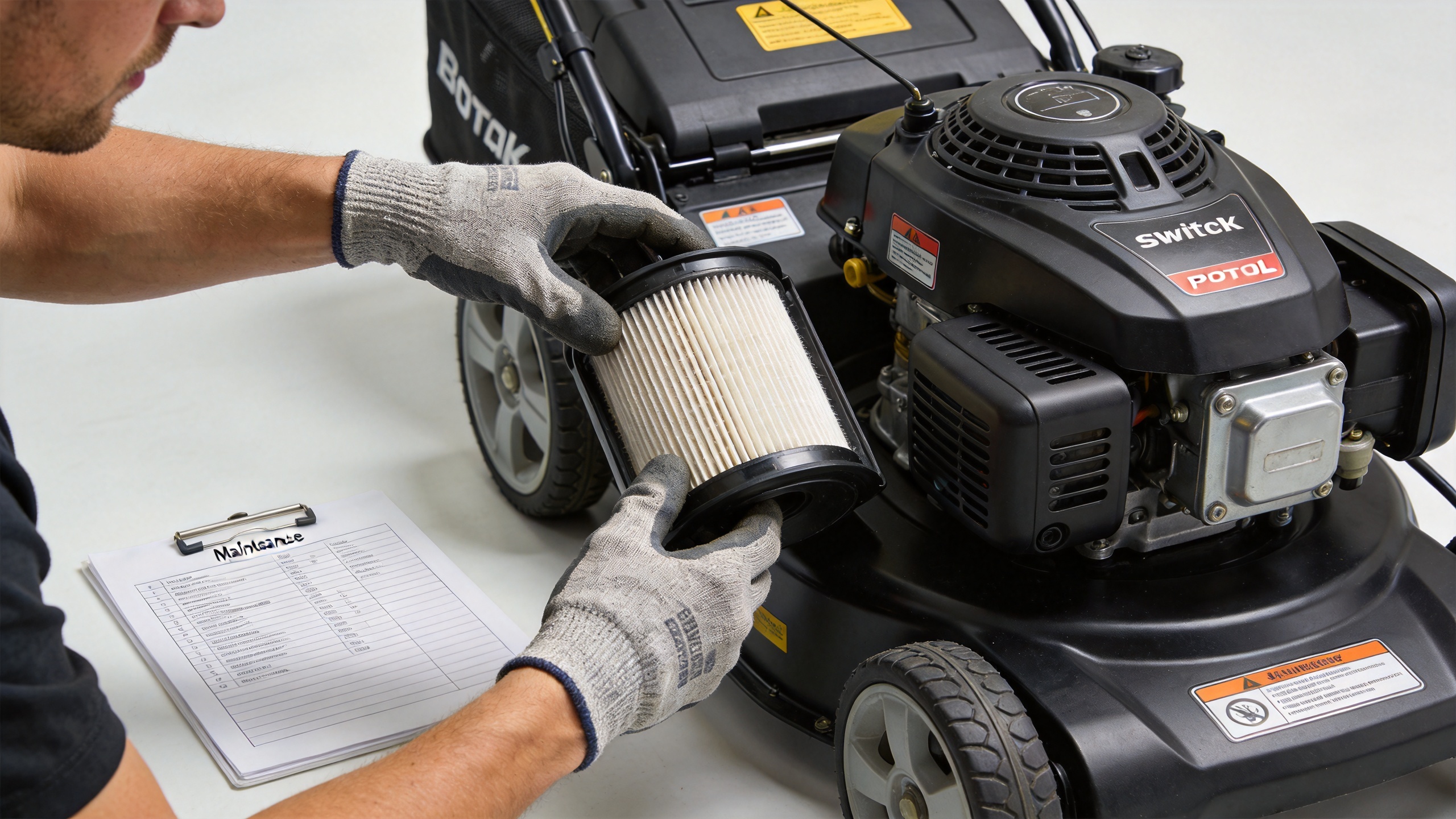
At this point, move from quick mower care to a more deliberate engine service. Inspect the air filter and pre-cleaner if your model uses one. Tap out loose debris only if the manual permits it; replace a paper element that is oily, torn, heavily loaded, or cannot be cleaned as directed. A restricted filter changes how a gasoline lawn mower breathes and can show up as poor starting, uneven running, or excess fuel use.
Also examine the spark plug lead, throttle and drive controls, wheel hardware, and deck fasteners. For self-propelled machines, check the drive engagement and cable adjustment according to the manual. Lubricate only the points the maker identifies. Adding lubricant to unlisted locations can attract grit or interfere with a component designed to run dry.
At 50 hours or once per year: plan the main engine service
For many owners, the annual service is the anchor of the maintenance schedule. With the engine warmed briefly and then stopped, disconnect the spark-plug lead, clean around the oil fill and drain area, and change the oil using the approved grade and quantity. Choose oil according to the engine manual rather than a generic internet chart when the manual gives a specification. If the gasoline lawn mower has an oil filter, replace it at the interval stated for that engine; many walk-behind models do not have one.
| When | Gasoline lawn mower task | What to note |
|---|---|---|
| First 5 hours, if specified | Change break-in oil | Use the manual’s oil grade and fill amount. |
| Before each use | Check oil, fuel, guards, fasteners, and cut quality | Stop for new vibration, leaks, or unusual noise. |
| After each use | Remove clippings and inspect the deck and blade area | Disconnect the plug lead before underside work. |
| About 25 hours | Inspect or service the air filter and controls | Shorten the interval in dusty conditions. |
| About 50 hours or annually | Change oil and complete a seasonal engine service | Check the spark plug, blade, and drive system. |
| Before long storage | Clean, stabilize or manage fuel as directed, and store dry | Follow the fuel-system instructions for your model. |
During this engine service, inspect the spark plug and replace it at the maker’s stated interval. Check the muffler and spark-arresting components where fitted, along with the fuel line and fuel filter if the model has one. These are gasoline lawn mower tasks where model-specific parts and procedures matter more than a one-size-fits-all checklist.
End-of-season storage is part of the schedule
Storage begins with cleaning, not with a cover. Remove dry turf clippings, inspect the blade, make a note of parts to order, and deal with fuel exactly as the engine manual directs. Fuel left untreated for a long period can create starting and running troubles later. Some manuals call for stabilized fuel; others specify a different fuel-system procedure. Do not improvise this step.
Store the gasoline lawn mower in a dry location clear of ignition sources. If you need to tilt the machine for cleaning or blade work, follow the manual’s orientation instructions so oil or fuel does not enter an unintended area. A simple label showing the next oil-change hour target can save time when the next season arrives.
Know when routine mower care becomes repair work
Routine care covers inspection, cleaning, scheduled oil work, filters, and blade condition. Persistent smoke, repeated stalling, a fuel leak, damaged safety controls, a cracked deck, or vibration that remains after proper blade inspection calls for professional repair. Continuing to run a gasoline lawn mower with those symptoms can turn a contained issue into a more involved engine service.
The practical answer is consistency: check a gasoline lawn mower before and after use, use hour-based intervals for filters and oil, sharpen or replace blades when cut quality says it is time, and prepare storage before the off-season. That maintenance schedule keeps mower care tied to real operating conditions and gives repair technicians a clearer history if a fault does arise.





 Hot News