
 EN
How to Properly Charge and Store Cordless Lawn Mower Batteries?
A cordless lawn mower is easy to stow after mowing, but the battery deserves a separate routine. As a garden-machinery technical consultant, I suggest treating the pack as a precision component rather than leaving it on the mower or charger until the next job. A little battery storage discipline can support predictable runtime, safer handling, and a longer useful battery lifespan.
Start with the instructions supplied for your exact cordless lawn mower and battery platform. Charge indicators, approved storage ranges, and charger behavior differ by manufacturer. The steps below are a practical framework for routine care, not a replacement for that manual.
Let the Battery Cool Before Charging
After mowing, switch off the cordless lawn mower, remove the safety key if fitted, and take out the removable battery. Check the casing and terminals for turf clippings, moisture, cracks, swelling, unusual odor, or heat that does not fade as the pack rests. Do not charge a damaged battery or try to open it; place it somewhere non-combustible and contact the equipment supplier or an approved service channel for advice.
It is sensible to let a warm battery return to a normal indoor temperature before charging. Charging immediately after a long, demanding run can add heat to a pack that is already warm. Brush off loose debris with a dry soft brush or cloth. Do not use a wet cloth around electrical contacts, and do not push metal objects into terminals.
Use a Simple Charging Routine
- Choose a dry, stable location. Put the charger on a firm, non-flammable surface with clear airflow. Keep paper, fuel, solvents, and other combustible materials apart from the charging area.
- Use the matching charger. A cordless lawn mower battery should be charged only with the charger specified for its platform. Similar-looking connectors or improvised adapters are not a safe substitute.
- Check temperature conditions. Very cold garages, hot sheds, direct sun, and damp areas are poor choices. If the charger shows a temperature fault, allow the pack to acclimatize rather than trying to override it.
- Follow the charge indicator. Let the charger complete its intended cycle, then remove the battery if the manual directs you to do so. Do not rely on a timer from another brand or battery size.
- Look again before refitting. A clean, dry battery and clean mower contacts help the cordless lawn mower connect correctly for the next cut.
These charging tips are deliberately plain because the small habits matter. If a charger flashes an error, the pack becomes unusually hot, or the charge time changes sharply, stop using that combination until the manual or service team explains the signal.
Everyday Battery Storage Between Mows
For a break of a few days, do not leave the battery exposed in the garden or inside a vehicle. Remove it from the cordless lawn mower and keep it in a dry indoor location, protected from direct sunlight and out of reach of children. Store the charger separately unless its instructions say otherwise. A shelf, cabinet, or clean tool case is often more suitable than a damp floor or an uninsulated shed.
There is no single charge percentage that fits every cordless lawn mower battery. Some manufacturer guidance for lithium-ion garden-tool packs recommends partial charge for long storage, while other systems give different directions. That is why the charge-level symbol in your manual matters more than a generic internet rule. Avoid storing a pack visibly near empty for a long time, and do not assume a fully charged pack is automatically the right seasonal-storage state.
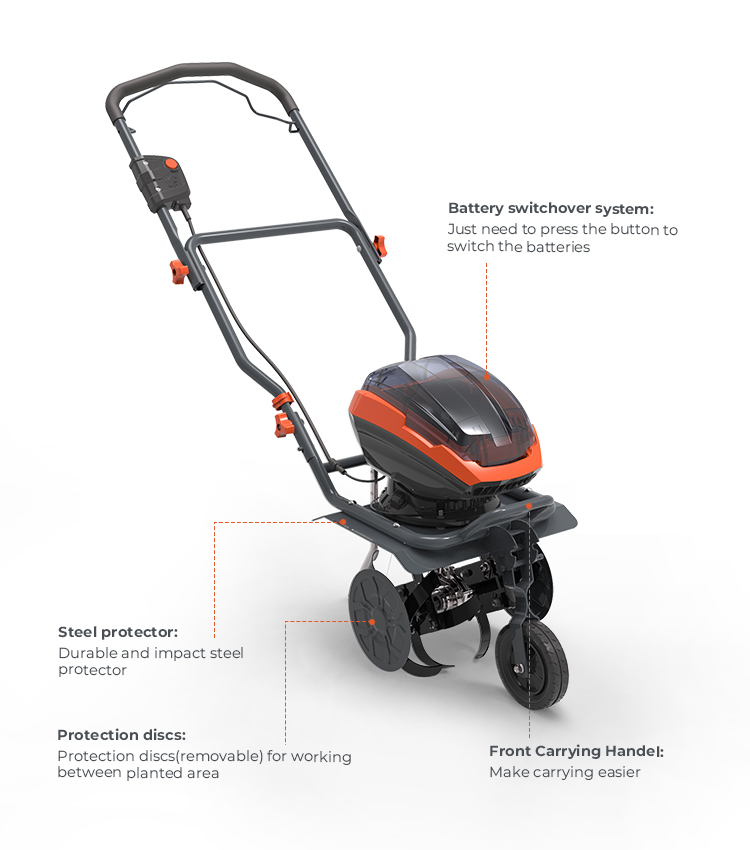 Store a removable battery clean, dry, and separate from the mower during extended breaks.
Prepare for Winter or Other Long Breaks
Seasonal battery storage deserves a five-minute checklist. First, clean and dry the cordless lawn mower and battery. Second, remove the pack from the tool. Third, check the manual for the recommended storage charge and temperature range. Fourth, choose a dry, secure indoor location with a steady temperature. Finally, note the date so you remember to inspect the battery before the new mowing season.
During a long break, inspect the pack periodically for physical damage, corrosion around contacts, or an unexpected loss of charge. Only recharge when the manufacturer’s guidance calls for it. This is particularly useful for households that store a cordless lawn mower through cold or humid months: the aim is to avoid extremes of temperature, moisture, and deep discharge rather than to keep the battery constantly charging.
Habits That Can Shorten Battery Lifespan
- Leaving the battery on the cordless lawn mower outdoors or in a hot vehicle.
- Charging a wet, dirty, damaged, or still-hot battery.
- Using a charger that is not approved for that battery platform.
- Storing the pack on a concrete floor, near heat sources, or in a location where it can be crushed or punctured.
- Ignoring recurring error lights, loose terminals, swelling, or a steep drop in runtime.
- Keeping a cordless lawn mower battery at an unsuitable charge level for months because the manual was not checked.
Maintenance also means using the mower intelligently. A clogged deck, dull blade, or lawn growth that is too wet can make a cordless lawn mower work harder than necessary. Clear the deck with the battery removed, keep the blade in serviceable condition, and mow at a pace that matches turf height and conditions. These steps do not change the battery’s chemistry, but they can reduce avoidable load during each job.
When to Stop and Ask for Help
Take a cautious approach if your cordless lawn mower battery is swollen, leaking, cracked, unusually hot, smells odd, has discolored terminals, or will not charge with its approved charger. Do not tape it, dismantle it, or place it in household waste. Follow local battery-recycling rules and the manufacturer’s disposal instructions. If a battery’s runtime has gradually fallen, check mower cleanliness, blade condition, and charging practice first; if the change is sudden, ask an authorized service provider to assess the pack and charger.
A Practical Routine to Remember
After each use: remove the battery, let it cool, clean it dry, and charge it only with the correct charger in a suitable place. Before a long pause: consult the manual, set the prescribed storage charge, remove the battery from the cordless lawn mower, and keep it dry and protected from temperature extremes. Those straightforward charging tips and battery storage habits make maintenance easier to manage and give you a clearer picture of battery lifespan over time.
A cordless lawn mower offers useful flexibility, but its battery needs deliberate care. Keep the instructions for your specific platform nearby, act early on warning signs, and build these checks into your normal end-of-mow routine.
 Hot News