
 EN
Why Are Battery Powered Garden Tools Replacing Traditional Equipment?
Walk into a garden-equipment showroom today and the shift is hard to miss: battery powered garden tools are no longer confined to light trimming jobs. They are taking on mowing, blowing, edging, pruning, and routine grounds care that once defaulted to petrol machines or corded electric tools. The reason is not that every battery tool is automatically better. It is that, for a growing share of everyday work, the trade-offs have changed.
For dealers and buyers, the strongest case for battery powered garden tools is operational rather than fashionable. Users can start work quickly, avoid fuel mixing and engine servicing, reduce on-site exhaust, and work with less noise and vibration. For a homeowner, that can mean a simpler Saturday morning. For a contractor or garden centre, it can mean an easier-to-explain system built around shared batteries, chargers, and task-specific tools.
The old comparison was petrol versus weak electric tools
Older perceptions were formed when cordless garden equipment often had short runtime, limited cutting performance, and batteries that could only serve one tool. That comparison is now incomplete. Modern battery powered garden tools are sold as systems: one platform may cover a mower, blower, hedge trimmer, pruning saw, and a cordless grass strimmer. The practical advantage comes from keeping charged packs moving between tools instead of maintaining several small engines.
That does not erase the need to match the tool to the workload. Dense grass, long wet growth, woody material, steep ground, and all-day professional use can still expose the limits of a poorly planned cordless setup. But for routine trimming, residential lawns, property maintenance, and jobs close to homes, a properly sized system is often a more convenient fit than traditional equipment.
What is pulling buyers toward battery powered garden tools?
1. Less preparation and less routine maintenance
A petrol tool has a useful place, but it usually asks for more attention before and after use: fuel storage, oil checks, air-filter care, spark-plug service, seasonal preparation, and troubleshooting when it sits unused. Battery powered garden tools remove many of those engine-specific tasks. Insert a charged battery, perform the normal safety check, and start. That is especially valuable for occasional users who do not want a machine that needs a service routine before it is needed.
The ownership benefit is not “maintenance-free.” Blades, lines, guards, fasteners, decks, and battery contacts still need inspection. The difference is that maintenance becomes more visible and task-based, rather than tied to a combustion engine.
2. Noise, vibration, and neighbourhood expectations matter more
Quiet operation is one of the clearest reasons buyers consider battery powered garden tools. Without an idling petrol engine, a user can often hear changes in the work area, communicate more easily, and work with less disruption near homes, schools, hospitality sites, or noise-sensitive clients. Lower vibration can also make short, repetitive jobs feel less tiring.
One limitation matters here: the cutting mechanism still makes noise. A mower blade, blower airflow, or trimmer line can be loud under load. The point is not silence; it is a different noise profile and the removal of engine exhaust at the point of use. Those benefits help explain why many local buyers now ask about cordless options before asking about engine size.
3. A shared battery platform changes the economics
The most sensible battery purchase is rarely a single tool viewed in isolation. It is a platform decision. A charger and two or more compatible packs can support several tools, spreading those shared costs across the kit. That is why a battery powered string trimmer, blower, mower, and hedge trimmer can make more commercial sense together than separately.
Before choosing a platform, ask three plain questions: Which jobs happen on the same day? How long does each job actually run under load? And can a second battery charge while the first is being used? The answers are more useful than an advertised runtime taken from an easy test condition. For long sessions, extra packs and a sensible charging rotation may matter more than chasing the highest nominal voltage.
Why traditional equipment is losing ground in everyday work
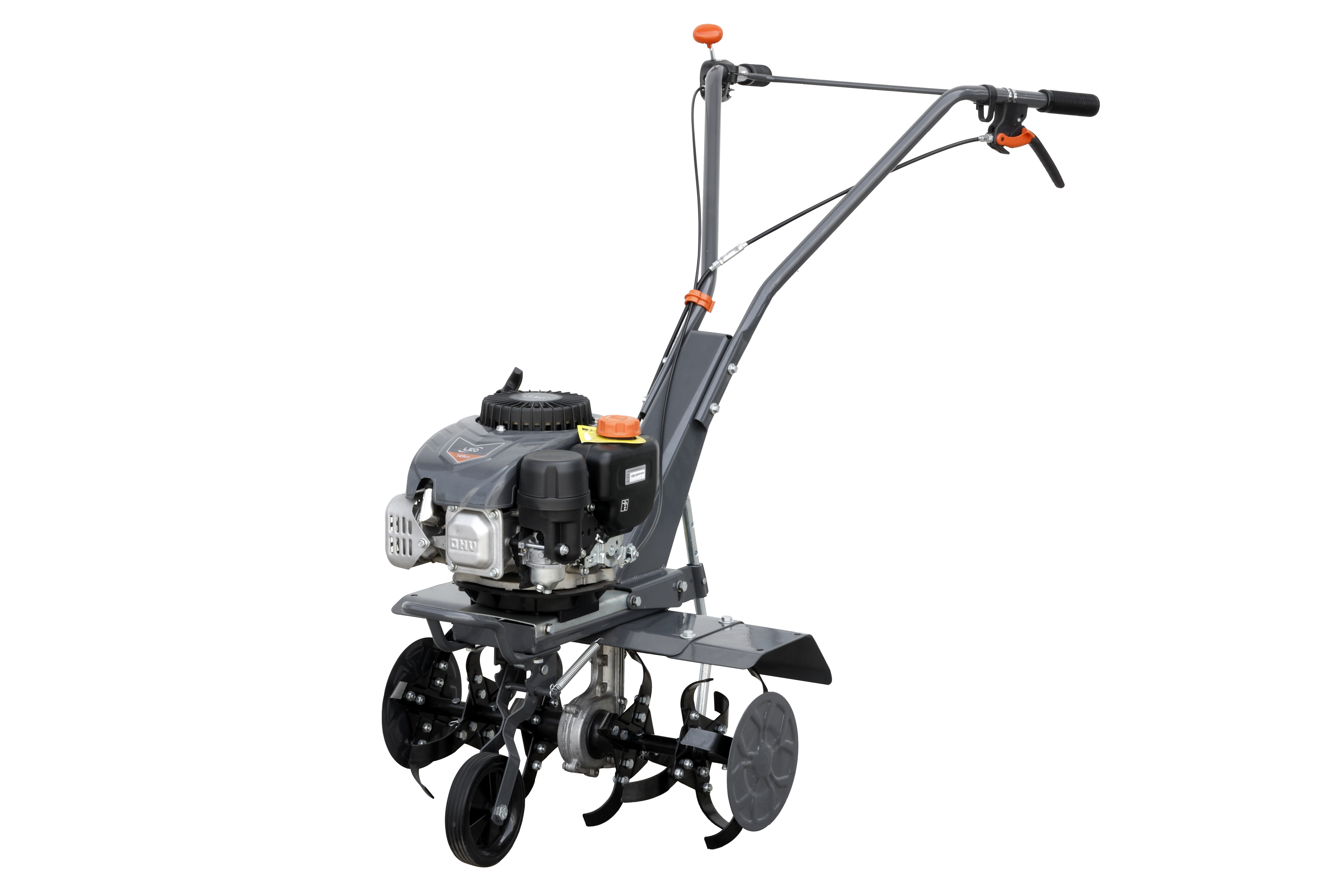
Traditional petrol equipment still has strengths: rapid refuelling, a familiar service ecosystem, and dependable endurance when crews tackle heavy or remote work. Yet its advantages are not equally valuable in every garden. A small petrol mower may be more machine than a compact property needs, while its fuel storage, noise, starting routine, and maintenance burden remain constant.
Battery powered garden tools turn that equation around for frequent, shorter tasks. A homeowner may prefer a mower that folds and stores easily. A maintenance team may value being able to carry a blower and trimmer in a vehicle without fuel odour or spill concerns. A dealer may find it easier to help a customer build a modular set around real tasks rather than sell several unrelated engine-driven products.
Performance has become a matching problem, not a blanket objection
It is reasonable to be sceptical of a blanket claim that cordless tools replace every petrol tool. They do not. The better question is whether the battery, motor, cutting system, and workload match. For example, a self propelled battery mower may suit a maintained lawn with a charging plan, while a large, overgrown site may call for multiple batteries, a faster charging setup, or a different machine category.
| Work situation | Why battery can fit | What to check first |
|---|---|---|
| Routine residential mowing | Quick starts, simpler storage, lower local noise | Lawn area, grass condition, battery capacity, charge time |
| Edging and light trimming | Portable tools are easy to deploy for short jobs | Line head, shaft balance, spare battery availability |
| Blowing paths and patios | No fuel mixing and useful stop-start convenience | Airflow mode, trigger control, duty cycle |
| All-day commercial work | Can work in a managed fleet system | Pack rotation, charging access, crew workflow, backup plan |
This is where buyers sometimes make the wrong comparison. They buy the least expensive bare tool, pair it with one small battery, then judge the whole category by a poor runtime result. A better assessment considers total working time, charging windows, spare packs, service support, and whether the tool is intended for light, medium, or demanding duty.
Total cost is more than the purchase price
Battery systems can cost more at the first checkout, particularly when batteries and chargers are included. Over time, however, the calculation can include avoided fuel purchases, fewer engine-service items, less time spent preparing equipment, and the ability to add bare tools to an existing platform. The answer depends on how the equipment is used. A lightly used homeowner may value convenience most; a professional buyer may focus on labour flow, battery rotation, and serviceability.
Do not assume the lowest upfront price is the lowest ownership cost. Compare what is included, the usable capacity of the packs, charger speed, warranty terms, availability of replacement batteries, and local parts support. If a tool is likely to be kept for years, a system with a clear service path can be a safer decision than a cheap, isolated battery format.
What a sensible buyer should do next
- List the jobs by frequency and difficulty, not just by tool name.
- Choose the battery platform before adding individual bare tools.
- Size battery capacity for the heaviest regular job, allowing for tougher conditions.
- Plan storage, charging, and a spare-pack routine before peak season.
- Keep a traditional option only where its endurance or task fit remains genuinely necessary.
Battery powered garden tools are replacing traditional equipment because they make common outdoor work easier to start, easier to manage, and more compatible with modern expectations around noise, fuel handling, and flexible ownership. They are not a universal substitute. With the right platform and realistic workload planning, though, they have moved from a secondary option to the default choice for many garden tasks.

 Hot News