
 EN
What Are the Environmental Benefits of Cordless Lawn Mowers?
A cordless lawn mower changes one visible part of lawn care immediately: it mows without burning petrol at the point of use. That matters for gardeners, grounds teams, and retailers thinking about cleaner equipment choices. But calling any battery machine an eco friendly mower without context misses part of the picture. The electricity used for charging, the size of the lawn, battery care, and end-of-life handling all shape the result.
For a practical assessment, begin with the job rather than a marketing label. A cordless lawn mower can reduce local exhaust exposure and avoid fuel handling, but it should also have suitable runtime, a battery system that can be maintained, and an end-of-life route that does not send lithium-ion cells into household waste. Those conditions turn a convenient electric tool into a more credible part of sustainable gardening.
Why operational emissions are the starting point
A petrol mower produces exhaust where it is used. A cordless lawn mower has no tailpipe or fuel-combustion exhaust while it is cutting, so it does not add those combustion emissions directly to the garden, path, or work area. This is the clearest environmental difference between the two power sources.
That distinction is meaningful in places where mowing happens near homes, schools, public green spaces, or staff working outdoors. The U.S. Environmental Protection Agency has documented gasoline lawn and garden equipment as a source of air pollutants; its national inventory also identified lawn mowers as a substantial portion of the 2011 equipment population. A cordless lawn mower does not make a lawn impact-free, but it shifts energy use outside the point of mowing.
The phrase zero emission needs careful handling. It can accurately describe the lack of on-site tailpipe emissions during operation, not the whole lifecycle of a cordless lawn mower. Manufacturing, battery materials, shipping, charging, repairs, and disposal still have environmental consequences. Clear language helps buyers compare options without overclaiming.
Charging electricity affects the broader footprint
Electricity is not identical everywhere. The climate impact associated with charging a cordless lawn mower depends in part on the local grid and on when the battery is charged. A grid with a larger share of lower-carbon generation can lower charging-related emissions; a grid relying more heavily on fossil fuels changes the calculation. That is why a battery mower is not automatically a full-lifecycle zero emission choice.
A few everyday choices remain within the user’s control. Charge only after the battery has cooled, use the charger supplied or approved for the system, and avoid leaving a charged pack in very hot or very cold conditions. These habits support battery health and can reduce unnecessary replacement. If a home or facility uses renewable electricity, charging a cordless lawn mower from that supply can further improve the operational picture.
Less fuel handling and fewer routine consumables
Petrol lawn care involves buying, transporting, storing, and refilling fuel. A cordless lawn mower removes those repeated fuel-handling steps from normal mowing. That can reduce the chance of small fuel spills and avoids the containers and travel associated with routine refuelling. This is especially relevant for homeowners who mow modest areas often, rather than managing very large sites.
Battery-powered electric tools may also have a simpler routine maintenance pattern because there is no engine oil, spark plug, or air filter tied to an internal-combustion engine. Blades, decks, wheels, safety controls, and batteries still need attention. Keeping the blade well-maintained is environmental housekeeping as well as mowing housekeeping: a clean cut can help the machine avoid working harder than necessary through dense turf.
Noise is a local environmental consideration too
Sound does not appear in a carbon calculation, yet it affects how lawn care fits into a neighbourhood. A cordless lawn mower is generally quieter at the operator’s position than a comparable petrol machine because it lacks an engine combustion cycle. Actual sound levels vary by model, turf conditions, blade design, and operating mode, so purchasers should check the manufacturer’s sound data rather than assume a figure.
Lower operating noise can make it easier to plan mowing at considerate times and may reduce disturbance in dense residential areas. For contractors and municipal teams, a cordless lawn mower can also support work near noise-sensitive spaces when the specification and runtime match the task.
Battery lifecycle: the condition behind the benefit
The battery is the part of a cordless lawn mower that requires the most deliberate environmental thinking. Lithium-ion batteries contain valuable materials, and they should not be put in household garbage or mixed recycling. Collection and recycling programs can recover materials and help keep damaged batteries out of waste streams where they may create fire risks.
Before purchase, ask what the supplier says about battery compatibility, storage guidance, replacement availability, and collection options in the intended market. A shared battery platform can be useful when compatible electric tools are genuinely needed, because one well-managed system may cover several garden tasks. However, do not buy extra battery products merely to claim a sustainability gain; fewer idle batteries is usually the more sensible outcome.
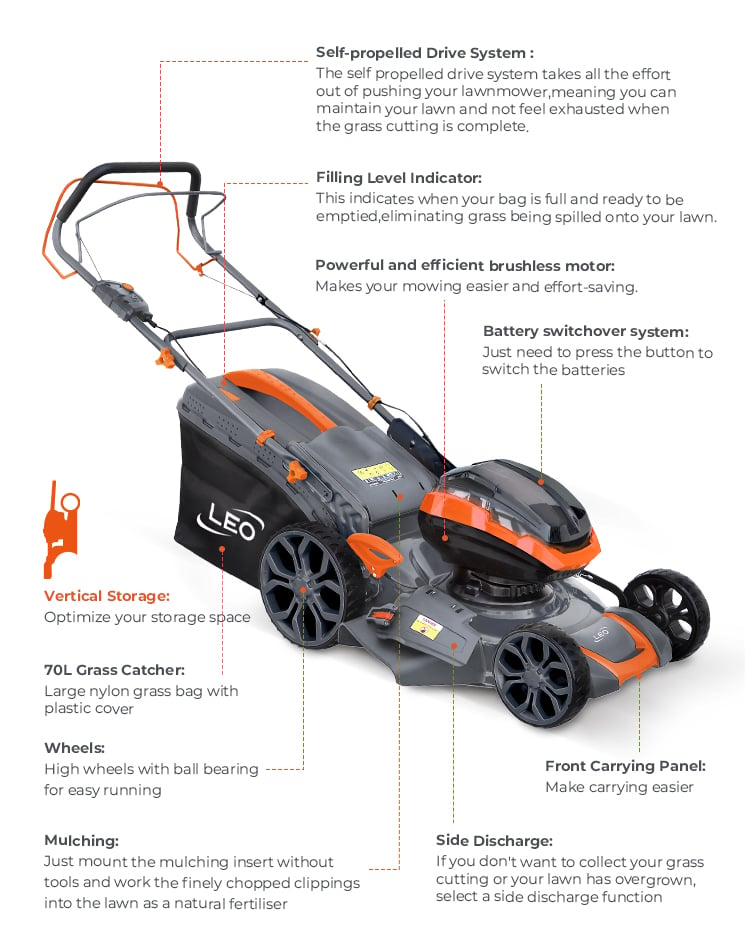 Battery care and responsible collection are part of a lower-impact cordless mowing routine.
How a cordless mower supports sustainable gardening
A cordless lawn mower is most effective as part of a broader routine. Set a suitable cutting height for turf and weather conditions, avoid scalping a dry lawn, and mow when the lawn surface is not excessively wet. Where appropriate for the lawn and mower design, leaving finely cut clippings on the turf can return organic matter rather than creating another collection-and-transport task.
Sustainable gardening also means matching machine size to the area. A light cordless lawn mower used within its intended runtime can be a sensible fit for many small and medium lawns. For a large, steep, or continuously managed site, the right answer may involve additional batteries, a different mower type, or a broader equipment plan. The environmental choice is the one that performs the required work efficiently and remains in service for years.
A balanced checklist before choosing
- Choose a cordless lawn mower with runtime and cutting capacity appropriate for the real lawn, not just an optimistic estimate.
- Check local electricity sources and consider renewable charging where it is available.
- Read battery storage, repair, and recycling guidance before committing to a system.
- Maintain the blade, deck, and battery so the cordless lawn mower has a longer useful life.
- Compare noise data and service support alongside environmental claims.
The practical conclusion
The environmental case for a cordless lawn mower begins with avoiding on-site petrol exhaust and repeated fuel handling. It becomes stronger when charging is thoughtful, batteries are cared for and collected responsibly, and the mower is sized for the work. Rather than treating every battery model as an automatic eco friendly mower, take the fuller view: a well-matched, well-maintained cordless lawn mower can be a useful step toward quieter, lower-combustion, more sustainable gardening.
 Hot News