
 EN
How Smart Technology Improves Future Lawn Care Equipment?
For years, buying lawn care equipment meant choosing between more power, a wider deck, or a lower price. That picture is changing. The useful advances are not screens added for their own sake; they help an operator plan a job, protect a battery, avoid obstacles, and catch a maintenance issue before it takes over a Saturday. For homeowners, grounds teams, and dealers, smarter lawn care equipment should make routine work more predictable without making the machine harder to understand.
As someone who has sold and serviced garden machinery for years, I would start with a simple rule: useful technology reduces a real point of friction. A connected feature earns its place when it saves setup time, improves safety, or gives the user a clearer decision. That perspective keeps lawn care equipment focused on the lawn rather than on novelty.
From separate tools to a more coordinated mowing routine
Traditional lawn care equipment often asks the user to manage several small uncertainties at once: Is the grass too wet? Will the battery finish the back section? Has the blade become dull? Smart gardening does not replace judgment, but it can make those questions easier to answer. A mower that shows meaningful charge status, a tool that records service reminders, or a robotic mower that follows an agreed working area can turn guesswork into a repeatable routine.
That is especially useful where a family, a facilities team, or a landscaping crew shares lawn care equipment. Clear status information helps the next person see what has been charged, cleaned, or scheduled. The technology should remain secondary to fundamentals such as a suitable cutting height, a sharp blade, stable footing, and proper machine care.
1. Battery intelligence makes cordless work easier to plan
For cordless lawn care equipment, runtime anxiety remains one of the most practical concerns. Battery-management systems can monitor operating conditions and help present charge information in a form the user can act on. A real-time indicator, for example, can prompt a user to change batteries before starting the far end of a lawn rather than stopping halfway through it.
Automation is most valuable here when it supports planning instead of overpromising. Runtime still changes with grass height, density, terrain, blade condition, and temperature. Smart lawn care equipment can help users spot patterns, but it cannot turn every garden into the same workload. For a distributor building a cordless range, compatible battery platforms can also simplify how customers add trimmers, mowers, or other tools over time.
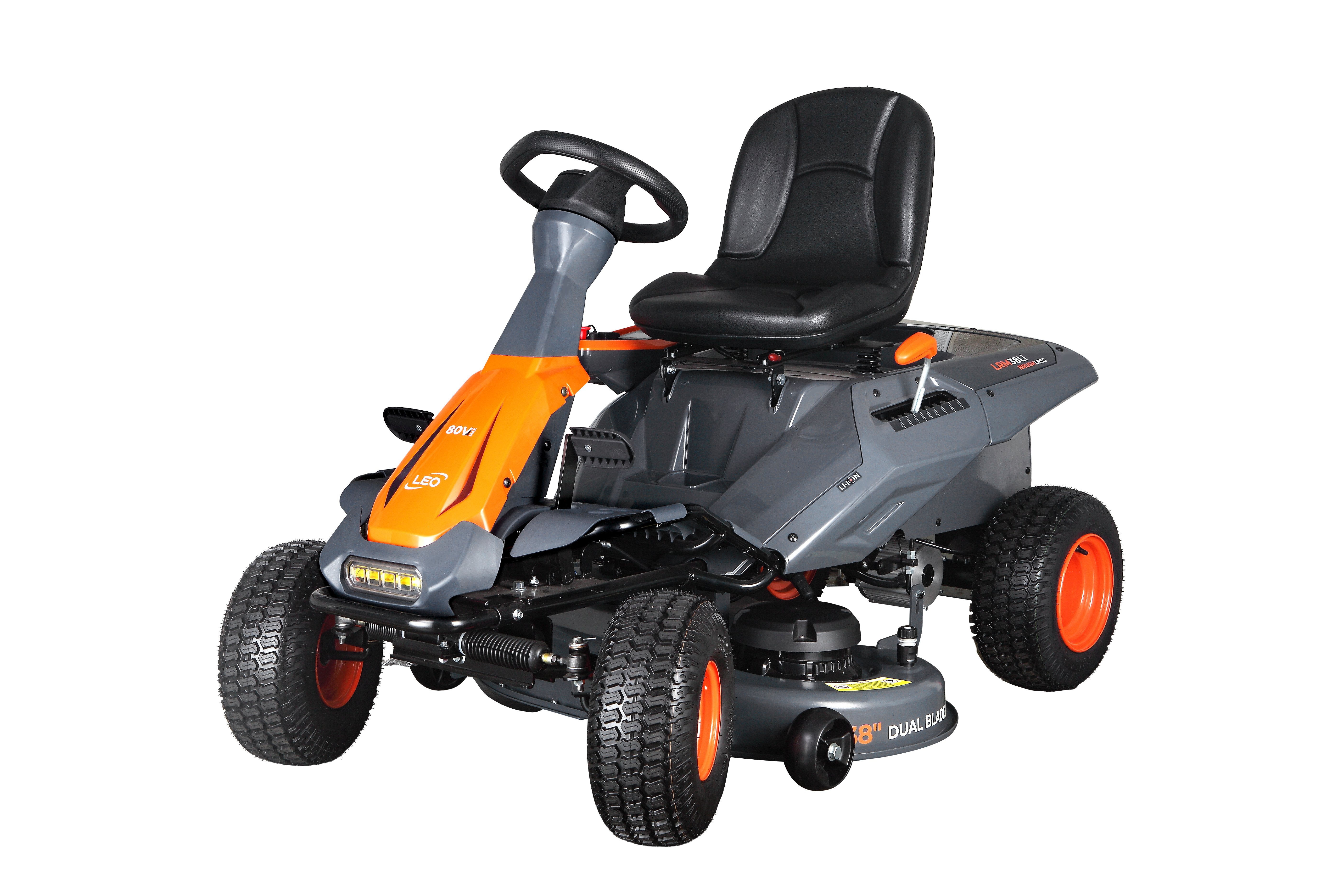 Battery information can make a cordless mowing plan easier to manage.
2. Sensors can support safer, more accurate operation
Sensor-assisted lawn care equipment may detect tilt, lift, obstruction, boundary conditions, or operating load, depending on the machine type. The benefit is not merely “automatic” behavior. Good feedback can encourage the operator to slow down, check an obstruction, or adjust the plan when conditions change. On autonomous machines, reliable sensing and stop functions are central to whether the technology is appropriate at all.
This is why future technology trends must be discussed with safety, not just convenience. EU machinery rules increasingly address connected equipment, autonomous mobile machinery, and AI-supported safety functions. That does not make every smart mower compliant, and buyers should confirm documentation for the exact model and market. It does show why responsible lawn care equipment design has to consider safe behavior when a device communicates, updates, or works with limited supervision.
3. Robotic mowing changes the schedule, not the need for care
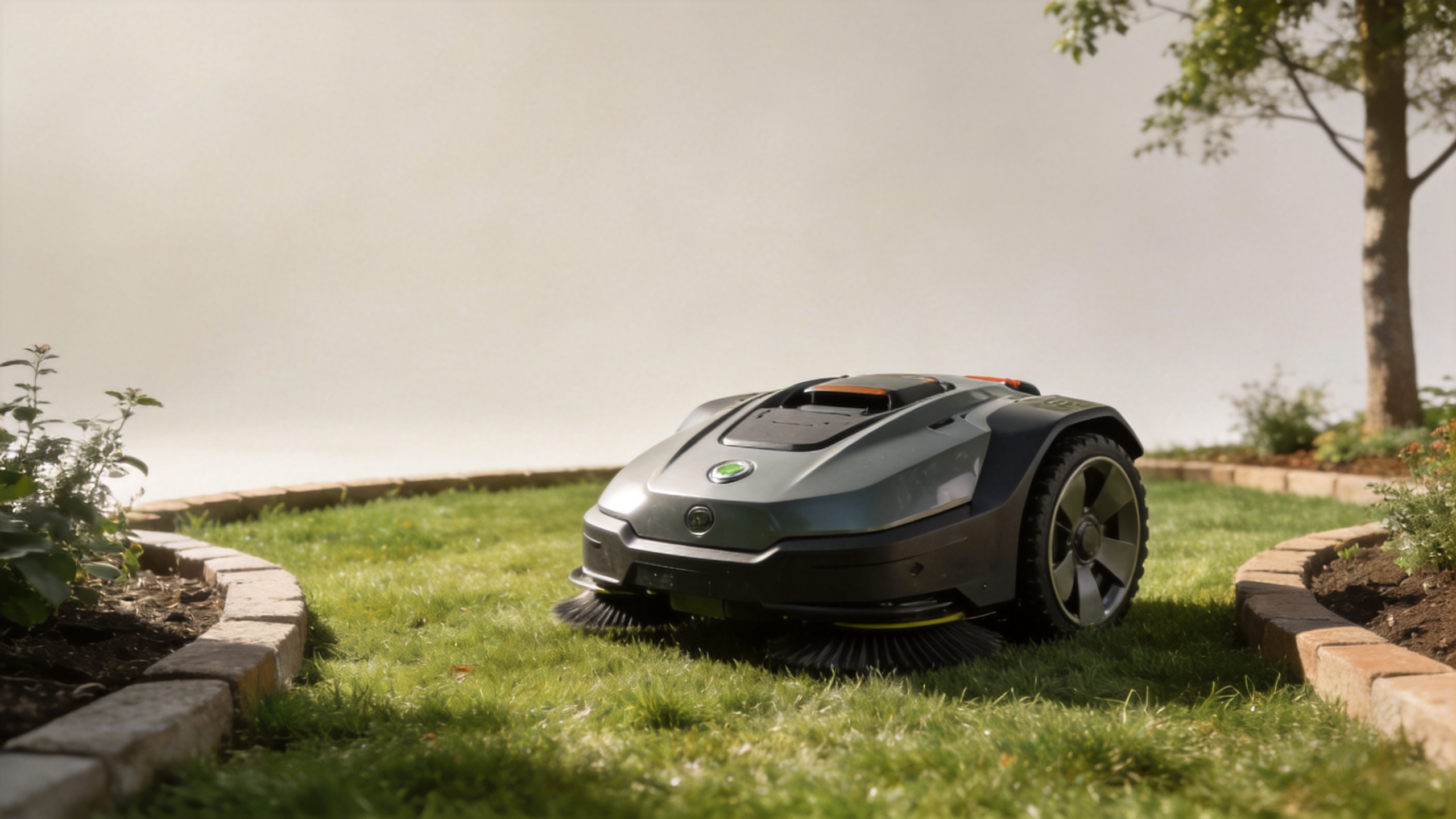
A robotic mower can keep grass within a regular maintenance window by handling smaller, repeated cuts. For the right garden, this can reduce the physical burden of routine mowing and support a more consistent appearance. Yet robotic lawn care equipment is not a universal replacement for a walk-behind or ride-on mower. Complex borders, seasonal leaf fall, tall recovery growth, slopes, pets, children, and access routes all need an honest assessment.
Before adding a robot to a smart gardening plan, review the site rather than the app alone. Define the work zone, inspect edges and obstacles, understand the machine’s stated limits, and follow the maker’s instructions. Independent safety testing services for robotic mowers exist for a reason: autonomy must be evaluated as seriously as cutting performance. In many properties, a practical result may come from combining automated maintenance with conventional lawn care equipment for occasional heavier work.
4. Maintenance prompts can preserve the basics people forget
The most helpful innovation may be the least dramatic. Service reminders can help users clean a deck after wet mowing, inspect a blade, check a collection system, or prepare equipment for storage. These small actions affect cut quality, runtime, reliability, and safety. Smart lawn care equipment should therefore support ownership habits rather than hide them behind an interface.
A reminder and a diagnosis are not the same thing. An app may flag that service is due; it should not be treated as proof that a mechanical issue has been solved. If a mower vibrates, cuts unevenly, overheats, or behaves unexpectedly, pause use and follow the manufacturer’s service guidance. Technology can improve communication, but it does not replace inspection by a qualified technician where needed.
5. Better data can help dealers and buyers match the machine to the job
For sellers, service teams, and professional buyers, connected lawn care equipment can create a clearer conversation about suitability. The useful questions are still practical: What area is being maintained? How often will it be cut? Are there narrow passages, slopes, or wet conditions? What charging and storage options exist? Data from actual use can make follow-up support more relevant, provided it is handled transparently and with appropriate privacy controls.
For a garden machinery manufacturer, innovation should also include the unglamorous support around the machine: understandable manuals, parts planning, technical communication, and carefully documented product changes. A feature list only creates value when a customer can use it confidently through more than one season.
What to look for when evaluating smart lawn care equipment
- Clear purpose: Choose features that solve a known problem, such as charge planning, scheduled mowing, or service tracking.
- Safe fallback behavior: Confirm how the machine stops, alerts the user, and behaves if connectivity is lost.
- Useful information: Prefer readable battery, maintenance, and operating feedback over vague “smart” claims.
- Service support: Ask how software updates, spare parts, diagnostics, and warranty communication are handled.
- Right-sized automation: Select lawn care equipment that matches the terrain and workload rather than buying technology for a feature checklist.
The future is practical, not gadget-driven
The future of lawn care equipment is likely to combine better battery visibility, safer sensing, targeted automation, and easier maintenance communication. The most helpful innovation may feel almost invisible because it removes small failures from the workflow: an unexpected flat battery, an overlooked service task, a poorly defined work zone, or uncertainty about what the machine is doing.
When considering smart gardening, keep the decision grounded in the property and the people who will use the tool. The right lawn care equipment makes routine care calmer, safer, and easier to plan. That is a more durable definition of innovation than connectivity alone.
 Hot News