
 EN
How Manufacturers Improve Safety Performance of Lithium Ion Lawn Mowers
For a manufacturer, a lithium ion lawn mower is not made safer by one switch, one battery label, or one test at the end of the line. Safety performance comes from a connected design process: the battery pack must prevent electrical faults, the cutting system must stop predictably, the controls must make unsafe actions difficult, and production checks must confirm that every unit behaves as intended. That broader view matters to distributors, too. A mower that is easy to document, inspect, and service is easier to place confidently in a market.
The practical starting point is to separate hazards rather than treating “battery safety” as the whole answer. A battery-powered mower has energy-storage hazards, rotating-blade hazards, charging hazards, heat and moisture exposure, and foreseeable user mistakes. Strong designs link those risks to specific controls and then verify the controls throughout development and manufacturing.
Start with a safety architecture, not a feature list
Before selecting parts, engineering teams can map the operating states of a lithium ion lawn mower: transport, storage, charging, startup, mowing, blade obstruction, wet-grass exposure, shutdown, and service. Each state creates a different question. Can the machine energize unexpectedly? What happens when a cable or connector is damaged? Does the blade stop promptly when the operator releases the handle? Can the mower be charged in an unsuitable condition?
This exercise prevents a familiar problem in product development: adding impressive components without defining how they work together. A guarded connector does little if the enclosure lets water reach it. A robust mower battery protection board cannot compensate for a control layout that permits an unintended restart after a jam. The resulting specification should assign each hazard an owner, a control method, an acceptance test, and a traceable production check.
Build battery protection into the pack and the mower
The battery system is usually the first safety discussion around a lithium ion lawn mower, and rightly so. The pack should use a battery-management approach appropriate to its cell configuration and intended duty cycle. In practical terms, that means monitoring conditions such as cell voltage, current, and temperature; limiting operation when measured conditions leave the approved range; and providing electrical protection against conditions such as overcharge, excessive discharge, overcurrent, and short circuit. Exact thresholds are design-specific and need validation with the selected cells, electronics, enclosure, charger, and local requirements.
Mechanical design belongs in the same review. Engineers assess insulation paths, connector retention, strain relief, contact protection, housing integrity, and the way a removable pack seats in the mower. Clear polarity control and keyed interfaces reduce the chance of an incorrect connection. A pack that is retained securely during normal vibration but can still be removed deliberately gives the user a straightforward way to isolate energy before cleaning or storage.
Where a product and market call for it, manufacturers should work with qualified testing partners on relevant battery standards and transport obligations. IEC 62133-2 is one widely referenced safety standard for portable sealed secondary lithium cells and batteries, but it is not a substitute for confirming the requirements that apply to the finished machine in its intended market. The manufacturing point is straightforward: compliance evidence must correspond to the actual battery configuration, not a visually similar pack or a generic cell claim.
Make blade and drive safety independent of battery convenience
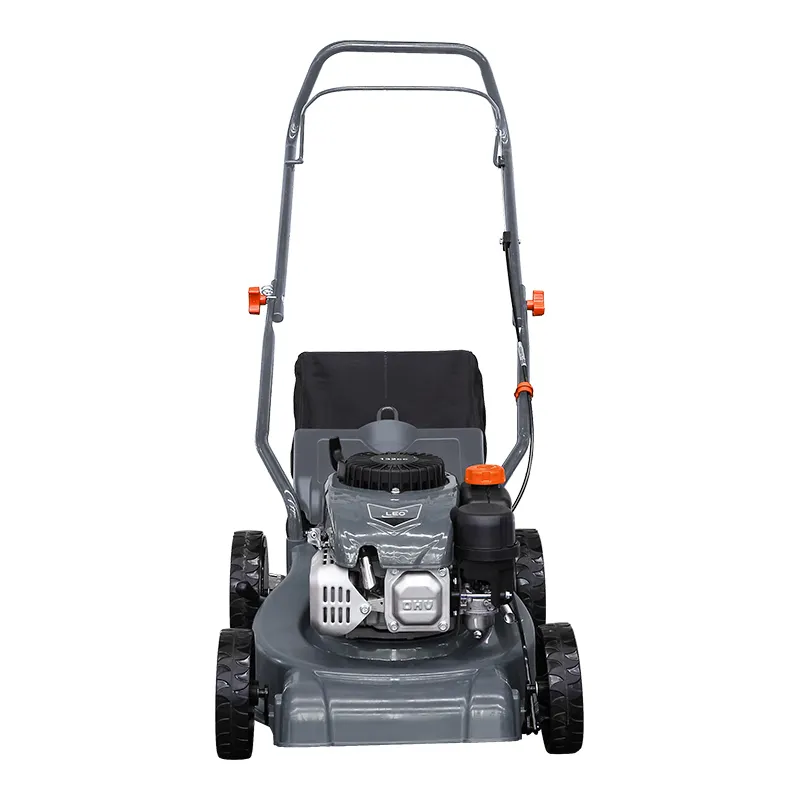
A lithium ion lawn mower removes a trailing power cord, but it does not remove the need to control a high-speed cutting system. Manufacturers therefore design multiple layers around the blade and drive train: an operator-presence control, a dependable stop command, appropriate guarding, a stable deck, and a restart sequence that requires deliberate action. A commonly cited mower-safety reference uses a three-second blade-stop expectation after the operator-presence control is released; the applicable requirement must be verified for the target market and mower type.
Independence matters here. The release of the operating control should command the drive and blade system to a safe state even when the battery remains installed. Engineers also evaluate brake response with realistic load conditions, not only with an unloaded blade on a test bench. Cut grass, contamination, wear, and thermal changes can reveal variation that a clean laboratory trial does not show.
For a battery powered lawn mower, a useful design review asks what happens after a blockage. A safe sequence typically prevents automatic restart when the obstruction clears. The user should have to release the control, investigate the cause with the energy source removed where the instructions require it, and then perform the normal start sequence. That protects against a mower resuming operation while hands are near the deck.
Use human factors to reduce predictable misuse
Many incidents begin with ordinary shortcuts rather than extraordinary behavior. Manufacturers can reduce those opportunities through control placement, labels, instructions, and maintenance access. The goal is not to burden the user with warnings; it is to make the safe action the easy action.
- Controls: Distinguish start, drive, and safety controls by position and feel, and require an intentional sequence before the blade can run.
- Battery handling: Mark removal, charging, storage, and inspection instructions where users need them, including guidance not to use a damaged pack or charger.
- Service access: Design cleaning and blade-maintenance points so technicians can follow a clear energy-isolation process.
- Packaging and manuals: Keep critical warnings consistent across the product label, quick-start material, full manual, and distributor documentation.
One practical limit is worth stating plainly. A cordless design may be a good fit for many gardens, but a steep site, frequent commercial use, dense growth, or a large cutting area changes the thermal and runtime demands. Product teams should communicate those limits rather than letting a broad “cordless” claim imply that every lithium ion lawn mower suits every job.
Validate the system with abuse cases and production controls
Safety verification should resemble the product’s real life. Development testing can include vibration, repeated handle operation, wet and dry contamination exposure where appropriate, charging and discharging at relevant temperatures, blade-stop timing, obstruction response, drop or impact scenarios for removable packs, and repeated connector insertion. The exact test plan depends on the product design and applicable standards, but its purpose is consistent: find interactions between parts before field use finds them first.
Then manufacturers need a production bridge. Incoming inspection can verify critical battery and electronic components. Assembly stations can use poka-yoke features for polarity-sensitive parts and fasteners. End-of-line tests can confirm control response, fault indication, charging-interface behavior, and blade-stop performance as applicable. Traceability for battery packs, chargers, and safety-critical revisions helps a company investigate a field issue without guessing which configuration left the factory.
That is also where suppliers earn distributor confidence. Garden-machinery specialists can support market-facing partners with accurate specifications, consistency between the approved sample and serial production, and documentation aligned with the destination market. Those practices do not replace formal certification; they make it much easier to show how the safety design was controlled.
Design for safe ownership after the sale
A lithium ion lawn mower remains a safety product after it leaves the factory. Clear guidance on inspection, cleaning, storage, charger use, replacement parts, and damaged-battery handling supports safer ownership. Spare parts should preserve the intended safety function rather than encouraging substitutions that change electrical or mechanical behavior. Warranty and service teams should also feed recurring field observations back to engineering so labels, instructions, fixtures, or components can be improved in the next revision.
The strongest safety performance is therefore not a marketing claim. It is a repeatable loop: identify hazards, design layered controls, test credible fault conditions, verify each production unit, document the configuration, and learn from service feedback. When manufacturers follow that loop, a lithium ion lawn mower can deliver the cordless convenience buyers expect while keeping safety decisions visible from the battery pack to the blade brake.
 Hot News