EN
Choosing the Right Branch Chipper Supplier for International Markets.
When sourcing a garden branch chipper for export, the decision is not simply about a quotation or a cutting diameter printed on a catalogue page. An importer needs a supplier that can deliver the same configuration, documents, packaging, spare-parts support, and response quality after the first container has arrived. That is why supplier selection should start with evidence rather than a price comparison.
For international buyers, a garden branch chipper is often a seasonal product. A delayed shipment can miss the spring retail window, while an inconsistent second batch can create warranty work just when distributors need reliable stock. The following framework helps procurement teams compare a manufacturer before committing to samples, tooling, or volume orders.
Start With the Market and Product Brief
Before contacting a manufacturer, write a brief that distinguishes a branch chipper from a light-duty leaf shredder. Specify the expected branch material, intended user, power source, mobility needs, local noise expectations, voltage or engine preferences, packaging format, and target price position. A clear brief makes it easier to judge whether a proposed garden branch chipper is genuinely suitable or merely the nearest model in a supplier’s range.
Ask a practical question early: will the product be used in compact residential gardens, by landscapers, or by municipal maintenance teams? A unit that fits occasional pruning waste may not suit long daily operating cycles. The same applies to feed opening, cutting system, wheels, guards, and the way users access service parts. A responsible supplier selection process compares these conditions to the actual sales channel instead of treating every garden branch chipper as interchangeable.
Assess Whether the Manufacturer Fits Your Program
Look beyond a showroom sample. Ask how long the manufacturer has worked with garden machinery, which stages are controlled in-house, and who owns engineering changes. A supplier with relevant category experience should be able to explain how it manages incoming components, assembly instructions, change notices, and traceability between a sample and production. Those answers matter more than broad statements about capacity.
For an OEM equipment program, define the boundary between a private-label request and a true engineering change. Colour, carton artwork, manuals, and labels are different from changes to the hopper, cutting mechanism, engine connection, guarding, or electrical system. Request a written confirmation of drawings, approved bill of materials, sample sign-off criteria, and the point at which a change becomes chargeable. This protects both the buyer and the manufacturer from assumptions.
It is also useful to ask whether the supplier supports adjacent garden-machine categories. A broader relevant portfolio can make it easier to consolidate purchases, but it should not substitute for model-specific evidence. The question is whether the proposed garden branch chipper has a controlled production route and an appropriate service plan for your market.
Turn Quality Control Into Verifiable Checkpoints
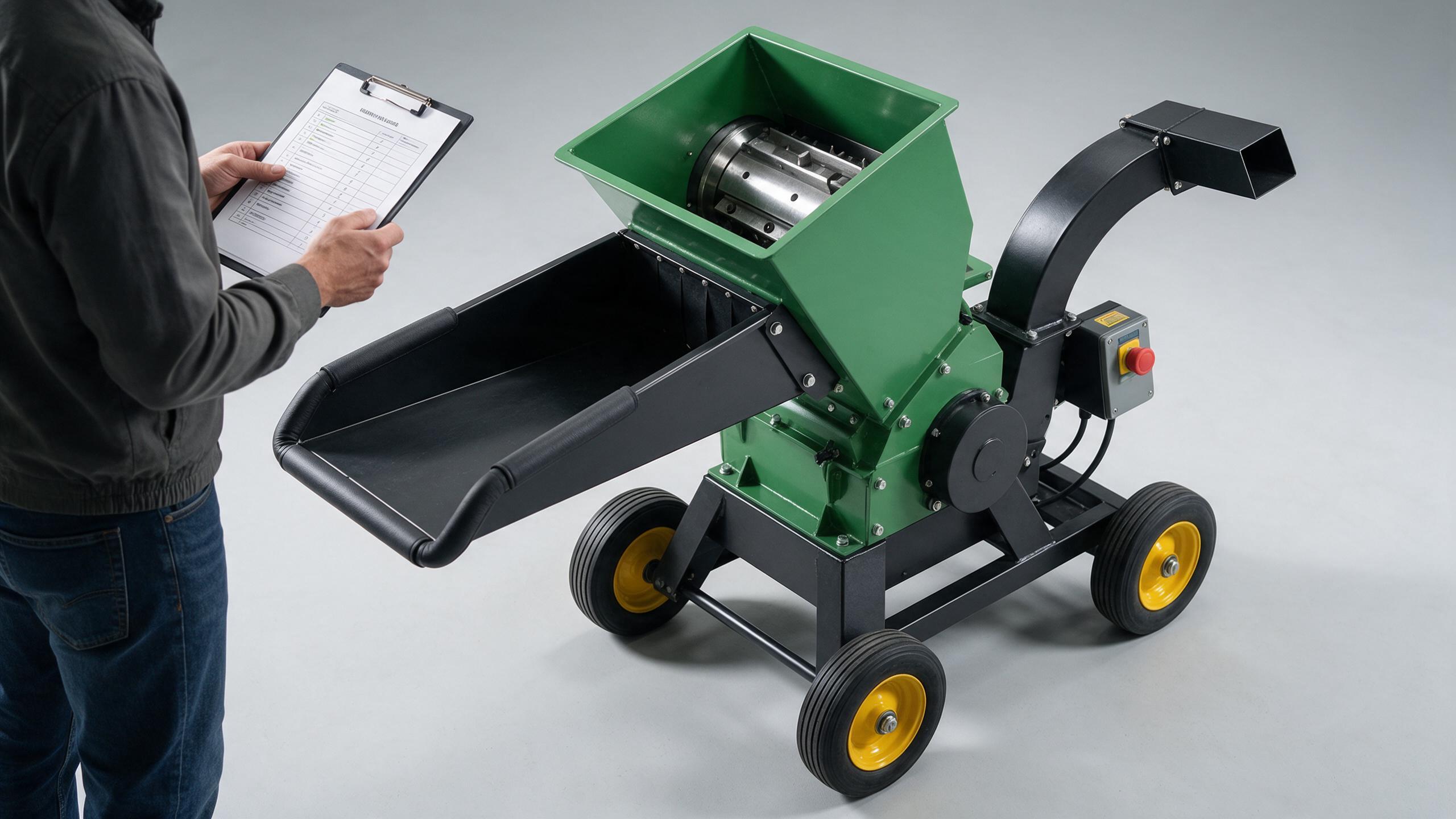
Quality control is easiest to evaluate when it is visible. Ask the factory to show the inspection points used for a garden branch chipper: incoming checks for key components, assembly verification, guard and fastener checks, functional tests, cosmetic inspection, carton checks, and final sampling. A useful answer identifies the test method, record, acceptance criterion, and person responsible—not just the name of a quality department.
For a first order, build an approved-sample pack. It can include photographs, key dimensions, material or component specifications, label artwork, user manual version, carton marks, test records, and a list of permitted tolerances. During pre-shipment inspection, compare cartons and machines against that pack. If the supplier cannot show how it prevents an unauthorized substitution, treat that as a procurement risk.
- Request a dated production schedule and identify the final inspection window.
- Agree on the sampling method and the defect categories that require rework or hold.
- Check that serial, batch, or other traceability information can connect a shipment to its records.
- Confirm who approves corrective actions when a test fails.
This level of quality control is especially useful for a garden branch chipper, where safety guards, cutting components, fastening, and instructions all affect the buyer’s downstream exposure.
Verify Compliance Documentation for Each Destination
Do not accept a generic claim that a product is “for Europe.” For a garden branch chipper destined for the EU or EEA, ask which requirements apply to that exact model, configuration, and destination. The manufacturer should be able to provide relevant technical documentation, instructions, labeling information, and a declaration of conformity where applicable. Review dates, model identifiers, and responsible-party details so that documents match the machine you intend to import.
Noise is another reason to check the destination model rather than reuse paperwork. EU rules governing outdoor-equipment noise cover a range of machine types, but the obligations and labels can depend on the product classification. Ask the supplier what tests, markings, and documents apply to the proposed configuration. Compliance specialists or local counsel should confirm market-specific obligations before an order is released.
Test Communication, Service, and Parts Readiness
A quotation does not show how a supplier will respond when a distributor needs a replacement blade, a guard, or a corrected manual. During evaluation, send structured technical questions and note whether the manufacturer replies with traceable drawings, clear revision control, and realistic lead-time information. This is a simple way to assess whether the team can support a garden branch chipper after delivery.
Request a recommended spare-parts list for the launch period, part numbers, packing information, and the process for warranty claims. If a supplier has export experience, it should be comfortable discussing packaging protection, label languages, document handover, and pre-season planning. Treat vague answers as a prompt for deeper due diligence, not necessarily a rejection—but resolve them before a purchase order.
Use a Weighted Supplier Selection Scorecard
A scorecard keeps price from overwhelming more durable criteria. Weight the areas according to your market and record the evidence behind every score.
| Criterion | What to review |
|---|---|
| Product fit | Application, configuration, safety features, and approved sample alignment |
| Manufacturer capability | Category experience, engineering ownership, production planning, and change control |
| Quality control | Inspection records, traceability, corrective-action process, and pre-shipment access |
| Compliance support | Model-specific documentation, instructions, labeling, and destination review |
| Commercial reliability | Lead-time transparency, packaging, parts planning, and communication discipline |
Make the First Order a Controlled Learning Cycle
The first order should validate the relationship, not exhaust the evaluation. Confirm the approved sample, inspection plan, documentation list, packaging artwork, spare-parts order, and escalation contacts before production starts. After arrival, collect distributor feedback on the garden branch chipper, manuals, packaging, and service parts, then turn the findings into a controlled revision list for the next run.
For buyers comparing supplier selection options, the right partner is the one that can make its process visible, answer market-specific questions, and keep product details aligned from sample to shipment. OEM equipment is most manageable when requirements are written, quality control is auditable, and the manufacturer regards documentation and after-sales readiness as part of the product—not an afterthought.
 Hot News