
 EN
Lithium Ion Battery Maintenance Guide for Garden Machinery Users.
Cordless mowers, trimmers, hedge cutters, and blowers make outdoor work quieter and more flexible, but their runtime and long-term usefulness depend on thoughtful lithium ion battery habits. As a garden-machinery technical consultant, I recommend treating the battery pack as a working component with its own routine, not as an accessory that lives on the charger. A few checks before charging, sensible storage, and attention to warning signs can support safer operation and a more predictable lifespan.
The exact limits for a lithium ion battery vary by tool platform. Start with the operating manual for the pack, charger, and tool. That manual takes priority over any general advice, especially for permitted temperatures, indicator lights, cleaning methods, and storage intervals.
Why garden equipment needs a battery routine
Garden machinery is exposed to conditions that desk-bound electronics rarely face: damp lawn residue, dust, rapid temperature changes, vibration, and long gaps between seasons. A lithium ion battery may work well after a busy mowing day yet still need care before it is charged or placed in storage. The practical aim is simple: keep terminals clean and dry, use compatible charging equipment, avoid temperature extremes, and address damage early.
Battery care also helps planning. For a large garden, a charging-time bottleneck can interrupt work if every pack is left empty until the job starts. Rather than assuming one battery will cover every task, plan the workload around the runtime stated for your specific tool, lawn height or hedge density, and the number of fully serviceable packs available.
1. Check the pack after every use
Before connecting a lithium ion battery to a charger, remove it from the tool when the manufacturer instructs you to do so and make a quick visual inspection. Look for a cracked housing, swelling, loose parts, damaged contacts, unusual odor, leakage, discoloration, or a pack that remains unusually hot after a normal task. Brush off dry debris using the cleaning method in the manual; do not introduce water into vents or electrical contacts.
If a pack has been dropped hard, submerged, visibly damaged, or behaves abnormally, do not attempt to recharge, open, or repair it. Keep it separate from combustible materials, follow the manufacturer’s support instructions, and use the appropriate local collection route for damaged batteries. This is one of the most important distinctions in responsible battery care: routine cleaning is appropriate; fault diagnosis inside a sealed pack is not a user task.
 Inspect a battery pack and its contacts before charging garden machinery.
2. Use the intended charging method
A correct charging method begins with the charger specified for that lithium ion battery platform. Do not improvise with an unapproved adapter, damaged lead, or unrelated charger. Place the charger on a stable, dry, non-combustible surface with ventilation around it, and keep fuel, solvents, dry garden debris, packaging, and other flammable materials outside the charging area.
Let a hot pack cool to the condition required by its manual before charging. Likewise, do not charge a pack that has been left in freezing or very hot conditions until it is within the manufacturer’s approved range. Many chargers monitor temperature, but the tool manual remains the source for the applicable limits. Check that the charger’s indicator pattern matches the instructions rather than assuming that every flashing light means the same thing.
- Inspect the pack, contacts, charger, and lead before connecting them.
- Use a dry indoor or protected charging location, not wet ground or an exposed workbench.
- Connect only the matching battery and charger specified by the tool manufacturer.
- Remove the pack after the charge cycle when the manual directs you to do so.
- Do not cover a charging pack or charger with cloth, bags, or garden waste.
3. Match work habits to runtime
Electric tools feel simple to use, but demanding tasks can change runtime significantly. Tall, wet lawn cuttings, thick hedge growth, dull cutting components, and repeated stop-start operation may use more energy than a light maintenance pass. Keep blades, lines, and air paths maintained according to the tool instructions so the motor is not asked to work harder than necessary. This is not just a tool-maintenance point; it is part of sensible battery care because unnecessary load creates heat and makes job timing harder to predict.
For larger properties, organize tasks by tool rather than repeatedly changing packs between machines. A practical sequence might be trimming edges first, then mowing, then blowing debris after the mower has cooled. If you have multiple compatible packs, label them by purchase date or rotation order. This makes it easier to notice when one battery begins to deliver meaningfully shorter runtime than the others.
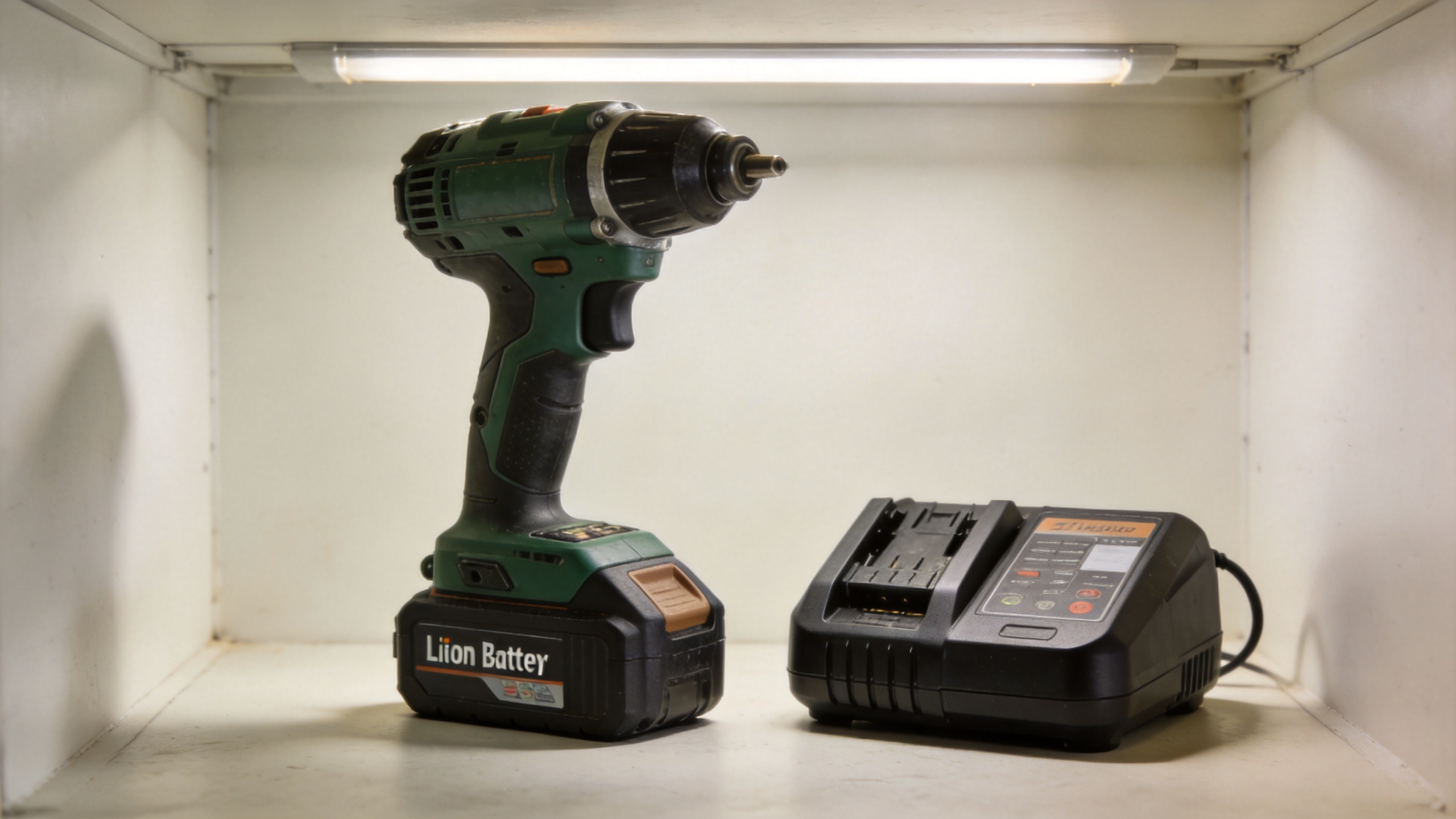
4. Store a lithium ion battery for the off-season
Seasonal storage is where many otherwise healthy packs are neglected. Remove the battery from the tool if the manual requires it, keep it in a clean, dry location out of direct sunlight and sources of heat, and avoid leaving it in a vehicle, unheated shed, or damp corner where conditions can become extreme. Store the charger separately when the instructions recommend that arrangement.
For charge level, follow the pack manual. Some garden-tool manufacturers advise storing a lithium ion battery at a partial state of charge rather than fully charged or fully depleted, but the correct indicator level is specific to the platform. Check a stored pack periodically as directed, then charge it shortly before the next planned job if that is what the manufacturer specifies. A measured approach is more useful than trying to force a universal percentage onto every battery design.
5. Protect lifespan through observation, not guesswork
A lithium ion battery will not have identical runtime forever. Track changes instead of judging from one difficult job. Note the tool, task, weather, starting charge indication, and approximate runtime. If the same pack repeatedly stops much earlier than comparable packs under similar conditions, shows an error code, overheats, or will not accept charge, stop using it and consult the product support process.
It depends on how often the equipment is used: a weekly homeowner routine may need a quick inspection and seasonal storage plan, while a contractor should include battery rotation, charger checks, and runtime records in daily equipment preparation. In either case, using the specified charging method and acting on visible damage are more valuable than chasing unsupported shortcuts.
A short maintenance checklist
- After use, allow the lithium ion battery and tool to cool as required by the manual.
- Inspect the housing and contacts; keep them dry and free of loose debris.
- Charge only with the intended charger in a protected, ventilated area.
- Keep charging and storage locations clear of flammable materials and temperature extremes.
- For long breaks, follow the manual’s storage-charge guidance and check the pack periodically.
- Stop using a damaged, wet, swollen, leaking, unusually hot, or malfunctioning pack and seek the manufacturer’s disposal or service guidance.
Final perspective
Good lithium ion battery maintenance is deliberately ordinary: read the instructions, inspect before charging, protect the pack from unsuitable conditions, and record changes in performance. That routine supports safer use of electric tools and gives garden machinery users a clearer basis for deciding when a battery needs professional assessment or replacement. With consistent battery care, charging method discipline, and sensible seasonal storage, the battery becomes a managed part of the equipment fleet rather than an unexpected interruption in the middle of garden work.



 Hot News