
 EN
How Do Manufacturers Improve Cordless Lawn Mower Safety Features?
A cordless lawn mower removes the cable-management problem, but it adds a different engineering challenge: the machine must manage a rotating blade, an electric motor, a removable energy pack, and a human operator as one safe system. For a garden-machinery manufacturer, safety design is not a single switch or warning label. It is a chain of decisions that begins with risk assessment and continues through prototype checks, supplier controls, production inspection, and service feedback.
As a garden machinery technical consultant, I would assess a cordless lawn mower by asking what happens when the user releases the handle, hits dense vegetation, removes the battery, stores the tool in heat, or opens the collection box. Those ordinary moments reveal whether safety has been built into the design rather than added at the end. The details vary by model and market, of course, but the engineering logic is consistent.
Start with a risk map, not a feature list
Manufacturers normally break cordless lawn mower hazards into mechanical, electrical, thermal, and user-behaviour categories. Mechanical risks include contact with the cutting blade, thrown debris, pinch points, and an unexpected restart. Electrical and thermal risks include short circuits, over-current, overheating, damaged cells, and poor battery-to-tool connections. A useful safety design process considers foreseeable misuse as well as ordinary mowing: wet clippings, an overloaded deck, a dropped battery, a blocked air path, or a child finding a stored machine.
That map guides the order of controls. A cordless lawn mower should first make the hazardous state difficult to reach through guarding, interlocks, and control logic. Clear instructions, symbols, and maintenance directions then support those physical controls; they do not replace them. This approach matters because a cordless lawn mower is often moved around gardens with obstacles, uneven ground, and changing cutting conditions.
Control blade motion and unintended restart
For the operator, the most visible cordless lawn mower safety feature is the control that requires deliberate engagement before the motor drives the blade. Releasing the handle should command the motor to stop, while the braking and control arrangement should be validated for the actual blade and motor combination. Manufacturers also examine whether a control can be held accidentally during carrying, cleaning, or collection-box removal.
Interlocks can add another layer. Depending on the model architecture, the mower may require the battery to be fitted correctly, a key or isolator to be in the operating position, and a sequence of intentional actions before start-up. The goal is not to make a cordless lawn mower awkward to use. It is to ensure that a routine interruption does not create a surprise restart when the user returns to the machine.
Deck shape, discharge-channel geometry, blade retention, and debris guarding are part of the same system. In product testing, engineers examine how the mower reacts to clipping buildup and objects encountered in normal garden work. A safety design review should also assess access for cleaning: if a user must reach close to the blade area to clear collected material, the design has shifted too much risk to the user.
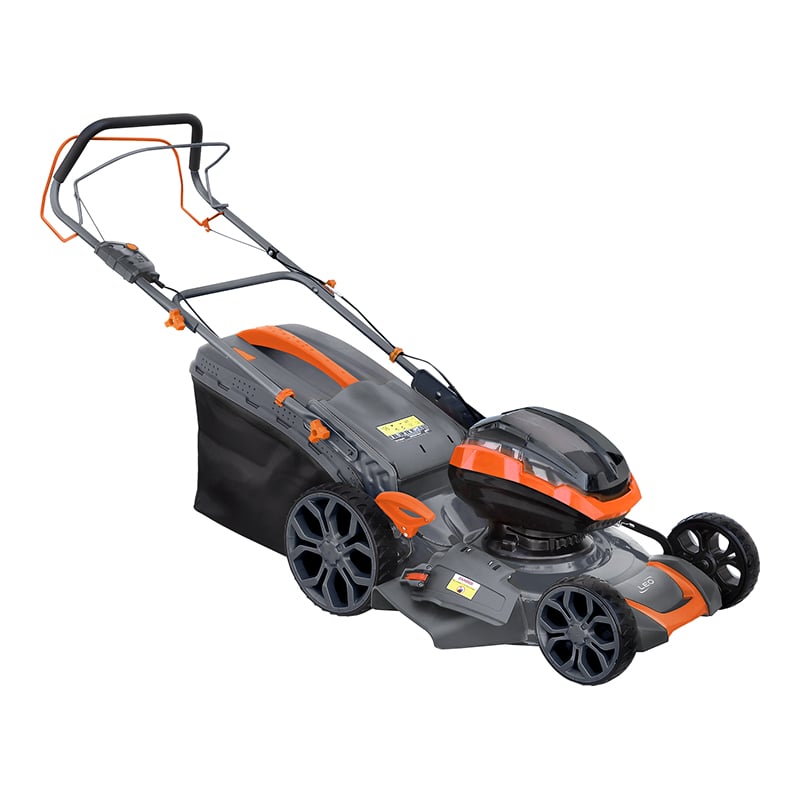
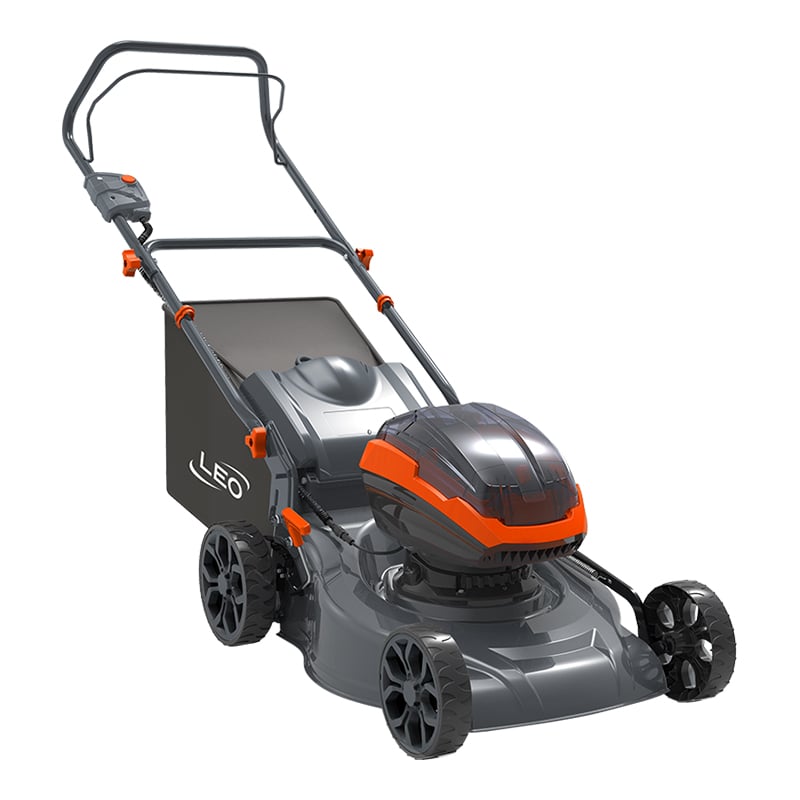
 Layered safety design combines controls, guarding, and battery-management measures.
Build battery protection into the tool and the pack
Battery protection is central to any cordless lawn mower because the pack supplies high current during demanding cuts. A battery-management system can monitor conditions such as cell voltage, current, and temperature, then communicate limits to the tool. When a fault threshold is reached, the system may limit operation or stop it until conditions return to an acceptable range. The exact strategy depends on the cells, electronics, enclosure, and intended duty cycle.
Good battery protection also involves robust terminals, keyed fitment, insulation, and housing features that reduce exposure to moisture, dirt, vibration, and accidental shorting. Charging is another design boundary. The charger, pack, and cordless lawn mower should be designed as a compatible system, with clear indicators that help users understand charging state and tool readiness. A real-time charge indicator can support safer planning by reducing an unplanned stop in the middle of a large lawn.
Standards context is useful here, but claims must be specific. IEC 62133-2 describes safety requirements and tests for portable sealed secondary lithium cells and batteries under intended use and reasonably foreseeable misuse. UN 38.3 addresses transport-related testing for lithium cells and batteries. Neither reference alone proves that a particular cordless lawn mower is suitable for every operating condition; manufacturers still need model-level validation and documented evidence for the market they serve.
Test the complete cordless lawn mower, not isolated parts
Component approval is necessary, yet it is not the end of product testing. A cordless lawn mower can behave differently once the battery, motor controller, blade, deck, handle controls, and collection system are assembled. Manufacturers should test representative production-intent units across temperature, vibration, wet-clipping loading, repeated starts and stops, blade obstruction events, battery insertion cycles, and storage-related scenarios. Engineers should also look for loose connections, heat accumulation, abnormal noise, and changes in stopping behaviour after repeated use.
For markets in the European Economic Area, machinery safety obligations and applicable conformity assessment requirements affect design and documentation. Regulation (EU) 2023/1230 establishes health and safety requirements for machinery placed on the European market. The practical lesson for sourcing teams is simple: ask for the relevant model documentation, declarations, test scope, and revision control rather than accepting a broad statement about a product family.
Use manufacturing controls to keep the design intact
Even a carefully engineered cordless lawn mower can lose its intended safety margin if manufacturing variation is not controlled. Incoming checks may cover battery packs, connectors, fasteners, blade assemblies, wiring harnesses, and moulded guards. In-process checks can verify torque application, wire routing, connector seating, control response, and safety-label placement. End-of-line testing commonly confirms basic start/stop behaviour and identifies obvious functional faults before packing.
Traceability makes that system more useful. Recording key lot information for a cordless lawn mower, critical components, and inspection results helps a manufacturer investigate a field issue with a defined scope. It also makes corrective action more disciplined: a recurring connector concern, for example, can trigger supplier review, process correction, and follow-up sampling instead of a vague production-wide response.
Turn service feedback into the next safety revision
Manufacturing does not end at shipment. Warranty records, dealer observations, repair findings, and user questions can identify patterns that a laboratory cycle did not expose. A cordless lawn mower that regularly returns with damaged battery latches, clogged cooling paths, or confusing indicator use gives the engineering team a focused question to investigate. The right response may be a component change, clearer instruction, a service bulletin, or an update to product testing.
For buyers evaluating a cordless lawn mower supplier, ask to see how the maker connects design reviews, battery protection, product testing, production inspection, and post-sale feedback. There is no single feature that settles the question. A safer cordless lawn mower comes from layered controls that work together, are verified on the finished machine, and are maintained through disciplined manufacturing.
 Hot News