
 EN
What Testing Processes Are Used for Professional Garden Machinery?
For a professional buyer, garden machinery testing is not one final switch-on at the end of a production line. It is a chain of checks that begins with components, continues through assembly, and finishes with evidence that a machine is ready for its intended market and workload. When sourcing equipment at scale, the question is not only the unit price. It is whether the supplier can show how product testing, reliability testing, manufacturing control, and quality inspection fit together.
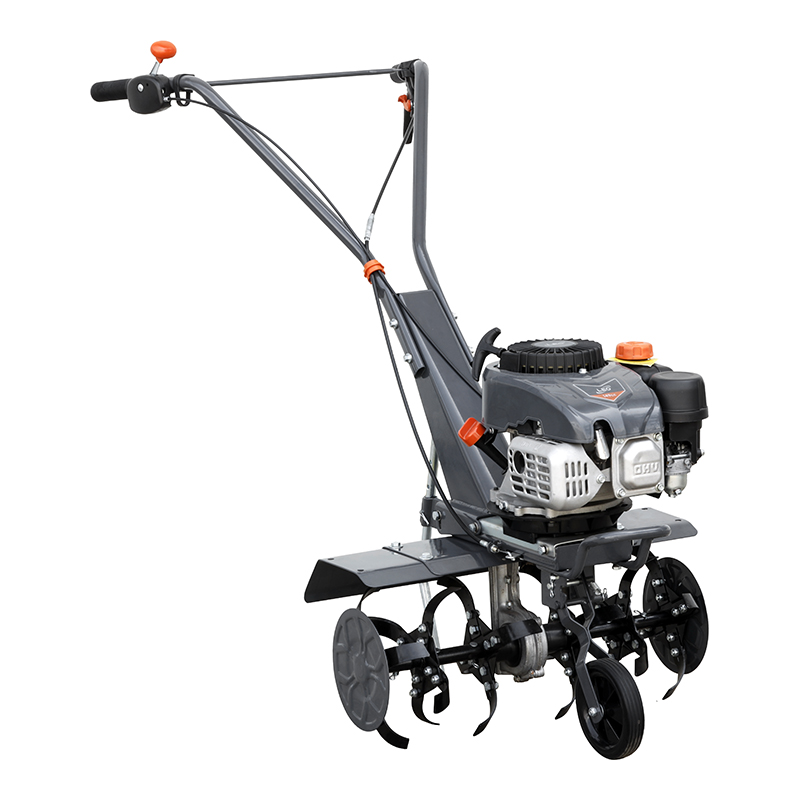
Professional garden machinery covers a wide field: walk-behind and ride-on mowers, shredders, tillers, pumps, and battery-powered equipment. Each machine has different hazards and duty cycles, so a sensible test plan changes with the product, power source, and destination market. The useful question for a buyer is: which risks has the manufacturer tried to expose before the equipment reaches a dealer, contractor, or end user?
Testing Starts Before Final Assembly
A credible garden machinery test process usually starts with incoming inspection. Motors, batteries, blades, guards, fasteners, wiring harnesses, switches, wheels, and safety labels are checked against the approved bill of materials and drawings. This stage is less visible than a finished-machine test, but it matters because a reliable assembly process cannot compensate for the wrong component or an out-of-spec part.
In manufacturing, inspection plans often identify critical characteristics: blade thickness, fastener grade, cable routing, connector fit, fuel-system sealing, or the presence of a guard. Sampling rules may be used for repeat parts, while safety-related or high-risk items receive closer attention. The result should be traceable to a purchase batch or production lot, so that a quality issue can be investigated rather than treated as an isolated complaint.
What Happens During Production?
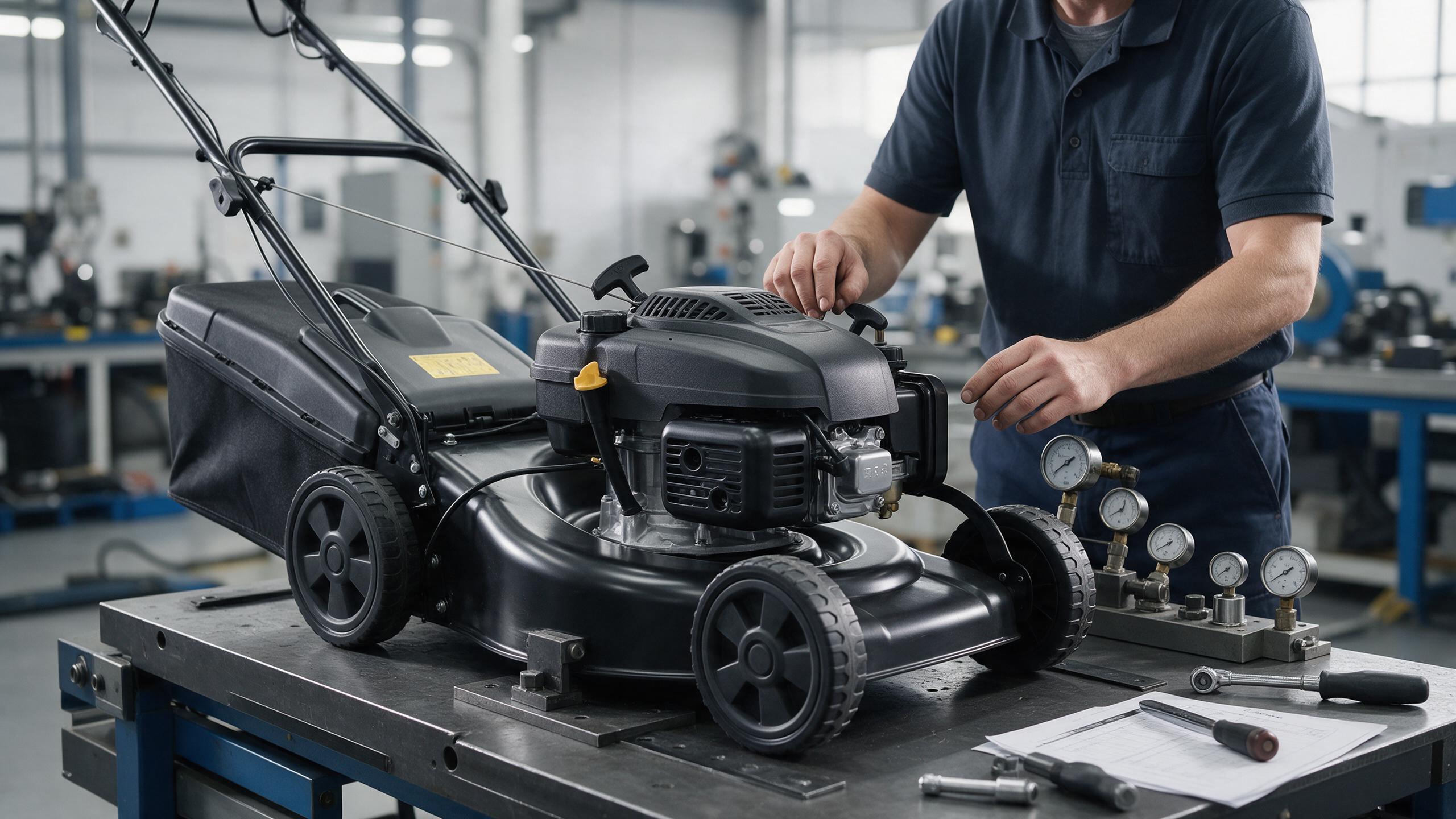
In-process product testing checks whether the machine is assembled as designed. Operators or quality staff may verify torque-controlled fasteners, movement of controls, protective-device fitment, wiring connections, lubrication points, and the attachment of warnings and serial information. A line test is also a chance to catch a simple but consequential error, such as a reversed cable, a loose linkage, or an incorrectly installed safety interlock.
For professional garden machinery, process discipline matters because vibration, heat, dust, moisture, and repeated starts can turn a small assembly variation into a field failure. Manufacturers commonly use work instructions, inspection points, and nonconformance records to keep the build consistent. Buyers do not need every internal document, but they should ask how a failed in-process check is identified, contained, corrected, and released back to production.
Functional and Performance Testing
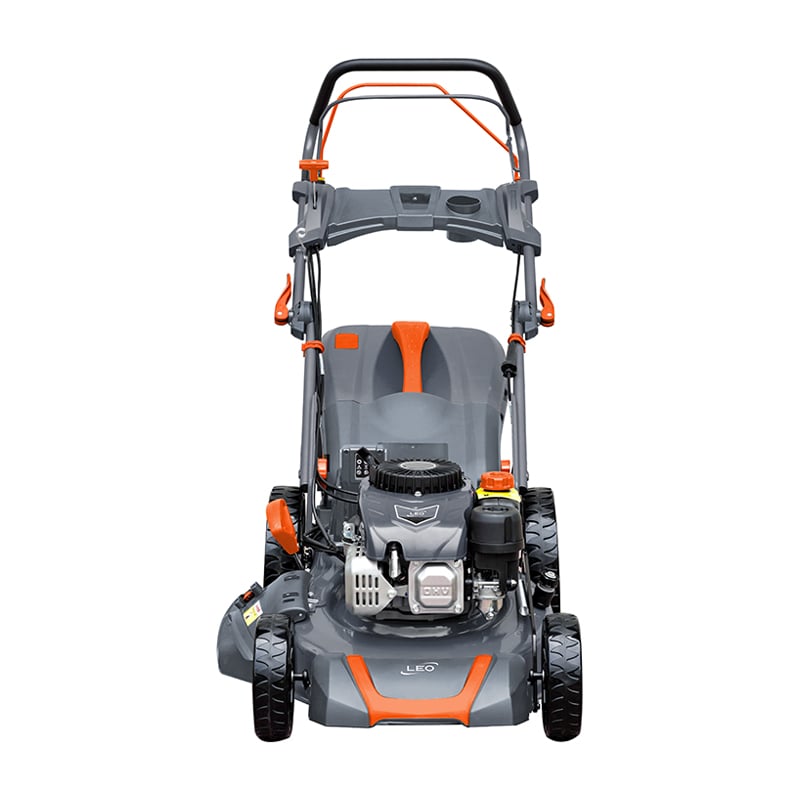
Once assembled, a machine needs to demonstrate its basic functions under controlled conditions. The exact procedure depends on the product. A mower may be checked for starting, drive engagement, blade-control response, steering, braking, cutting-system operation, and abnormal noise. A shredder may be assessed for feed operation, overload response, and guard position. A pump may undergo priming, flow, leak, and run checks. Battery-powered garden machinery adds charging, battery connection, control, and thermal-management considerations.
These tests are not simply demonstrations. They provide a repeatable way to compare each production unit or sample with an approved performance baseline. Test records should state the model, serial or batch reference, test date, result, and disposition. If a manufacturer reports a performance figure, a buyer should also ask for the test condition behind it. Terrain, load, ambient conditions, blade condition, battery state, and operator method all affect what a machine can do in real use.
Safety Verification Is Product-Specific
Safety testing for garden machinery is tied to the machine category and the market in which it will be sold. For example, the ISO 5395 family addresses safety requirements and verification for certain lawnmower categories, including combustion-engine-powered ride-on machines. That does not mean every garden product follows the same standard or that a standard number alone proves a particular model is compliant. It does show why the supplier should map each model to the applicable requirements and keep the associated test evidence.
Depending on the machine, safety verification can examine guarding, accessible moving parts, control logic, emergency stopping, braking, stability, electrical insulation, battery protection, hot-surface warnings, noise, and documentation. A professional purchaser should request the applicable market declaration, test reports where relevant, risk-assessment evidence, and the model-specific user information. A generic certificate that does not clearly identify the machine is less useful than a document trail connected to the supplied configuration.
How Reliability Testing Finds Weak Points
Reliability testing asks a different question from a final functional check: what happens after repeated use, exposure, and loading? The aim is to reveal wear or failure modes before volume shipment. Test programs may use extended running, repeated starting and stopping, cycling of controls, vibration exposure, temperature changes, water or dust exposure where applicable, and loaded operation that reflects the intended use envelope.
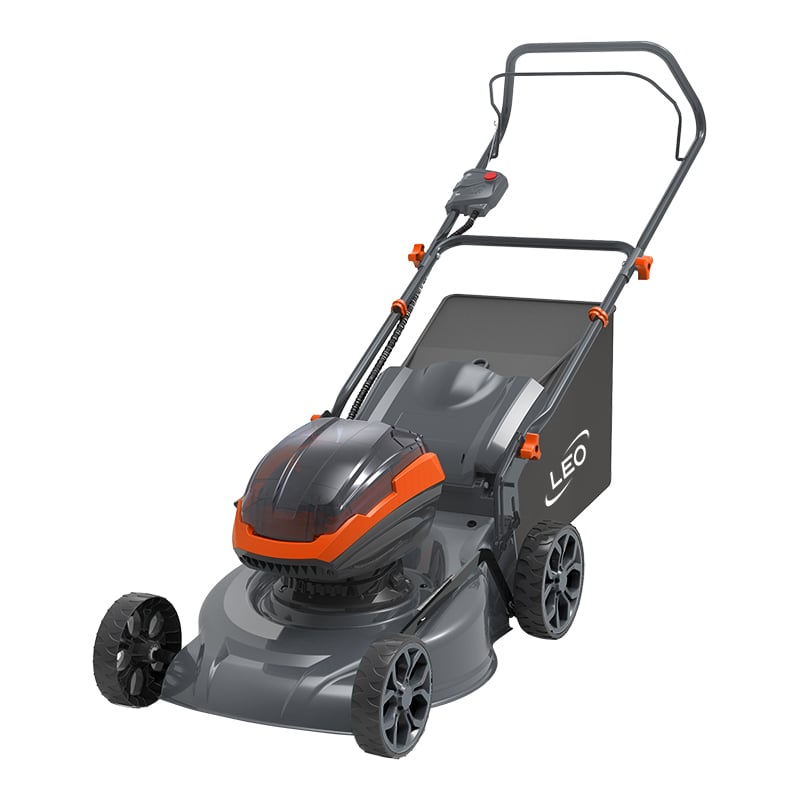
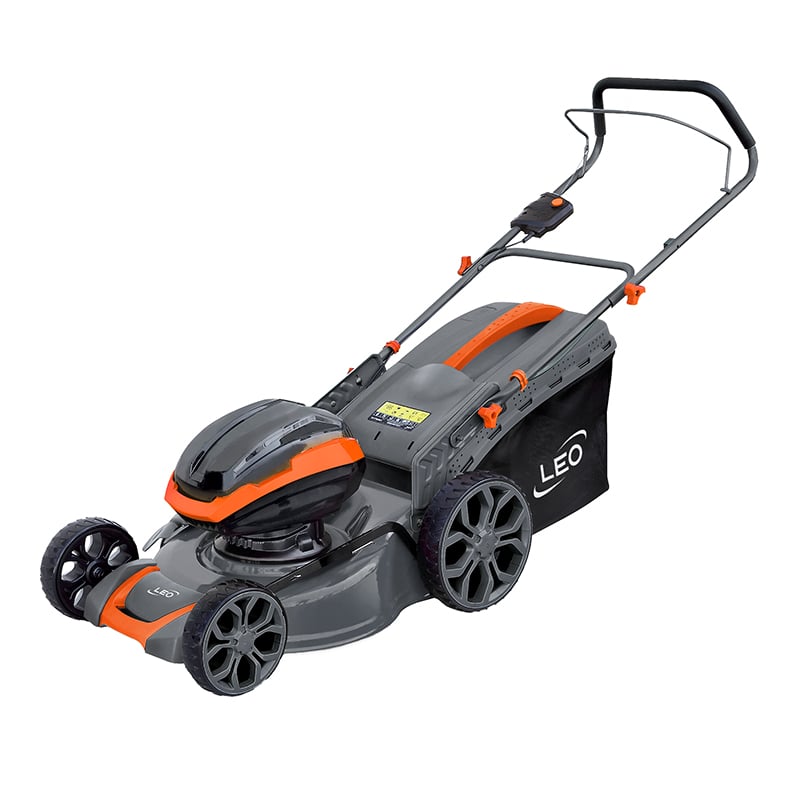
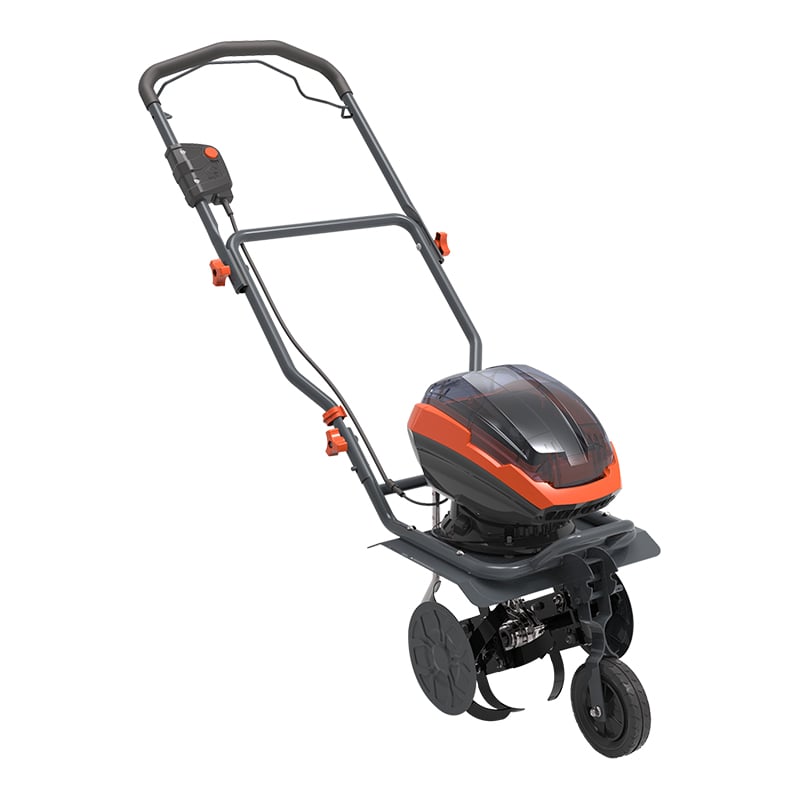
A ride-on mower, for instance, may require attention to steering, brake, seat, deck, transmission, and vibration-related fastener retention. A cordless mower may add battery connectors, charging behavior, enclosure sealing, and electronic protection. A professional shredder may focus on the cutting mechanism, feed path, overload response, and frame durability. The point is not to claim that a machine will experience no faults; it is to use reliability testing to identify patterns early and improve the design, parts, or assembly method.
Good reliability work also produces feedback. Engineering reviews failures, identifies the root cause, decides whether a design or process change is needed, and verifies the correction. That closed loop is valuable in garden machinery manufacturing because seasonal demand can make a field issue expensive for both the importer and service network.
Final Inspection and Pre-Shipment Quality
Before shipment, final quality inspection brings together identity, appearance, function, documentation, and packaging checks. Inspectors may confirm the model and serial marking, check for cosmetic damage, test agreed functions, verify accessories, and review labels, manuals, cartons, and packing quantity. For export orders, packaging matters: a functional machine can still create a service problem if fasteners, manuals, or protective materials are missing from the carton.
A final inspection record should identify what was inspected, the sampling basis, the result, and any rework or release decision. Independent pre-shipment inspection can add another review point when a buyer requires it. It should complement—not replace—the manufacturer’s own product testing and quality controls.
Questions to Ask a Garden Machinery Supplier
- Which checks are completed on incoming safety-critical components?
- What in-process inspections control assembly variation?
- Which functional tests are performed on every unit, and which are sample-based?
- What reliability testing reflects the intended workload and environment?
- Which market-specific safety requirements apply to this exact model and configuration?
- How are failed tests recorded, corrected, and traced to a batch or serial range?
- Can the supplier provide final-inspection and pre-shipment documentation for the order?
Why the Whole Process Matters
The strongest garden machinery quality process is a connected system, not a single final test. Incoming checks protect the build; in-process controls reduce variation; functional testing confirms core operation; safety verification addresses foreseeable hazards; reliability testing challenges the machine over time; and final inspection checks that the delivered order matches the approved specification.
For distributors, contractors, and procurement teams, the practical takeaway is to evaluate evidence as well as the product. Ask a supplier to explain its test sequence for the specific machine, the acceptance criteria it uses, and how it acts on failures. That conversation provides a clearer view of manufacturing maturity than a broad claim about quality alone.

 Hot News