EN
What Are the Main Differences Between Ride On Mowers and Lawn Tractors?
A ride on mower and a lawn tractor can look similar from the seat, yet the choice becomes clearer when you start with the work. Is the property mainly open turf, or does it also require towing a small cart? Are there access points, trees and beds to negotiate? Answer those questions before comparing engine sizes or labels.
The names overlap. A lawn tractor is itself a type of ride on mower, while the broader term also includes compact rear-engine riders, front-deck machines and zero-turn models. Sellers may use the labels differently. Compare the actual machine, its approved attachments and its operating limits rather than assuming every model in a category shares the same features.
At a glance: mowing focus or broader yard tasks?
A compact ride on mower is often chosen primarily for cutting turf and fitting through tighter spaces. A lawn tractor typically has a steering wheel, a tractor-like layout and a deck mounted beneath the chassis. Some models accept specified attachments or tow approved implements. Neither description is a promise about a particular machine's size, towing rating or commercial suitability.
Take two hypothetical properties. One has a large lawn broken up by mature trees and a narrow gate; a compact rider that fits the passage may reduce awkward trimming. The other has broad, open turf and a frequent need to move garden material; a lawn tractor with a manufacturer-approved cart may be worth examining. Both still need a check of the individual model's terrain limits and service requirements.
Cutting deck position and access
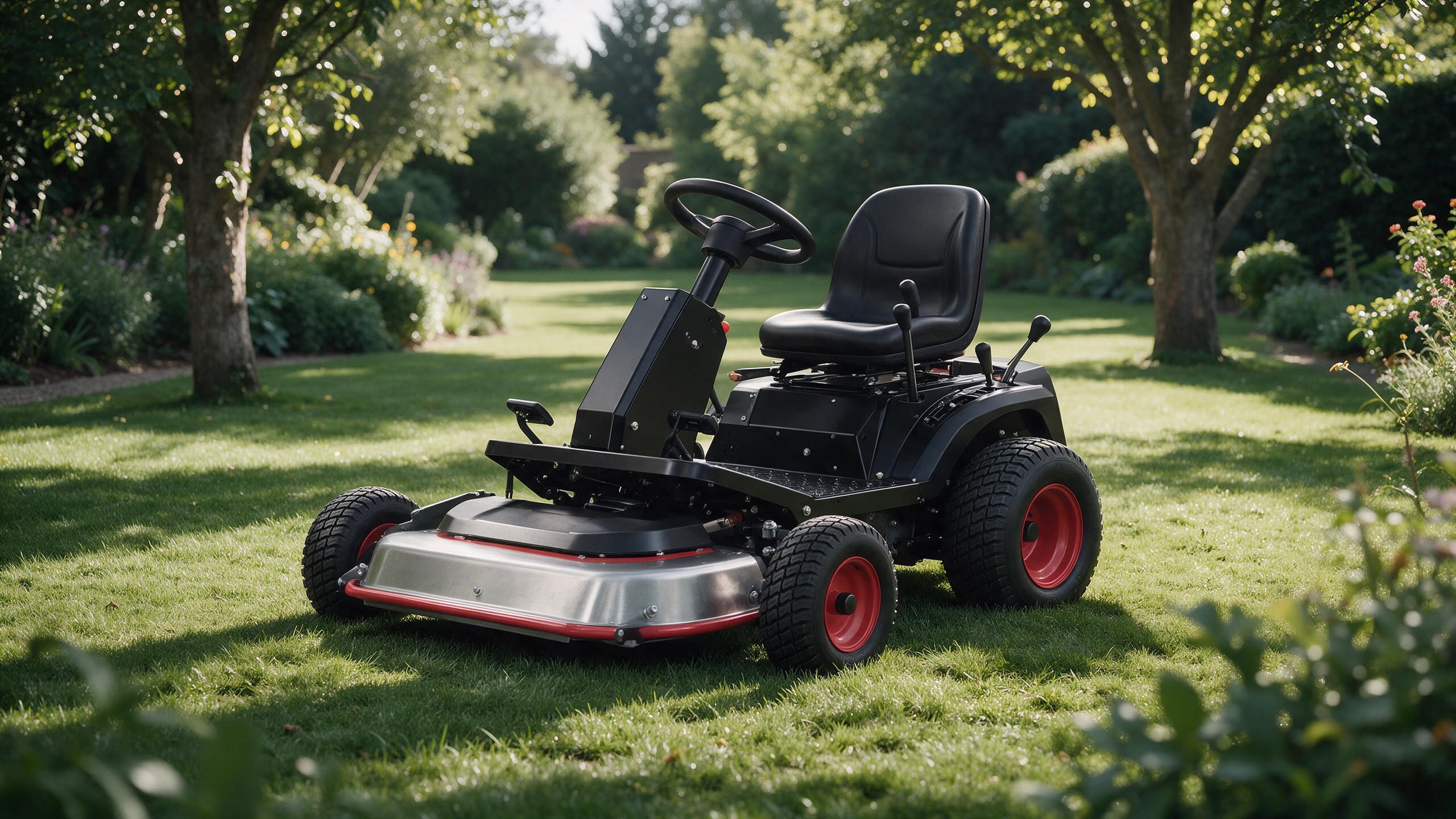
Deck location changes what the operator can see and reach. Some ride on mower designs place the deck toward the front, giving a clearer view of the cutting edge around borders. A lawn tractor commonly places the deck between the axles, so the operator needs to account for the uncut area around obstacles and the space needed to turn. Other riders also use mid-mounted decks, so position alone does not define the category.
Width is equally important. A wider deck covers more ground per straight pass, but its overall machine width must fit access points, storage doors and paths. A ride on mower that cannot reach a narrow strip may require a second machine or extra hand trimming. Measure the opening at its narrowest point and check the stated overall width with any chute or collection system installed, not just the cutting width.
Look at cutting height adjustments, deck access for cleaning and the available discharge, collection or mulching options. These features differ by model; verify which components are included and which require separate accessories. An even finish also depends on the condition of the blades and the operator's chosen speed, not on deck width alone.
Steering, obstacles and operator comfort
In this mower comparison, turning space can matter more than the size of the engine. Steering-wheel machines follow a turning circle, leaving some turf around a tree that may need another pass. Some zero-turn riders use independent drive controls and can turn in less space, but their handling is different. Ask for a demonstration if possible, especially if several people will use the equipment.
For a large lawn with few interruptions, a comfortable seat and easy-to-reach controls can be as useful as manoeuvrability. Check sightlines, legroom, vibration and how readily the operator can adjust the deck. If the route includes low branches or tight beds, think about the height and position of the operator as well as the machine's footprint.
Attachments and the limits of a lawn tractor
Some lawn tractor models can handle tasks beyond mowing, such as pulling an approved garden cart or using a compatible collection attachment. Availability depends on the hitch, the transmission and the manufacturer's stated limits. A ride on mower may also support attachments; the category name does not settle the question.
List the jobs you actually expect to do, then request the compatibility information for each attachment. Check the rated towing capacity, attachment weight, permissible terrain and any restrictions on slopes. A lawn tractor is not a substitute for a heavy-duty agricultural tractor simply because it has a towing point. If an intended job exceeds the manufacturer's limits, choose equipment rated for that work instead of improvising.
Power, drive and terrain
Two machines with similar engine figures can feel different in use. Transmission type, gearing, tyre condition, deck load and ground conditions all influence how a ride on mower responds. Some machines use a hydrostatic transmission for variable speed control; others use different arrangements. Confirm the drive specification and test the controls rather than treating a single power number as a complete performance rating.
Slopes deserve separate attention. Check the exact model's maximum permitted slope, recommended direction of travel and attachment restrictions in its operator manual. Wet turf, uneven ground and a loaded cart can change traction and stability; a suitable machine for dry, flat turf may not suit the same route after rain. Do not assume that a heavier lawn tractor is automatically safe on a steeper area.
Keep bystanders and children clear from the mowing area, remove loose objects before cutting, and stop the blades and engine before clearing a blockage or servicing the deck. Follow the machine's safety instructions and local requirements. Carry passengers only if the manufacturer expressly provides a suitable seat and permits it.
Ownership costs and commercial equipment decisions
The purchase price is only one part of ownership. Compare the cost and availability of blades, belts, filters and other wear parts, as well as routine service access. Ask how a deck is removed or cleaned and whether a local workshop can support the model. A ride on mower used on a regular schedule needs maintenance planned around the actual operating hours and conditions described in its manual.
For commercial equipment, check whether the proposed model and warranty are intended for the expected workload. A domestic lawn tractor may be suitable for a homeowner but not for a fleet mowing multiple properties each day. Record the projected hours, operator training needs and turnaround time for repairs before discussing terms with a supplier. Request the applicable documentation rather than relying on a category label.
Which one fits your property?
- Mainly mowing with tight access: compare compact riders by overall width, turning space and deck visibility.
- Open turf plus light yard work: compare a lawn tractor and other suitable riders by approved hitch and attachment ratings as well as cutting width.
- Frequent professional use: assess service access, parts, intended duty and warranty conditions for the specific model.
- Sloping or uneven ground: first check the model's documented limits; use another method if the site is outside them.
A ride on mower is an umbrella term; a lawn tractor is one configuration within it. The practical distinction is not a universal ranking but the match between the machine, the property and the jobs it is approved to perform. Measure the route, verify attachments and read the operating limits before making the final decision.
 Hot News