EN
How to Reduce Operating Costs of Ride On Mowers Through Maintenance?
A ride on mower is a time-saving machine only when its upkeep stays predictable. When cut quality drops, a belt slips, or an engine runs hot, the bill is rarely limited to one component. Lost mowing time, rushed purchases of spare parts, and a shortened service life can turn small omissions into recurring expense. The practical aim is not to service every item constantly; it is to give the parts that affect load, cooling, cutting, and traction attention before they create a larger job.
For a contractor or property manager, mower care is part of operating control. The price tag was the first number many owners looked at. After a season of regular mowing, fuel use, blade work, and unplanned repairs become the numbers that shape the real maintenance cost. A simple routine gives a ride on mower a more consistent workload and makes planned service easier to budget.
Why neglected maintenance costs more
A ride on mower works through lawn debris, vibration, heat, and damp clippings. Debris packed around the deck or cooling area can make normal work harder for the machine. A dull blade tears turf blades rather than making a clean cut, which can encourage operators to repeat passes or run at an unsuitable pace. Loose belts, worn pulleys, low tyres, and a restricted air filter each add their own form of strain.
The key point is that operating cost is connected. A small inspection can reveal a loose fastener or an emerging crack while the repair is still manageable. Leaving it until a ride on mower stops during a busy mowing day often means urgent labour, delayed work, and less choice when ordering spare parts. Follow the operator manual for the exact tasks, consumables, and intervals for the specific model; general schedules are useful prompts, not replacements for model instructions.
Build a short routine around every mowing session
The lowest-effort checks are often the most useful because they catch visible changes. Before starting a ride on mower, walk around it and look for fluid leaks, damaged guards, loose hardware, and clipping buildup. Check that the tyres appear evenly inflated and that the deck area is clear with the engine off, cooled, and secured according to the manual. Uneven tyre pressure can affect deck level and therefore cut appearance, so it is more than a comfort issue.
- Clean the cutting deck: Remove accumulated clippings and mud after use when safe to do so. A clean deck makes it easier to spot corrosion, belt wear, or a damaged blade.
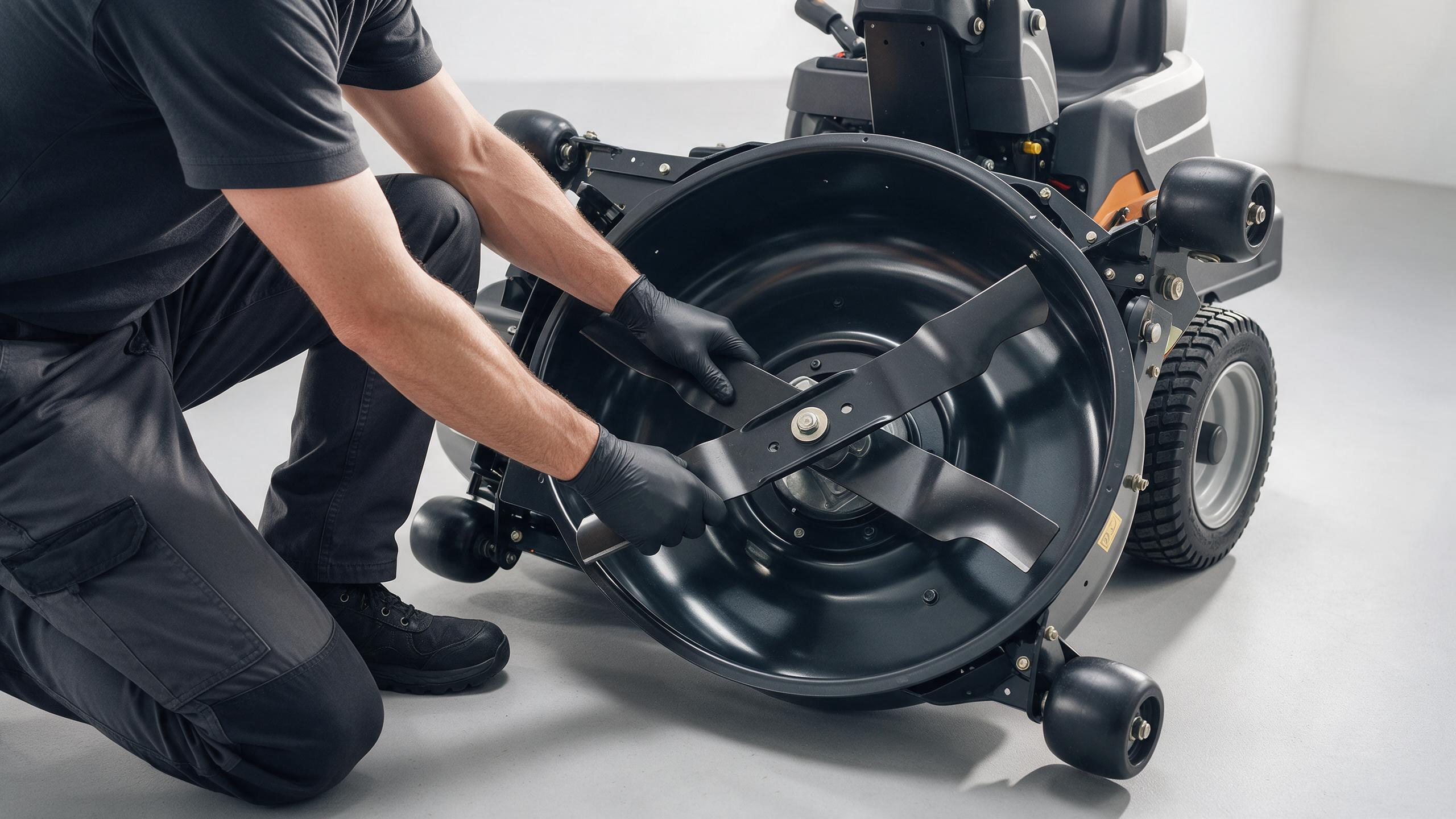
- Check blade condition: Look for nicks, bends, and excessive wear. Sharpen or replace blades according to the manufacturer’s guidance, and use the correct balancing and fastening procedure.
- Inspect belts and pulleys: Watch for fraying, glazing, misalignment, or unusual noise. Replacing a visibly tired belt during planned service is easier than reacting after a failure.
- Review tyres and steering: Confirm pressures and look for damage. A ride on mower that tracks poorly can create inconsistent overlap and unnecessary repeat passes.
This is also the right time for mower care notes. A quick log of operating hours, tasks completed, and unusual sounds turns vague recollection into a service plan. If the machine is shared, the log gives every operator the same reference point.
Control engine and drive-system wear
Engine service directly affects the service life of a ride on mower. Use the oil grade, filter type, fuel guidance, and change interval specified by the manufacturer. Check the oil level on the recommended schedule, and address fuel or oil spills safely instead of letting debris collect around them. An air filter deserves similar attention: a restricted filter can affect running quality and increase the workload on the engine.
Lubrication points vary by design. Some ride on mower models have fittings for steering, deck, or spindle components; others use sealed parts. Do not assume that a fitting exists or add lubricant where the manual does not call for it. The same rule applies to transmissions, battery terminals, and fuel-system work. Accurate, model-specific service avoids buying the wrong spare parts and avoids work that does not solve the underlying issue.
Plan spare parts before the season is busy
Spare parts are less disruptive when they are selected from the model and serial-number information rather than from appearance alone. Keep the manual, proof of prior service, part numbers, and a record of compatible consumables together. Blades, filters, belts, fasteners, and deck components are common wear items, but the sensible stock level depends on mowing frequency and the supplier lead time.
For a ride on mower used across several properties, a small, verified shelf of routine consumables can reduce downtime. For lighter domestic use, a written order list may be more practical than storing every item. Either way, inspect removed components before discarding them: a belt that repeatedly wears on one edge may indicate alignment or pulley condition rather than a one-off consumable expense.
Use cut quality as an early warning signal
Ask one useful question after mowing: did the ride on mower cut evenly at the expected pace? Streaks, uncut strips, vibration, new noise, reduced discharge, or a need for repeated passes are signals to inspect rather than simply work longer. The answer may be as simple as cleaning the deck, but it might also point to blade condition, deck level, tyre pressure, or drive wear.
Conditional checks are important here. A machine working on a dry, level lawn may need a different level of attention from one repeatedly mowing slopes, heavy growth, or rough ground. More demanding conditions can justify shorter inspection intervals, while the manual remains the authority for scheduled service.
A cost-focused maintenance checklist
- Record operating hours and the date of each mower care task.
- Perform a visual inspection and cleanup after each use.
- Use the model manual to schedule oil, filter, blade, belt, and lubrication work.
- Order verified spare parts early when wear is visible or seasonal demand is approaching.
- Investigate changes in cut quality, vibration, or noise before the next long session.
- Review the log at season end to identify repeated repairs and plan the next service.
Maintenance does not remove every repair cost, but it gives a ride on mower a clearer operating history and gives its owner more control over when labour and spare parts are needed. Keep the routine specific to the machine, use manufacturer-approved procedures, and treat each change in performance as useful information. That approach supports a longer service life and a more manageable maintenance cost over time.

 Hot News