
 EN
How to Improve Ride On Mower Productivity for Large Areas?
Large properties make small inefficiencies expensive. A few extra turns, a missed strip, or a deck that starts packing with damp clippings can turn a planned mowing window into a longer job. A ride on mower gives the operator more capacity than a walk-behind machine, but capacity alone does not determine output. Productive work comes from matching the ride on mower to the site, setting up a repeatable route, and keeping the cutting system ready for the day’s conditions.
From a contractor-focused viewpoint, the useful measure is finished, presentable turf per working hour—not the number shown on an engine badge. The following approach is intended for estates, grounds teams, and commercial landscaping crews responsible for large lawns, where consistent cut quality and predictable scheduling matter as much as forward speed.
Start with a realistic site plan
Before changing equipment settings, walk or map the area. Divide the work into open zones, obstacle-heavy zones, slopes, narrow entry points, and places where clippings need collecting. That quick site review shows where a ride on mower can make long, efficient passes and where a smaller machine or trimming tool makes more sense. It also makes daily planning easier: operators can mow the clean, open sections first, then return to edges and restricted areas with the right tool.
Measure the narrowest access point, note low branches, mark irrigation heads, and identify wet spots. A very wide deck may look attractive on paper, yet it can lose time if it cannot pass through access points or make clean turns around landscape features. The right ride on mower is the one that covers open ground quickly while fitting the actual route with limited backing and repositioning.
Match cutting width and drive system to the work
Cutting width is a major input to mowing efficiency, but it is only useful when the deck can be used effectively. On broad, uncomplicated turf, a wider deck reduces the number of passes. On sites with trees, beds, paths, and frequent changes of direction, manoeuvrability can matter more than theoretical width. Plan a short test route during normal turf conditions and observe how much of each pass overlaps. Excess overlap means the mower is covering the same ground twice.
Look at the whole working pattern rather than a single specification. Steering response, turning space, traction, seat position, and control layout affect whether an operator can hold a steady line and maintain a safe pace. A ride on mower intended for repeated large-area work should also have controls that support routine checks without making every service task cumbersome.
Use a route that reduces turns and missed strips
For rectangular open areas, begin with two perimeter passes when the site allows it. This creates turning space and gives the operator a clear boundary. Then cut the interior in long, parallel runs, using a stable visual reference such as a previous wheel track or turf line. Set a modest, consistent overlap; it is enough to avoid a visible strip without wasting a large part of every pass.
For irregular ground, segment the area rather than chasing every curve in one continuous pattern. Complete one zone, then move deliberately to the next. That keeps decisions simpler while driving and makes unfinished edge work easier to spot. In commercial landscaping, a written site map or simple zone list helps different operators deliver the same sequence rather than improvising each visit.
- Work open zones before congestion builds around pathways or parked vehicles.
- Schedule high-visibility turf early when the site has fixed access hours.
- Leave detailed edge work for the end, when the primary cutting area is complete.
- Record recurring obstructions so the route improves over successive visits.
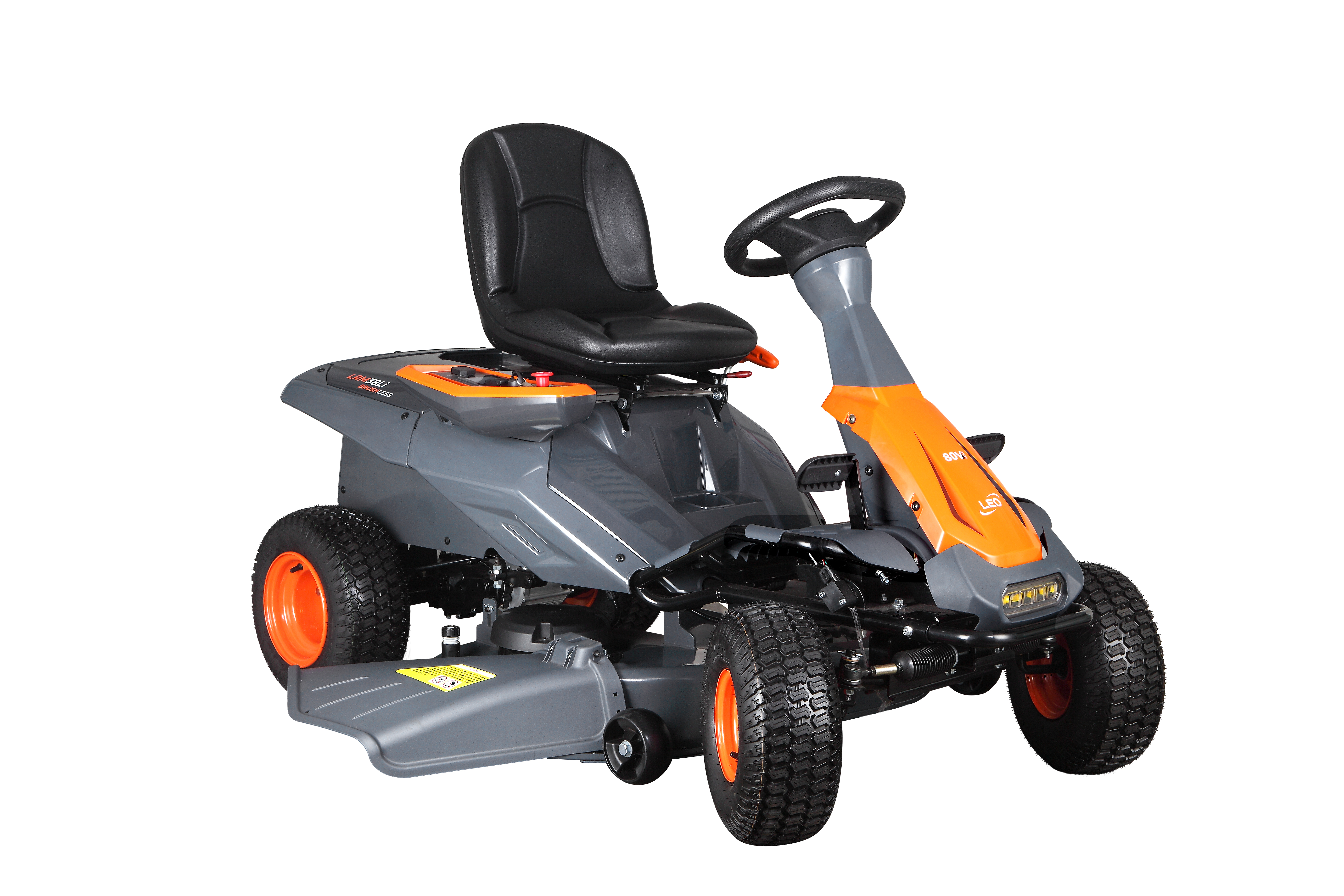 A planned pass pattern helps a grounds team cover open turf with less overlap.
Protect output by cutting for the conditions
Speed should follow turf height, density, and moisture—not a fixed habit. When turf is tall or damp, reducing ground speed gives the deck more time to discharge or process clippings and helps maintain an even appearance. Trying to force a ride on mower through unsuitable conditions can create clumps, uncut blades, and a second pass that erases the time saved.
Wet turf deserves special attention. It is more likely to adhere to the blade and underside of the deck, which can restrict discharge and leave an uneven finish. If the schedule allows, wait for turf to dry. If work must continue, inspect the deck more often, clear buildup only with the machine shut down and secured according to its manual, and adjust the day’s expectations. A clean deck is part of productivity, not merely end-of-day housekeeping.
Terrain sets another boundary. Follow the manufacturer’s stated slope limit for the specific ride on mower. Occupational safety guidance also emphasizes evaluating the terrain, using a slope indicator when needed, and mowing qualifying slopes up and down rather than across them. Steep or uncertain areas call for a different method or equipment; a schedule is not a reason to compromise operator safety.
Keep the cutting system ready between jobs
Routine maintenance has a direct effect on productivity. Blades that need servicing can produce an uneven cut and may leave a rough finish that invites a corrective pass. Check blade condition, deck cleanliness, tire condition, fluid levels, and fasteners at the interval stated in the operator manual. After working in damp turf, remove accumulated clippings when it is safe to do so and inspect the discharge path before the next site.
Make these checks part of the crew’s routine rather than an interruption. A short inspection before loading, a quick clean after a difficult site, and a record of service needs make downtime more predictable. For a fleet, identify which ride on mower is assigned to which route and log recurrent issues such as poor traction or repeated clogging. The record helps supervisors distinguish a site-condition problem from a setup or maintenance problem.
Set an operating standard for large lawns
Consistency is especially valuable across large lawns. Give operators a clear standard: planned route, target cut height, overlap guideline, no-go areas, wet-weather approach, and post-job check. A simple checklist supports training and creates useful feedback when one route regularly takes longer than planned. It also keeps mowing efficiency focused on useful output rather than rushing.
Review the result after each visit. Were there clumps, missed strips, excessive turning, or time spent clearing the deck? Did an obstacle change the route? Use that observation to refine the next visit. A ride on mower becomes more productive over time when the machine, operator, and site plan are treated as one system.
FAQ
How can a ride on mower improve productivity on a large area?
A ride on mower can reduce operator walking and cover open turf in wider, consistent passes. The gain is strongest when the deck width, route, turf conditions, and maintenance routine suit the site.
Should a ride on mower be used on every slope?
No. Check the manual for the machine’s slope limit and assess the ground before work. Use another method for terrain outside the stated operating conditions or where traction, stability, or hazards are uncertain.
What is the quickest way to improve mowing efficiency?
Start with a mapped route that limits turns and excess overlap, then keep blades well-maintained and the deck clear. Those actions reduce rework while supporting an even finish.
Final takeaway
For large-area work, a ride on mower is most effective when it is part of a disciplined operating plan. Match it to the site, use a repeatable route, adapt to weather and turf conditions, and maintain the cutting system between jobs. That combination supports steadier scheduling, cleaner turf, and practical productivity for grounds teams and commercial landscaping operations.

 Hot News